

Printable
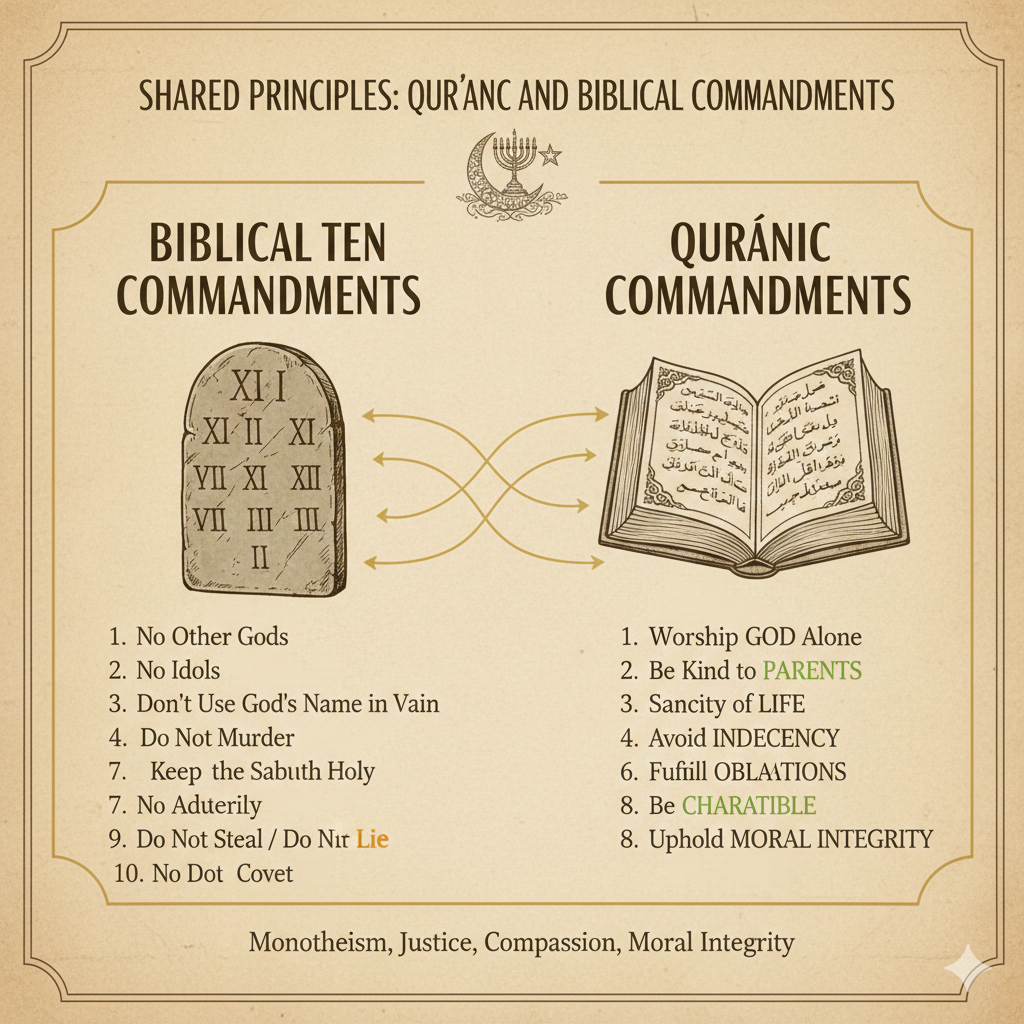
Shared Principles: Quranic and Biblical Commandments
for
Social Studies Teachers

By Faysal Burhan
Published 2025
The Qur’an and the Bible share substantial moral ground: devotion to God, respect for parents, protection of human life, sexual integrity, and honesty in human relationships.
Although the Qur’an does not present a formally numbered list titled “The Ten Commandments,” it brings together closely related teachings, particularly in Surah Al-An‘am (6:151–153) and Surah Al-Isra (17:23–39). These passages link worship to moral conduct, emphasizing duties to both God and humanity.
Core Qur’anic Commandments
The principles in these passages include:
♦ Worship God alone. Do not associate partners with Him (6:151; 17:23).
♦ Honor your parents. Treat them with kindness, patience, and respect, especially in old age (6:151; 17:23–24).
♦ Respect the sanctity of life. Do not kill unlawfully, and do not kill children because of poverty or fear of poverty (6:151; 17:31–33).
♦ Uphold sexual and moral integrity. Avoid indecency, whether open or concealed, and do not approach unlawful sexual relations (6:151; 17:32).
♦ Protect orphans’ property. Manage it only in ways that serve their interests until they reach maturity (6:152; 17:34).
♦ Deal honestly in commerce. Give full measure and weight, and conduct transactions fairly (6:152; 17:35).
♦ Speak with truth and justice. Remain impartial, even when a close relative is involved (6:152).
♦ Honor covenants and promises. Fulfill your covenant with God and remain accountable for your commitments (6:152; 17:34).
♦ Give others their due. Support relatives, people in need, and travelers, while avoiding wastefulness (17:26).
Together, these teachings present faith as a responsibility expressed through worship, compassion, justice, and trustworthy conduct.
The Biblical Ten Commandments
The Ten Commandments appear in Exodus 20:1–17 and Deuteronomy 5:6–21. The following is a familiar summary; religious traditions vary in their grouping and laws.
-
- Have no other gods before God.
- Do not make or worship idols.
- Do not misuse the name of the Lord your God.
- Remember the Sabbath and keep it holy.
- Honor your father and mother.
- Do not murder.
- Do not commit adultery.
- Do not steal.
- Do not bear false witness against your neighbor.
- Do not covet what belongs to your neighbor.
A Shared Moral Foundation
The clearest parallels concern worship of God, honoring parents, protecting life, sexual fidelity, and truthful conduct. The Qur’anic commands to safeguard property and deal fairly also reflect the biblical prohibition of theft and concern for others’ rights.
These parallels provide common ground for understanding and cooperation among Muslims, Jews, and Christians and other communities. Each tradition connects devotion to God with responsibility toward others, giving faith practical expression in family life, commerce, and the wider community.
Selected Qur’anic Passages
The following are English renderings of the meanings.
Worship, Parents, and the Sanctity of Life — Qur’an 6:151
Say: “Come, let me recite what your Lord has forbidden to you: associate nothing with Him; be good to your parents; do not kill your children because of poverty—We provide for you and for them; do not approach indecencies, whether open or concealed; and do not take a life God has made sacred except by right. This He has commanded you, so that you may understand.”
Property, Fair Dealing, and Justice — Qur’an 6:152
“Do not approach an orphan’s property except in the best manner until the orphan reaches maturity. Give full measure and weight with justice. We do not burden any soul beyond its capacity. When you speak, be just, even if a close relative is involved. And fulfill the covenant of God. This He has commanded you, so that you may remember.”
Kindness Toward Aging Parents — Qur’an 17:23
“Your Lord has decreed that you worship none but Him and that you treat your parents with kindness. If one or both reach old age in your care, do not utter even a word of irritation or rebuke them, but speak to them respectfully.”
Generosity and Responsible Spending — Qur’an 17:26
“Give relatives their due, as well as those in need and the traveler, and do not squander wastefully.”