

Reasons and Rationality
Reasons and Rationality
Published: 2002
No one before Islam was encouraged to use reasoning. Repression was based on the priesthood, hierarchyPreview Changes (opens in a new tab), or the one in control. They emphasized using intellectual capacity in all areas of life. One principle they developed is that the mind uses reason and exploration but does not harbor emotions. As a result of Islamic teachings and the preservation of Greek and Roman thought through Arabic translations of original texts, the Renaissance emerged.
Averroes (and broader Islamic thought) helped develop rationalism within the Christian tradition, a major influence on the West’s development. Especially in the Islamic kingdom of Spain, but also in the East, Islamic culture largely tolerated and affirmed religious diversity within its own boundaries. This created a rich intercultural intellectual milieu, where Islamic philosophers and theologians discussed and clarified their faith alongside similar voices from Christian and Jewish thinkers.
Statue of Averroes (Abu al-Walid ibn Rushd al-Qurtubi)
Cordoba in southern Spain, then the capital of the Moorish empire, is perhaps the most impressive example of such intercultural diversity. Here, Jewish scholars translated Muslim translations and commentaries on Aristotle from Greek into Arabic into Hebrew, and Christian scholars translated them from Hebrew into Latin. This created an extraordinary degree of mutual dependence and influence among the three religious traditions. By today’s standards, a surprising level of respect and friendship between Islamic philosophers and their counter-religionists.
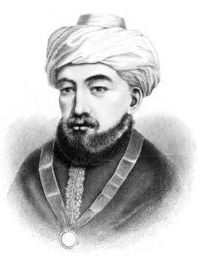
Thus, for example, the formidable Jewish philosopher Moses Maimonides declared himself a disciple of the Muslim Averroes. At the same time, an influential (though heretical) group called the Christian Averroists emerged in Paris, declaring their debt to the Master. No less a figure than Thomas Aquinas also owed Averroes a huge debt, although this debt was not always so explicitly acknowledged.
Christian thinkers relied more on Ibn Rushd (Averroism) than on Aristotle in their scientific research. Among Ibn Rushd’s followers were the Jewish thinkers who called him “the soul and intelligence of Aristotle.” In fact, Jewish philosophers such as Ibn Maymun, known as Maimonides (d. 1204), Yahuda ben Solomon Cohen, and Aveicebron, who were the main glory of intellect, were students of Ibn Rushd and Arabic philosophy.
Islamic philosophy floats high above all racism, giving freedom and protection to minorities and the Jews who translated the Arabic works into Hebrew (12th to 14th century).
Rom Landau stated in his book, “The Arab Heritage of Western Civilization,” that,
“Averroism became the chief doctrine of the philosophical schools of Paris, Padua, and Bologna. It helped lay the foundation for the Renaissance.”
Recommended Posts

Women’s Rights to Own Property
January 20, 2018

Navigation
January 20, 2018
Algebra
July 4, 2017