
Pharmacology
Pharmacology
By: Faysal Burhan
Published: 2002
Prophet Muhammad said, “For every  sickness, there is a cure.” This means no illness should be considered hopeless and that research should have no limits.
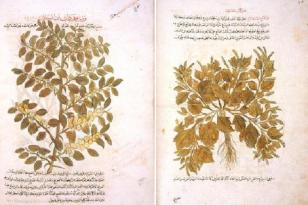
This belief motivated physicians and pharmacists to explore nature and find the right herbs, plants, roots, or minerals for the illness. Pharmacology in the Islamic world became a distinct science, separate from chemistry and medicine.
Al-Mansuri Hospital Complex
Ibn al-Baytar traveled in the Middle East and Europe searching for medicinal plants. His book, Singular Cures, offers many treatments.
His greatest work was his book, Compendium of Pharmacology. William Osler, considered the father of modern medicine, said that works such as the Compendium helped Muslims exert a strong influence on modern pharmacology. 25 (Carrison, F. H.).
In the 8th century, Muslims invented the first true pharmacy. They invented and used the paper filter; they added rose petals, orange blossom, and lemon peel for flavor. They used alcohol to extract active ingredients from herbs. Pharmacists dispensed drugs by prescription and prepared them.
Drug Jar, Damascus (1000 CE)
Goldstine and Bammit said: In Baghdad alone, sixty chemists’ shops dispensed drugs by prescription.
Government inspectors, al-Muhasib, regulated the pharmacies. Fines were given for adulterated drugs. Pharmacists had to obtain a license from the city’s governor.
Durant says the Caliph established the first pharmacy school in Baghdad. This act inspired Georgi Zeidaon to state that modern pharmacists are wholly indebted to the early Muslims. Routine said that the pharmacy was discovered and turned into science by the Muslims of Spain and Baghdad, 80 pharmacies were.
Recommended Posts
Women’s Rights to Own Property
January 20, 2018
Navigation
January 20, 2018
Algebra
July 4, 2017
Thanks, great article.