

The Life of Prophet Muhammad and the Finality of Islam:
Anecdotes of Dynamic and Relevant Management
Preface: The Architecture of Completion
Leadership is often measured by its beginning, but its true genius lies in its Finality.
This work explores the life of Prophet Muhammad not merely as a chronological biography, but as a masterclass in Strategic Management. To understand the “Finality of Islam” is to understand how a vision transitions from a revolutionary idea into a self-sustaining, perfected system. It is the moment where the spiritual meets the structural, ensuring that the message survives the messenger.
In these pages, we move beyond abstract theology to examine the Dynamic and Relevant Episodes that defined this era. These are not just stories; they are case studies in:
♦ Conflict Resolution: How to manage high-stakes transitions like the Opening of Mecca with mercy instead of vengeance.
♦ Institutional Sovereignty: The art of building bureaus and diplomatic frameworks that protect the future of the state.
♦ Human Agency: Recognizing the rights of women and the marginalized as essential pillars of a stable society.
Through these Anecdotes, we see a leader who mastered the “whip, the sword, and the tongue,” utilizing Hilm (forbearance) to navigate the complexities of human nature. This book is for the leader who seeks to understand how to manage the “episodes” of their own career with the same precision, pragmatism, and vision that led to the most successful social and spiritual consummation in human history.
Table of Contents:
The Prophet Muhammad ﷺ demonstrated that true revolution begins with the intellect. By establishing the “Philosophy of the Pen” in a society of oral traditions, he proved that a sustainable civilization must be built on literacy, empirical reasoning, and the pursuit of knowledge as a universal right.
Opening
Inquiry and Framework
Morning Sun of Revelation
A Civilization of Values, Not Conquest
The Greatest Lawgiver: Justice as a Universal Equalizer
The Imperishable Influence on Modern Civilization
The Bridge to the Renaissance: The Scientist Pope
The Muslim Genius
Part II
The Emergence of a Prophet — The Birth and Early Life of Muhammad
Long before his political rise, the Prophet was known as “Al-Ameen.” He taught that a leader’s most valuable asset is not power or wealth, but a reputation for unimpeachable honesty. Integrity is the foundation upon which trust—and eventually nations—are built.
The Birth and Early Life of Muhammad
Early Professional Life and Mercantilism
Trade Routes and Transregional Connections (Covenant of Sinai / St. Catherine’s Monastery material)
The Integrity of “al-Ameen”: Nobility Before Revelation
The Arbiter of Peace: The Black Stone IncidentThe Moral Struggle Against Jahiliyyah (Ignorance)
The Tragedy and Infanticide
A Revolutionary Shift in the Status of Women
The Music of the Soul: The Humane Heart of Muhammad (Story of Zayd ibn Harithah)
A Bond Beyond Servitude
The Choice: Freedom or Love?
The Promotion of Universal Virtue: Hilf al-Fudul (Alliance of the Virtuous)
Part III
The Great Transformation: Quranic Principles and the Radiant Path
Through the science of Balaghah, the Prophet demonstrated that truth is only effective when it is accessible. A leader must master the “tongue of the time,” ensuring that their message aligns with the recipient’s intellectual and social status to prevent alienation and misunderstanding.
The Great Transformation: Revelation in the Cave of Hira
Crisis and Validation: The Wisdom of Khadijah and Waraqah
The Consummation of Islam – Submission as a Universal Reality
1. The Intellectual Revolution
2. The Seeds of the Renaissance
The Consummation of Islam, Submission to God
The Quranic Paradigm: Principles of Universal Flourishing
A. The Inclusivity of the Abrahamic Legacy
B. The Universal Horizon: Reclaiming the Quran’s Relevance for All
1. A Mandate for Global Guidance
2. The Merit of Faith and Action
3. The Shared Abrahamic Language
C. The Hermeneutic Elasticity: A Message for All Eras
1. The “Colors of Manifestation.”
2. Fixed Text, Evolving Meaning
3. A Living Guidance
D. The Science of Balaghah: Tailoring the Message to the Recipient
1. The Rule of Contextual Matching
2. The Requirement of Cultural Competence
3. The Risk of Poor Presentation
E. The Evolution of Balaghah: The Science of Impactful Delivery
1. The Intellectual Pioneers
2. The Vitality of Realism
3. The Crisis of Stagnation: Tradition vs. Transformation
F. The Consequence of Stagnation: Reclaiming Quranic Relevance
1. Justice Above Self-Interest
2. The Triad of Social Excellence: Justice, Goodness, and Generosity\
3. Justice as the Repulsion of “Fasad” (Corruption)
G. Cultivating “Taqwa”: The Pursuit of God-Consciousness and the Rejection of Discord
1. The Multidimensional Nature of Taqwa: The Ethics of Harm Prevention
2. The Vertical Dimension: Spiritual Integrity
3. The Horizontal Dimension: Social Amn (Security)
4. Nature as a Gateway to Mindfulness
5. Scriptural Directives on Mindfulness and Cooperation
6. Countering the “Satanic” Narrative of Scarcity
7. Protecting the “Amn” of Society
H. The Sovereignty of Choice: Freedom as a Divine Mandate
1. The Axiom of Non-Compulsion
2. Freedom as the Basis of Accountability
a. The Primacy of Human Agency
b. Freedom of Expression and Trade
I. The Global Social Contract: Ta’arafu and the Ethics of Non-Harm
1. Beyond Tolerance: The Science of Ta’arafu
2. The Scope of Limitless Collaboration
3. Meritocracy of Non-Harm over Tribalism
I. The Mandate of Mercy: A Restorative Universal Force
1. The Universal Compassion of the Divine
2. Revelation as Spiritual Therapeutics
3. The Radiant Path of Healing
J. The Dual Dimensions of Mercy: Proactive and Reactive Grace
1. Mercy as a Proactive Social Benediction
2. The Shift from Clemency to Compassion
K The Dimensions of Divine Grace: Ar-Rahman and Ar-Rahim
1. Ar-Rahman: The Universal Beneficence
2. Ar-Rahim: The Personal and Situational Grace
L. The Ontological Sanctity of the Human Soul
1. The Interconnectedness of Life
2. The Gravity of Accompliceship
M. The “Radiant Path” of Gratitude
N. The Sovereignty of Conscience: The Quranic Framework for the Separation of Religion and State
1. The Divine Prohibition of Coercion
2. Freedom as a Non-Negotiable Rule of Law
3. The Prophet as a Reminder, Not a Controller
The Napoleonic Recognition
Evaluating the Risk: The Socio-Economic Counter-Narrative
1. The Threat to Capital and Creed
2. Radical Equality vs. Aristocratic Privilege
3. Reclaiming the Human Origin
The Architecture of a New Society: Building a Diverse Foundation (610–613 CE)
1. The Strategy of “Stealth Growth.”
2. Cross-Clan Networking and Deterrence
3. The Deterrence Factor
Systemic Repression: The Spectrum of Quraysh Resistance (613–619 CE)
1. The Phase of Enticement and Bribery
2. Psychological Warfare and Social Ostracization
3. The Escalation to Physical Brutality
4. Forced Displacement and Exile
The Integrity of the Means: Radical Transparency and the Rejection of Political Expediency
1. The Temptation of the Crown
2. The Refusal of Machiavellian Tactics
3. Power vs. Principle
The Pursuit of Peace: Strategic Patience and Conflict De-escalation
1. Economic Liberation vs. Violent Retaliation
2. The Underground Sanctuary: Dar al-Arqam
3. The Liturgy of Peace: The Silent Prayers
4. The Aesthetics of the Soul
The Primacy of Amn: Preserving Security as a Divine Trust
1. Resisting the Pressure of Retaliation
2. Integrity Over Ego
3. The Foundation of Social Stability
The Diplomacy of the Clan: Managing Internal Friction (614 CE)
1. The First Gathering: The Power of Strategic Silence
2. Building vs. Destroying: The Goal of Godliness
3. The Second Gathering: The Noble Appeal
4. Results of Emotional Intelligence
Islam and the Global Community: A Heritage of Shared Values
1. The Architecture of Beauty and Knowledge
2. The Social Genius of the Prophet
3. Ta’arafu: The Mandate for Universal Collaboration
4. Redefining Taqwa as Global Security
PART IV
The Diplomatic Vanguard
The Migration to Abyssinia and the Pledges of Aqaba show that a leader must look beyond their immediate borders. By seeking “common ground” with other faith traditions and building ethical coalitions, the Prophet demonstrated that diplomacy is the most effective means of ensuring a movement’s survival.
The First Diplomatic Asylum: A Christian Sanctuary (615–616 CE)
1. The Strategy of Cross-Faith Collaboration
2. The Test of Sovereignty and Justice
3. The Reciprocity of Loyalty
The Great Boycott: Exile and Economic Siege (616–619 CE)
1. The Mechanics of Ostracization
2. The Toll of the Siege
3. The Failure of Coercion
The Abyssinian Intervention: Interfaith Solidarity vs. Tribal Tyranny (619 CE)
1. The Dialogue of the Soul
2. Conflict De-escalation through Dignity
3. Awakening the Meccan Conscience
The Year of Sorrow: The Human Cost of Resilience (619 CE)
1. The Loss of the Political Shield: Abu Talib
2. The Loss of the Emotional Anchor: Khadijah
3. Am al-Huzn: The Year of Sorrow
The Ta’if Expedition: Resilience and the Ethics of Forgiveness (620 CE)
1. The Rhetoric of Rejection
2. The Trial of Physical and Psychological Suffering
3. The Rejection of Retributive Violence
4. The Mercy to the Worlds
Strategic Realism: The Return to Mecca and the Protection of Al-Mut’im
1. The Pragmatism of Cross-Creed Alliances
2. Rationality in Public Discourse
3. The Fruit of Patience
The First Pledge of ‘Aqabah: The Covenant of Values (620–621 CE)
The Diplomatic Envoy: Mus’ab ibn ‘Umayr
The Second ‘Aqabah Pledge: A Non-Combatant Treaty
The Second Pledge of ‘Aqabah: The Foundation of Sovereignty (622 CE)
1. The Masterstroke of Delegation: The Twelve Naqibs
2. The Shift in Geopolitical Power
The ‘Aqabah Model: Governance Through Consent and the Separation of Authorities
1. The Election of the ‘Aqabah Covenants
2. The Test of Jurisdictional Boundaries: The Road to Badr
3. Authority Through Consensus
The ‘Aqabah Model: Governance Through Consent and Civic Authority
1. Governance: A Civic Responsibility, Not a Religious Pillar
2. Authority Through Election and Consensus
3. The Separation of Personal Holiness from Public Office
The Miraculous Ascent: Jerusalem and the Unity of Prophecy (621 CE)
1. The Night Journey to Jerusalem (Isra’)
2. The Ascension and the Five Daily Prayers (Mi’raj)
3. The Radiant Path of Inclusivity
The Integrity of Authority: Rejecting Political Opportunism
1. The Dilemma of Geopolitical Alliances: The Banu Shayban
2. The Rejection of the Sa’sa’ Power-Play
3. The Legacy of the “Dress of Religion.”
PART V
The Sovereign State (Medina Model)
The Constitution of Medina established that a leader’s primary duty is to protect the “Sovereignty of Choice.” By granting equal rights to all citizens, regardless of creed, the Prophet created a pluralistic society in which security (Amn) was guaranteed by a shared civic contract rather than enforced uniformity.
The Great Migration: The Hijrah to Yathrib (622 CE)
1. Sacrifice for Sovereignty
2. The Shift to a Governance Model
3. Establishing the “Amn” of Medina
The Muslim Migration to Yathrib (613 CE)
The Masterpiece of Planning: The Strategic Hijrah (622 CE)
1. The Mechanics of a Secure Transition
2. The Failure of Tribal Repression
3. The night of the Great Escape
4. The Decoy Strategy: Ali ibn Abi Talib
5. Tactical Diversion: Heading South to Cave Thawr
6. The Intelligence and Logistics Network
7. The Divine Assurance
The Great Arrival: The Birth of a Nation (622 CE)
1. The Transformation into Medina
2. Establishing the First Institutions
3. The Birth of the Islamic Calendar
The Architecture of a Nation: The Urban and Social Transformation of Medina
1. The Civic and Spiritual Center: Masjid an-Nabawi
2. Conflict Resolution: The Aws-Khazraj Reconciliation
3. Public Health and Sanitation: The Juhfah Project
4. Economic Integration: The Mu’akhah System
5. Infrastructure and Land Reform: The 54 Wells Project
6. The Constitutional Milestone: Sahifat al-Medina
The Political Climate of Medina: Navigating Hypocrisy and External Threats
1. Internal Subversion: The Challenge of Abu ‘Amir “Al-Rahib.”
2. External Aggression and the Meccan Confederacy
3. The Plot of the “Mosque of Harm” (Masjid al-Dirar)
The Birth of a Defensive Strategy and Neutralizing Danger
The Doctrine of Necessary Defense: 622–623 CE
1. The Divine Mandate for Justice
2. Strategic Deterrence through Expeditions
3. Economic Deterrence and Restraint
The Hierarchy of Sanctity: The Nakhlah Incident and the Ban on Religious Persecution
1. The Prophet’s Reprimand and the Crisis of Legitimacy
2. The Revelation of Ethical Priorities
3. Freedom of Belief as the Supreme Sanctity
The Sovereignty of Conscience: Re-evaluating the “Riddah” Rule
1. The Quranic Argument for Agency
2. The Prophetic Precedent: The Case of the Bedouin
3. Restoring the Radiant Path
Reclaiming the Narrative: The Ethical Dimensions of Jihad
1. The Literal Foundation: Striving for Excellence
2. The Prophet’s Hierarchy of Striving
3. “Holy War” vs. Justified Conflict
The Jurisprudence of Conflict: Distinguishing Jihad from Qital
1. The Ethical Distinction: Jihad vs. Qital
2. The Doctrine of Non-Transgression
3. The Priority of Forgiveness and Peace
The Primacy of Amn: Security as a Divine Mandate
1. The Prohibition of “Fatk”: Rejecting Treachery
2. Security as the Basis for Civilization
3. The Transition to Autonomous Defense
The Battle of Badr: A Turning Point in Sovereign Defense (624 CE)
3. The Victory of Faith and Strategy
Strategic Consultation: Rational Command at the Battle of Badr
1. The Mandate of Collective Consent
2. Technical Expertise over Personal Opinion
3. The Engagement: Strategic Resolve and Divine Intervention
4. Restorative Justice: The Ransom of Education
Deconstructing the Myth: Martyrdom, Pluralism, and the Ethics of Defense
1. The Context of the Battle of Badr
2. The Quranic Mandate for Universal Reward
3. Abrahamic Solidarity and Prophetic Continuity
4. Redefining Martyrdom as Ethical Sacrifice
The Prophetic Continuity: Biblical Foretelling of the “Radiant Path”
1. The Burden Upon Arabia: Isaiah 21:13–17
2. Mapping the Hijrah and the Medina Model
3. The Diminishing Glory of Kedar
Hypocrisy
The Battle of Uhud: Consultation, Subversion, and Resilience (625 CE)
1. The Challenge of Democratic Decision-Making
2. Internal Subversion and the Hypocrite’s Dissent
3. The Strategic Defeat and Tactical Recovery
The Mandate of Mercy: Ethical Restraint on the Battlefield
1. Transcending Retribution
2. The Gandhian Perspective: Sovereignty Over the Sword
3. The ‘Aqabah Model in Action
The Post-War Humanitarian Crisis: Orphans and Economic Security
1. The Rationale of Restorative Protection
2. Modern Equivalencies
3. The Ethical Boundary of Justice
The Shura Principle: A Blueprint for Participatory Governance
1. The Divine Mandate for Consultation
2. The Test of Democracy at Uhud
3. Sovereignty and Legal Boundaries
Strategic Deterrence: Preempting the Confederacy of Aggression (625 CE)
1. The Display of Readiness: Hamra’ al-Asad
2. Forestalling the Invasion: Banu Asad and Banu Hudhayl
The Banu Asad Mission:
The Neutralization of Khalid al-Huzali:
3. Preserving “Amn” Through Decisiveness
The Plots of Raji’ and Bi’r Ma’una: Treachery and the Cost of Trust (625 CE)
1. The Betrayal at Al-Raji
2. The Tragedy of Bi’r Ma’una
3. The Demand for Accountability
The Expedition of Dhat al-Riqa: Strategy of Active Deterrence
1. The March of the “Patchwork.”
2. Deterrence by Denial
3. The “Prayer of Fear” (Salat al-Khawf)
4. The Ethics of Forgiveness
The Battle of the Trench: Deterrence, Innovation, and the Failure of the Confederacy (627 CE)
1. Intellectual Innovation: The Persian Trench
2. Strategic Restraint Amidst Provocation
3. Crisis and Treason: The Qurayza Betrayal
4. The Divine and Natural Resolution
Diplomatic Attrition:
Logistical Collapse:
Environmental Deterrence:
5. A Victory for Peace and Stability
The Strategic Peacemaker — Governance, Women’s Rights, and Diplomatic Sovereignty
The Architecture of Justice: Sharia as a Civic Constitution
1. The Constitutional Nature of Sharia
2. Participatory Governance: The Democratic Legacy
Abu Bakr (The First Caliph):
Umar ibn al-Khattab (The Second Caliph):
3. Decentralized Justice and Pluralism
Jurisdictional Freedom:
The Rabbinical and Ecclesiastical Courts:
The Principle of Shura in Islam Comprises Democracy in Some Respects
The Jurisprudence of Pluralism: Sharia in the Global Context
1. The Legacy of the Separate Court Systems
2. Sharia vs. Western Legal Paradigms
Breadth of Scope:
The Source of Authority:
3. The “Millet” Model of Inclusion
The Aesthetics of Faith: Beauty, Flexibility, and Rationality
1. The Case of the “Ruined Man”: A Masterclass in Mercy
The Path of Liberation:
The Path of Discipline:
The Path of Charity:
2. From Judgment to Generosity
3. Faith as Tranquility
Graciousness over Judgment:
Ease over Hardship:
The Mandate of Moderation: Rejecting Ghulu (Extremism)
1. The Warning Against Religious Excess
2. The Principle of Ease (Yusr)
3. The Stainless Character: A Model of Unpretentious Leadership
The Sovereignty of Choice: The Mandate for Freedom of Belief
1. The Rejection of Coercion
2. The Divine Will for Diversity
3. The “No Authority Over Belief” Doctrine
The Limitation of Oversight:
The Rejection of Guarding:
The Mandate of Delivery:
The Status of Women and Reform
The Restoration of Dignity: Women’s Rights and Social Reform
1. The Principle of Equal Partnership
2. Accessibility and Personal Agency
3. The Sanctity of Motherhood
4. Legal and Economic Empowerment
Property Rights:
Civil Rights:
Emotional Intelligence and the Feminine Identity
1. The Aesthetics of Consideration
2. The First Global Feminist
3. Restoring the Lost Identity
From Nonentity to Stakeholder:
The Healing of Sorrows:
The Architecture of Reconciliation: The Prophet’s Pursuit of Peace
1. The Bridge of Compromise
2. The Pilgrimage of Peace (Umrah)
3. Restoring the Sacred Order
The Pilgrimage of Peace: The Hudaybiyyah Strategic Maneuver (628 CE)
1. The Entitlement of Faith
2. Avoiding Conflict Through Tactical Rerouting
3. The Manifesto of Reconciliation
The Treaty of Hudaybiyyah: A Masterpiece of Strategic Diplomacy (628 CE)
1. Resisting the Incitement to Violence
Tactical Provocation:
The Detention of Uthman:
The Act of Grace:
2. The Shift in Tribal Alliances: Al-Hulath ibn Alqamah
3. The Testimony of Urwah ibn Masoud
Reconciliation as Victory: The Strategic Breakthrough at Hudaybiyyah
1. The Prophet’s Optimism: The Arrival of Suhail
2. Dismantling the Jahiliyyah Mindset
3. The Foundation of a Great Victory
The Primacy of the Social Contract: When Treaties Supersede Individual Interests
1. The Ethical Paradox of Abu Jandal
2. Peace as the Ultimate Goal
After Hudaybiyah – Stability A Fundamental Religious Principle
Strategic Diplomacy: The Power of Negotiation and Reconciliation
1. The Wisdom of Strategic Compromise
2. Responding with “Amn” (Security)
3. The Call to be “Amenders,” Not Tyrants
Fulfilling the Minor Pilgrimage Pledge (629 CE)
Strategic Readiness: The Defensive Safeguards of the Compensatory Pilgrimage
1. The Doctrine of Proactive Deterrence
2. The Revelation of Non-Aggression
Strategic Branding: Countering Propaganda through the “Radiant” Display
1. Countering the “Yathrib Fever” Narrative
2. Tactical Adaptation: The Athletic Display
The Bare Shoulder (Idtiba):
The Jogging (Raml):
3. Prioritizing Mission over Ritual
4. The Legacy of Ingenuity
Contextual Integrity: Correcting the Misinterpretation of Defensive Revelation
1. The Scope of Defense: Quran 2:190-191
The Mandate of Proportionality:
The Target of Reciprocity:
2. Protecting the Sanctity of the Shrine
3. The Grammatical and Historical Specificity
It refers exclusively to those members of the Quraysh
It does not apply to Christians, Jews
Strategic Kinship: Building Bridges Through Marital Diplomacy
1. The Union with Maymonah al-Hilaliyah
2. Diffusing Enmity Through Celebration
The Sanctity of the Soul: The Core Pillar of Islamic Ethics
1. The Divine Prohibition of Harm
2. The Sanctuary of the Soul
Life is Inviolable:
Shared Responsibility:
The Sovereignty of Intent: Judicial Restraint at Mayfa’ah (629 CE)
1. The Sanctity of the Word
2. Restorative Justice and Compensation
3. The Criteria of Human Genius
The Savior of Humanity: George Bernard Shaw on Prophetic Leadership
1. Solving the Global Crisis
Pluralism & Equal Protection:
Ethical Boundaries:
Formal Representation:
2. The “Radiant Path” to Peace
The Khaybar Settlement: From Military Confrontation to Economic Integration
1. Addressing the Source of Instability
2. The Siege and the Fall of the Fortresses
3. The Terms of Restorative Justice
Demilitarization:
Economic Autonomy:
Strategic Resource Realignment:
The Doctrine of Disarmament: Safeguarding Communal Stability
1. The Case of the Banu al-Nadir (625 CE)
2. Restoring Order: Banu Qurayza and Khaybar
Neutralizing the Threat:
Restorative Justice:
3. The Elimination of Hostility
The Mass Emancipation:
The Legal Precedent of Inclusivity:
1. A Timeline of Monogamy and Mission
The Foundation of Loyalty:
The Humanitarian Phase:
The Diplomatic Era:
2. Dissolving Enmity through Relationship
3. The Expert Perspective: Beyond the Sword
Global Outreach: The Expansion of Diplomatic Sovereignty (629 CE)
1. The Selection of Strategic Ambassadors
2. Diverse Reactions: Wisdom vs. Tyranny
The Persian Response:
The Roman Response:
3. Formalizing the Sovereign Identity
The Art of the Envoy: Strategic Selection in Prophetic Diplomacy
1. Dihyah al-Kalbi: Cultural Aesthetic and Eloquence
Cultural Appeal:
Symbolic Integrity:
The Result:
2. Amr al-Dhumari: The Power of Relational History
3. Human Agency and Divine Success
The Defensive Shield
The Prophet’s refusal of “Fatk” (assassination) even in times of war established that the “Radiant Path” cannot be paved with treachery. Leadership requires the strength to defend the state, but the moral courage to prefer peace-building and de-escalation over the cycle of revenge.
The Expansion of Peace: Beyond the Boundaries of Conflict
1. The Reconciliatory Nature of Expeditions
2. The Missionary Network
Established Common Ground:
Promoted Voluntary Consent:
3. Sovereignty Through Persuasion
The Battle of Mu’tah: Defending Diplomatic Integrity (629 CE)
The Byzantine Frontier: When Geopolitics Disrupts Abrahamic Solidarity
1. A Conflict of Proportionality
2. The Byzantine Fear of a Sovereign Arabia
3. Ideological Clash: Tolerance vs. Dominance
Strategic Allocation: Prioritizing Community Welfare over Personal Rites
1. The Absence of the Strategic Asset
2. The Conflict of Profitability: Personal vs. Communal
3. The Supremacy of the Common Good
Communal Security (Amn):
The Opportunity Cost:
Effective Allocation:
The Expedition of Dhat al-Salasil: Strategic Deterrence on the Northern Frontier (630 CE)
1. The Doctrine of Active Defense
2. Tactical Reinforcement and Unity
3. Deterrence through Presence
The Collapse of Diplomacy: The Meccan Breach of Hudaybiyyah (629 CE)
1. The Night Attack and the Violation of Sanctuary
A Breach of the Truce:
The Desecration of the Haram:
3. The Prophet’s Response: Demanding Accountability
The Liberation of Mecca: A Masterpiece of Strategic Peace (630 CE)
1. The Failure of Meccan Diplomacy: Abu Sufyan’s Mission
2. The Strategy of “Amn” (Security) over Conflict
Total Mobilization:
Tactical Secrecy:
Strategic Restraint:
3. Restoring the Sanctuary
1. Deterrence by Denial: The 10,000 Lights
2. Tactical Deception and Strategic Restraint
3. The Universal Decree of Safety
The Sanctuary of the Home:
The Sanctuary of the Leader:
The Sanctuary of the Sacred House:
4. Achieving the Impossible: The Great Amnesty
The Magnanimity of the Prophet: Six Strategic Insights from the Opening of Mecca
1. The Sanctity of All Creation: Rerouting for the Vulnerable
2. Power as a Trust: Maintaining Local Leadership
3. The Rhetoric of Reconciliation: From Slaughter to Mercy
4. Rationality in Ritual: Prioritizing Human Welfare
5. The Scope of Amnesty: Forgiveness for the Aggressor
6. Judicial Integrity: The Case of Hatib ibn Balta’ah
The Battle of Hunayn: Resilience, Restoration, and the Diplomacy of Mercy (630 CE)
1. The Ambush and the Crisis of Command
2. Tactical Recovery and the Siege of Ta’if
3. The Stewardship of Booty: A Strategy of Integration
Winning the Hearts:
The Restorative Gesture:
The Anatomy of Mercy: Character-Based Leadership in Conflict
1. Transcending Enmity through Grace
2. The Absolute Prohibition of Collateral Harm
A. Protecting the Innocence of Children
B. Protecting Women and Non-Combatants (‘Aseef)
Conquering the Heart: The Strategy of Magnanimous Giving
1. Beyond the Sword: The Power of Benevolence
2. Radical Generosity as Diplomacy
Abu Sufyan and his sons, Yazid and Mu’awiyah
Hakim ibn Huzam and al-Harith ibn al-Harith
3. The Reputation of Fearless Giving
The Legitimacy of Governance: Acknowledging Social and Political Stature
1. Preserving Local Leadership
Confirming Authority:
Decentralized Accountability:
2. Building Trust through Magnanimity
Transforming Adversaries into Allies:
Gaining the “Covenant of Hearts”:
3. The Prophet as the “Conveyor,” Not the Autocrat
The Synergy of Faith: Divine Intervention and Human Responsibility
1. The Lesson of Hunayn: From Overconfidence to Tranquility (630 CE)
Raising Morale:
Invisible Reinforcement:
2. The Miracle of Badr: Victory in Vulnerability (624 CE)
3. The “Believer’s Bonus”: Piety as a Strategic Asset
Part VIII
The Final Consummation
In his Farewell Sermon, the Prophet Muhammad ﷺ codified the “Universal Declaration of Human Rights.” He taught that the highest form of leadership is to leave behind a system where no person is superior to another except through their contribution to the common good and the prevention of harm.
The Expedition of Tabuk: Achieving the “Impossible” through Strategic Deterrence (630 CE)
1. A Climate of Existential Fear
2. Radical Mobilization and Shared Responsibility
Voluntary Contribution:
The Force of 30,000:
3. Deterrence by Denial: The Empty Camp
4. Diplomatic Consolidation and Peace Accords
Peace Treaties:
Strategic Acquisition:
The Covenant of Sinai: A Global Charter for Religious Freedom
1. The Pillars of the Saint Catherine Covenant
Protection of Sanctity:
Economic Autonomy:
Institutional Integrity:
Absolute Freedom of Belief:
Gender-Based Religious Rights:
2. The Consummation of the “Radiant Path.”
The Sanctification of Mecca: Restoration and the Declaration of Disassociation
1. The Legal Framework: The Declaration of Disassociation
Step 1: Termination of Breached Covenants.
Step 2: Honoring Integrity.
Step 3: Sanctuary Sanctification.
Step 4: The Respite of Choice.
2. Correcting the “Sword Verse” Misinterpretation (9:5)
The Specific Target:
Deterrence by Denial:
The Year of Delegations: Consolidating the Covenant of Peace (630–631 CE)
1. The Voluntary Expansion of Sovereignty
2. The Case of Najran: Pluralism in Practice
The Sanctuary of the Mosque:
The Covenant of Protection:
3. The Charter of Najran: Codifying Religious Freedom
The Farewell Pilgrimage: A Global Manifesto for Humanity (632 CE
1. The Sanctity of the Person
2. The Mandate for Gender Equity
3. The Universal Brotherhood of Man
The Passing of the “Radiant Path”: Humility in Death
A Legacy for All Creation
3. The Definition of True Greatness: Strategic Detachment
The unextinguished Light
Part I
The Radiant Dawn — The Architecture of Islamic Enlightenment
Leadership Lesson: The Mandate of Enlightenment
The Prophet Muhammad ﷺ demonstrated that true revolution begins with the intellect. By establishing the “Philosophy of the Pen” in a society of oral traditions, he proved that a sustainable civilization must be built on literacy, empirical reasoning,
Opening
Inquiry and Framework
♦ How did the specific teachings of Prophet Muhammad catalyze a global revolution in social justice?
♦ In what ways did the emergence of Islam synthesize and transform the existing cultures and faiths it encountered?
♦ How can the management of dynamic episodes in the Prophet’s life serve as a blueprint for addressing 21st-century societal crises?
The Morning Sun of Revelation
Prophet Muhammad did not merely introduce a new religion; he dismantled the structures of ignorance (Jahiliyyah)—idolatry, systemic selfishness, and social stratification. In their place, he established Islam: a comprehensive framework rooted in freedom, justice, cooperative intellectuality, and the mandate of rationality.
A Civilization of Values, Not Conquest
The hearts of millions were won not through the edge of the sword, but through the embodied human values of the Prophet. Under his leadership, peace and security became tangible realities. He restored the sanctity of the vulnerable, upholding the dignity of women and the impoverished. By fostering an environment in which every individual was a co-stakeholder in the community’s moral and political life, he redefined the concept of human equality.
Today, in the 21st century, Muhammad’s radiant personality remains a beacon of compassion. As Professor K.S. Ramakrishna Rao eloquently observed:
“The simplest peasant and the most sophisticated intellectual alike can share his love as a warm human emotion.”
The Greatest Lawgiver: Justice as a Universal Equalizer
As a relentless advocate for social justice, Muhammad established that the elite and the marginalized stand equal before the law. This profound legal legacy led the United States Supreme Court in 1935 to recognize him as one of the “Greatest Lawgivers” in history. His mission was anchored in the divine mandate of the Quran:
“Indeed, Allah commands justice, the doing of good, and generosity to kinsfolk. He forbids all shameful deeds, injustice, and rebellion…” (Quran 16:90)
Under this mandate, the pursuit of knowledge became a “universal equalizer.” Education was no longer a luxury of the privileged; individuals such as Bilal the Ethiopian, Salman the Persian, and scholars such as Aishah and Umm Salama became pioneers of higher learning, demonstrating that virtue and intellect are independent of race or lineage. This biography explores Muhammad’s multifaceted character—as a husband, father, statesman, merchant, and Prophet. It contrasts his championing of scholarship with the European “Dark Ages.”
The Imperishable Influence on Modern Civilization
From the “desert of ignorance” emerged a fountain of genius that shaped the boundaries of modern civilization. In The History of the Moorish Empire in Europe, Samuel Parsons Scott notes:
“The impression of Arabian genius can be detected in the novels of Boccaccio, the romances of Cervantes, the philosophy of Voltaire, and the ‘Principia’ of Newton and in the tragedies of Shakespeare… its influence is imperishable.”
Robert Briffault, the revolution founded by the Prophet, was the very seed that enabled the European Renaissance.
“The evolution that the Prophet of Islam founded was the seed of the rebirth of Europe from its Dark Ages into the Renaissance.”
The Faith and Science Magazine reported in December 2019,
“It was under the influence of the Arab and Moorish (Muslim) revival of culture—not in the 15th century—that a true renaissance emerged. Spain, not Italy, was the cradle of Europe’s rebirth. Science represents the most significant contribution of Arab civilization to the modern world, and its fruits continue to shape contemporary society.” The Cradle of the Rebirth of Europe
The Bridge to the Renaissance: The Scientist Pope
The intellectual debt owed to Islamic civilization is perhaps best exemplified by Gerbert of Aurillac (Pope Sylvester II). Between 995 and 999 CE, Gerbert studied in Moorish Spain, where libraries such as Al-Hakam II’s in Cordoba housed more than 400,000 volumes.
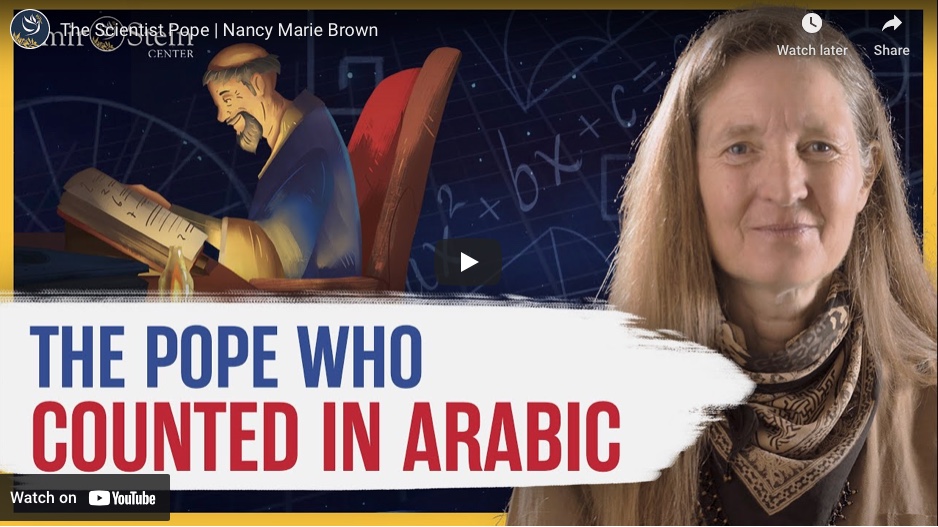
Dr. Adnan Ibrahim notes that Gerbert’s mastery of the Arabic sciences and of the Maliki School of Jurisprudence—known for its rational methodologies—enhanced his scholarly standing.
This “Scientist Pope” introduced Arabic numerals to the West, laying the groundwork for the scientific explosion that would follow centuries later in Italy. As Nancy Marie Brown demonstrates in The Abacus of the Cross, the Islamic world provided the essential tools for the rebirth of European thought.

Where did the X of the Algebraic equations X = Am + B come from?
On the TED Talk Show, Terry Moore shows where the X in algebraic equations came from.
The video’s Story Summary: This TED Talk explores the surprising origin of the mathematical symbol ‘x’ for the unknown. Terry Moore’s presentation traces the symbol’s roots through Arabic and its linguistic challenges for European translators. Discover the solution to a historical linguistic puzzle.
The Muslim Genius
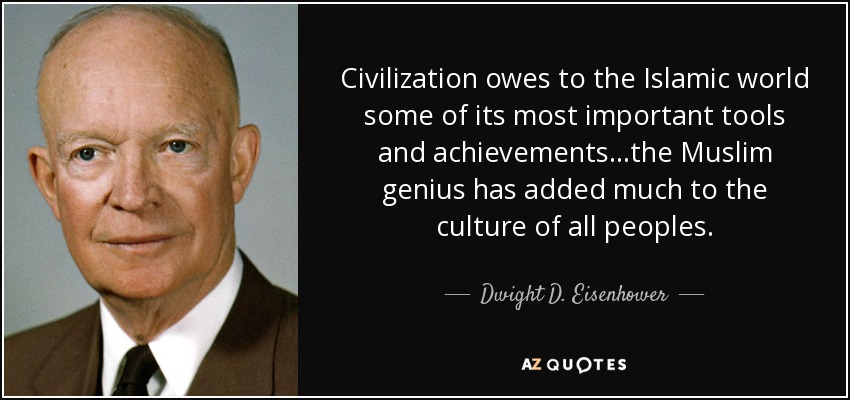
Historians and world leaders continue to recognize this legacy. Dwight D. Eisenhower, the 34th U.S. President, summarized it perfectly:
“Civilization owes some of its most important tools and achievements to the
Islamic world… the Muslim genius has added much to the culture of all peoples.”
Part II
The Emergence of a Prophet — The Birth and Early Life of Muhammad
The Formative Years: The Birth and Early Life of Muhammad
Muhammad ibn Abdullah was born in 570 CE into the Banu Hashim, a noble yet modest branch of the prestigious Quraysh tribe in Mecca. His early life was marked by profound personal loss, which arguably shaped his later empathy for the marginalized. His father, Abdullah, passed away six months before his birth, and he lost his mother, Amina, at the age of six. Following the death of his grandfather and initial guardian, Abdul Muttalib, the guardianship passed to his paternal uncle, Abu Talib, two years later.
Early Professional Life and Mercantilism
In his youth, Muhammad worked as a shepherd, a role that traditionally fostered patience and a sense of responsibility. By the age of twelve, his horizons expanded as he accompanied Abu Talib on merchant caravans to Syria. It was during a stop in Basra that Islamic tradition records a pivotal encounter with Bahira, a Christian monk, who reportedly recognized in the young Muhammad the signs of a future prophetic mission.
Trade Routes and Transregional Connections
Muhammad’s career in commerce likely spanned the vital trade routes connecting the Indian Ocean to the Mediterranean. Recent scholarship, such as Dr. John Andrew Morrow’s The Covenants of the Prophet Muhammad with the Christians of the World, suggests that Muhammad’s pre-Islamic mercantile journeys were extensive, potentially reaching as far as Egypt via the Sinai Peninsula.
Dr. John Andrew Morrow provides compelling evidence regarding the Prophet’s relationship with the Monastery of St. Catherine in Sinai. He posits that Muhammad’s familiarity with these Christian communities began during these early trading expeditions, laying the groundwork for the famous Covenant of Sinai—a document that granted protection and religious freedom to the monks, reflecting a deep-seated respect for the “People of the Book” long before the formal establishment of the Islamic state.
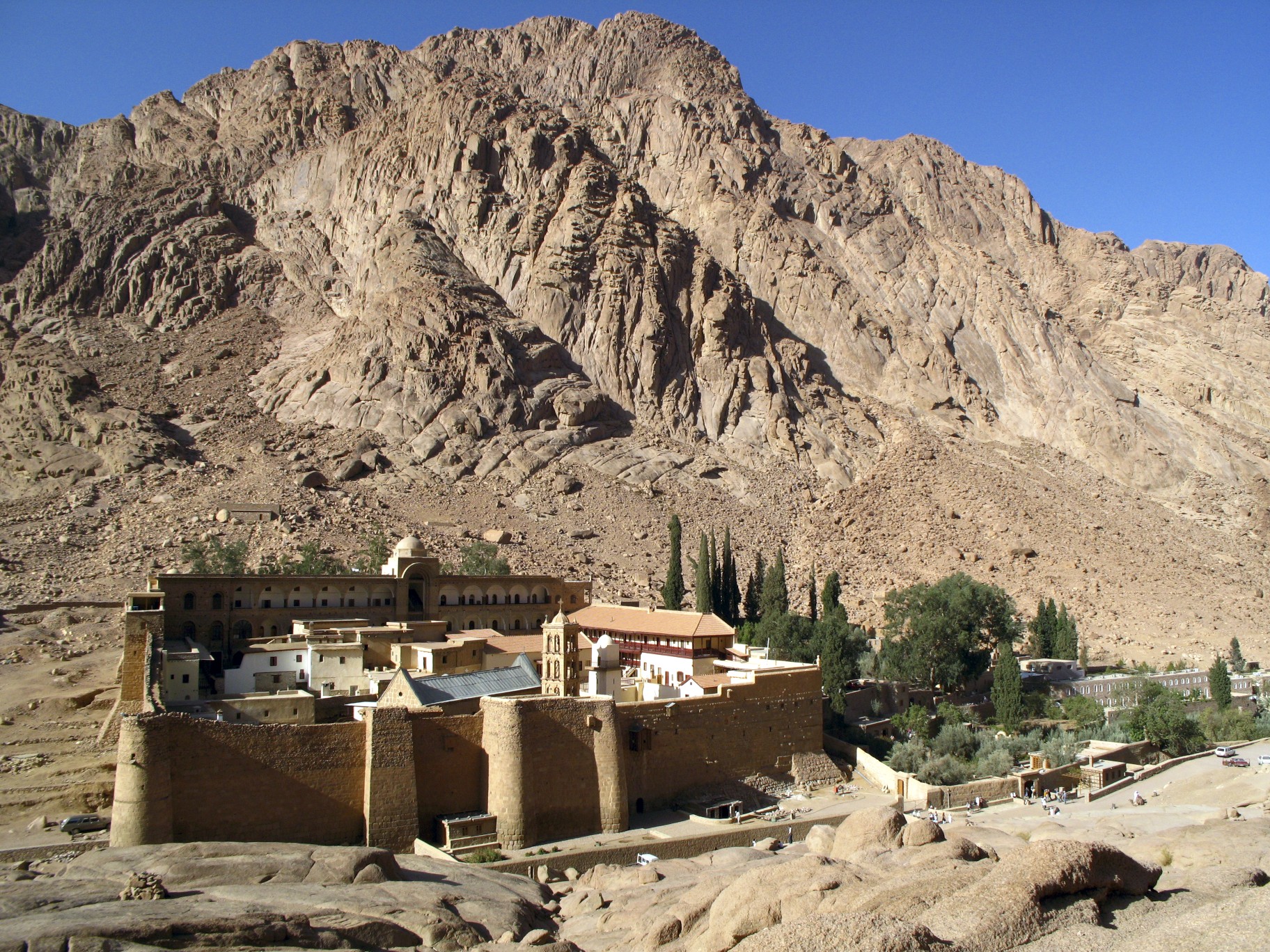 St. Catharine Monastery-
The Integrity of the “al-Ameen”: Nobility Before Revelation
Long before the first verses of the Quran were revealed, Muhammad ibn Abdullah lived a life defined by such unimpeachable virtue that he earned the title “As-Sadiq al-Ameen” (The Truthful, The Trustworthy). In a Meccan society often driven by tribal rivalry and material gain, he was the person to whom even his future enemies entrusted their most precious belongings.
The Testimony of an Adversary
The Prophet’s reputation for honesty was so widespread that it transcended the borders of Arabia. During the early Medinan period, the Byzantine Emperor Heraclius summoned a group of Arab traders to Jerusalem to inquire about this new Prophet. Among them was Abu Sufyan, then one of Muhammad’s most formidable opponents.
Despite his personal enmity, Abu Sufyan’s testimony regarding Muhammad’s noble lineage, absolute honesty, and the growing devotion of his followers led the Emperor to a startling conclusion. Heraclius famously proclaimed:
“If what you have said is true, he will soon occupy the place beneath my feet.” (Al-Bukhari)
Heraclius (Flavius Heraclius Augustus, c. 575-February 11, 641), Rome’s emperor (610-641).
The Arbiter of Peace: The Black Stone Incident
Muhammad’s inclination toward conflict resolution was evident as early as 605 CE. Following a devastating flood that damaged the Kaaba—the ancient sanctuary built by Abraham and Ishmael—four major tribes competed for the honor of placing the sacred Black Stone back into its niche.
The tension escalated to the point where the Banu Abd ad-Dar prepared for a “blood-oath” war. To avoid a massacre, the tribal elders agreed to accept the judgment of the next person to enter the sanctuary. When Muhammad appeared, a collective sigh of relief swept through the crowd; they cried out,
“It is Al-Ameen! We are satisfied with his judgment!”
In a diplomatic masterstroke, Muhammad spread his cloak on the ground, placed the stone in the center, and had a representative from each tribe lift a corner. By allowing them to carry the stone together, he leveled their honor and averted a war that could have devastated tribal relations for generations.
The Moral Struggle Against “Jahiliyyah” (Ignorance)
While Muhammad grew up in a society dominated by paganism and the brutal practice of infanticide, he remained spiritually and morally detached from these customs.
The Tragedy of Infanticide
In pre-Islamic Arabia, the birth of a daughter was often viewed as a social and economic burden. Some fathers, driven by a misplaced sense of “honor,” chose to bury their newborn daughters alive. The Quran would later condemn this atrocity with chilling precision:
“And when the girl who has been buried alive is asked: for what crime was she slain?” (Quran 81:8-9)
The Prophet’s profound empathy was famously recorded when a man confessed to burying his four-year-old daughter. The narrator told the Prophet that, as he was pushing sand over her, the Prophet’s eyes overflowed with tears upon hearing the child’s final cries of “Daddy, Daddy!” He responded with a stern warning:
“Had it not been for God’s mercy… He would have tormented you.”
A Revolutionary Shift in the Status of Women
To ensure this evil ended forever, the Prophet made the prohibition of infanticide a core condition of the Pledge of Aqaba. He transformed the social value of girls, famously promising:
“Whoever raises two daughters with kindness and compassion, he and I will be like these two [fingers] in Paradise.” (Muslim)
It is no wonder that, in His wisdom, God holds everyone accountable for their acts. Allah maintained:
“And when the girl who has been buried alive shall be asked, for what crime she was slayed.” Qur’an 81:8
The Music of the Soul: The Humane Heart of Muhammad
In the harsh, tribal landscape of pre-Islamic Arabia, life was often governed by the brutal tradition of Ghazw (raiding). During seasons of famine and drought, the vulnerable often became victims of this lawless environment. It was during one such raid that a young eight-year-old boy named Zayd ibn Harithah was torn from his mother’s arms while they were visiting family in Syria.
Bandits carried Zayd to the slave markets of Mecca, where he was purchased by the family of Khadijah. When Khadijah married Muhammad, she chose Zayd as a wedding gift for her husband. Little did anyone know that this transaction would lead to one of the most beautiful displays of human empathy in history.
A Bond Beyond Servitude
Although society regarded Zayd as property, Muhammad regarded him as a soul. He treated the boy with a level of dignity and tenderness that was entirely foreign to the era. In Muhammad’s household, the cold chains of servitude were replaced by the warm bonds of a father’s love.
Meanwhile, Zayd’s biological father, Harithah, was consumed by a grief that only a parent could understand. He spent years wandering the desert, composing agonizing poetry about his lost son:
“I weep for Zayd, not knowing his fate… Is he alive to be hoped for, or has death taken him? By God, I know not, though I ask the very clouds of his whereabouts.”
The Choice: Freedom or Love?
When news finally reached Harithah that his son was in Mecca under the care of a man named Muhammad, he and his brother rushed to the city, carrying a heavy ransom. They approached Muhammad at the Ka’ba, pleading for the boy’s release.
Unaware of the depth of Muhammad’s soul, they were stunned by his response:“Let us call Zayd and let him choose for himself. If he chooses you, he is yours without any ransom. But if he chooses me, I cannot turn away one who wishes to stay.”
Zayd was brought forth, his eyes lighting up at the sight of his father. But when the choice was put to him, Zayd did the unthinkable. He turned to Muhammad and said,
“I choose to stay with you. For I have seen in you that which would make me never choose another over you.”
His father, shocked and heartbroken, cried out,
“Zayd! Do you choose slavery over freedom? Over your own father and family?”
Zayd replied with a conviction that silenced the crowd:
“Muhammad has treated me with a kindness I have found in no other.”
The Restoration of Dignity
Muhammad, sensing the father’s pain and the boy’s devotion, did not simply keep Zayd as a servant. In a magnificent gesture of social justice and emotional intelligence, he took Zayd by the hand to the center of the Ka’ba and announced to all of Quraysh:
“Bear witness that Zayd is my son; he shall inherit from me and I from him.”
In that moment, he restored Harithah’s dignity—knowing his son was now a nobleman in the house of the “Ameen”—and he gave Zayd the highest status a man could give. From that day on, he was known as Zayd ibn Muhammad, the “Son of Muhammad,” until the formal regulations of the Quran arrived years later.
As Prof. K. S. Ramakrishna Rao noted, Muhammad was “human to the marrow of his bones,”
“Muhammad was more than honest. He was a human to the marrow of his bones, he was a human sympathy, and human love was the music of his soul… to serve humanity, to elevate humanity, to purify humanity, to educate humanity, in a word to humanize people, this was the object of his mission.”
Such a story remains the definitive proof that his mission was, above all, to humanize the world through love.
The Promotion of Universal Virtue: The Hilf al-Fudul (The Alliance of the Virtuous)
Even before the formal mission of Islam began, Muhammad was an active participant in Meccan initiatives aimed at systemic social reform. The most notable among these was the Hilf al-Fudul, an alliance formed by several Meccan clans to protect the oppressed and ensure that no traveler or resident was defrauded of their rights within the city.
1. A Pre-Islamic “Bill of Rights.”
The alliance was established in the house of Abdullah ibn Jud’an, where the signatories pledged to stand as one against any oppressor, regardless of their tribal status. For Muhammad, this was not merely a tribal pact, but a “Social Justice Fair” that prioritized human dignity over tribal lineage—a revolutionary concept in 7th-century Arabia.
2. Validation Through Revelation
A key principle of the Prophet’s mission was that “Good is Good,” regardless of its source. After the Revelation of Islam, he did not abandon these pre-Islamic ethical commitments; instead, he formally endorsed them, integrating them into the moral fabric of the new faith. The Prophet famously stated:
“I witnessed in the house of Ibn Jud’an an alliance (The Hilf al-Fudul) that I would not trade for the rarest of treasures. If I were called to participate in it now, under Islam, I would certainly respond.” (Al-Bidayah wa al-Nihayah)
3. The “Radiant Path” of Inclusivity
This endorsement establishes a vital precedent for contemporary Muslims: Universal Justice transcends religious boundaries. By honoring a pagan-era pact focused on helping the oppressed, the Prophet taught that Muslims must be the first to join any “Alliance of Virtue” that seeks to protect the weak, fight corruption, and uphold the rights of all human beings.
Part III
The Great Transformation — Quranic Principles and the Radiant Path
The Great Transformation: Revelation in the Cave of Hira
As Muhammad approached the age of forty, his soul felt an increasing pull toward spiritual solitude. Disturbed by the social injustices and the spiritual void of Meccan life, he began retreating to the Cave of Hira on Mount Noor. This period of Tahannuth (devotional reflection) served as the quiet precursor to the most significant turning point in human history.
1. The First Encounter (610 CE)
During one of these meditations in the lunar month of Ramadan, a celestial presence—the Angel Gabriel—appeared on the horizon, shaking Muhammad to his core. The Angel issued a command that would redefine human civilization: “Iqra!” (Read/Recite!)
Muhammad, known for his honesty and humility, replied in a trembling voice, “I cannot read.” The Angel embraced him with an overwhelming, breathless intensity. After this was repeated three times, the first five verses of the Quran were revealed:
“Read in the name of your Lord who created—Created man from a clinging substance. Read, and your Lord is the most Generous—Who taught by the pen—Taught man that which he knew not.” (Quran 96:1-5)
2. Crisis and Validation: The Wisdom of Khadijah
Overwhelmed by the physical and spiritual weight of the Revelation, Muhammad rushed down the mountain to his wife, Khadijah. Shaking with awe, he cried, “Cover me! Cover me!” In a display of superb emotional intelligence, Khadijah wrapped him in a cloak and held him until his terror subsided.
When he questioned his own experience, fearing for his well-being, Khadijah provided a masterful validation of his character. Her words established the Ethical Baseline for the Prophetic mission:
“Never! By Allah, God will never disgrace you. You keep good relations with your kith and kin, you speak the truth, you help the weak and the helpless, you serve your guests generously, and you assist those afflicted by calamity.” (Shamail, p. 398)
3. The Bridge to the Abrahamic Legacy
Seeking a theological framework for the experience, Khadijah took Muhammad to her cousin, Waraqah ibn Nawfal, a scholar of the Christian scriptures. Upon hearing the account, Waraqah recognized the signs immediately:
“This is the same ‘Namus’ (the Great Spirit of Revelation) who was sent to Moses. I wish I were young and strong when your people drive you out!”
Stunned by this geopolitical forecast, Muhammad asked, “Will they truly drive me out?” Waraqah replied with the somber reality of reform: “Yes. No man has ever brought what you have brought without being met with hostility. If I live to see that day, I will support you with all my might.”
https://islamstory.com/ar/artical/972/موقف-ورقة-بن-نوفل-من-رسول-الله
4. The Philosophy of the “Pen.”
It is a profound irony that the first word revealed to an unlettered Prophet was “Read!” By establishing the “Pen” as the primary tool of the new faith, Islam signaled its Intellectual Foreign Policy from its very first breath. This mandate for knowledge would eventually bridge the gap between the Arabian desert and the European Renaissance.
Leadership Lesson: The Strategic Partner
Validation in Crisis: The Prophet Muhammad’s first instinct during his greatest vulnerability was to seek counsel. Khadijah’s response demonstrates that a leader’s success is often tied to a “Strategic Partner” who can assess their past virtues to validate their future mission.
The Finality of Islam: Submission as a Universal Reality
The final Revelation of Islam began with the transformative command to “Read,” unfolding periodically over twenty-three years to form the Holy Quran. In the Quranic worldview, “Islam” (Submission) is not presented as a new religion, but as the primordial faith and the common thread connecting all prophets.
The Quran asserts that figures such as Adam, Noah, Abraham, Moses, and Jesus were all Muslims—meaning those who surrendered their will to the Creator—and were sent as beacons of guidance to lead their respective communities toward the worship of the One God.
1. The Intellectual Revolution
This Revelation catalyzed a massive shift in human consciousness. By prioritizing reason and the “Philosophy of the Pen,” Islam sparked a revolution in rationality, spirituality, commerce, and science. This era, known as the Islamic Golden Age, transformed the Near East and beyond into a global center for art and innovation.
2. The Seeds of the Renaissance
It was from the intellectual soil of this Golden Age that the seeds of the European Renaissance were sown. While medieval Europe was often characterized by a rejection of empirical reason in favor of dogma—a period frequently described as the Dark Ages—Islamic civilization preserved and expanded upon the knowledge of the ancients. This transmission of science and philosophy provided the necessary foundation for Europe’s eventual intellectual rebirth.
The Finality of Islam, Submission to God
Thus began Islam’s final (Submission) Revelation with the word “read,” and the Revelation continued to occur periodically over 23 years, culminating in the formation of the Holy Qur’an.
The Holy Qur’an states that the name of the religion is Islam, wholesome submission to God, and that all the previous prophets, including Adam, Noah, Abraham, Moses, Jesus, and other prophets of the Israelites, were muslims, submitters, and were sent to guide their people to obey God Almighty. The text of one of these verses follows:
As a result of this Revelation, rationality, spirituality, trade, science, and art thrived in the region, creating the Golden Age of Islam. Out of this Golden Age of Islam emerged the seeds of the Renaissance, marking the beginning of Europe’s escape from the Dark Ages, during which the church rejected reason and knowledge.
The Quranic Paradigm: Principles of Universal Flourishing
The Quran is not merely a book of rituals; it is a comprehensive manifesto for human flourishing. It espouses a set of foundational principles that mandate rationality, spiritual depth, civil liberty, and scientific inquiry. Rather than existing as abstract theories, these values were dynamically embodied in the practical life and leadership of the Prophet Muhammad ﷺ.
Below are the core pillars that define the “Radiant Path” of the Quranic message:
A. The Inclusivity of the Abrahamic Legacy
The Holy Quran defines “Islam” not as a partisan identity, but as a state of wholesome submission to the Creator—a primordial faith shared by all messengers throughout history. According to the Quranic worldview, the prophets Adam, Noah, Abraham, Moses, and Jesus were all Muslims (submitters) sent to guide their respective communities toward divine obedience. This theological continuity is explicitly mandated in the scripture:
“Say: ‘We believe in Allah and what has been revealed to us and what was revealed to Abraham, Ishmael, Isaac, Jacob, and the Tribes; and in what was given to Moses, Jesus, and the prophets from their Lord. We make no distinction between any of them, and to Him we [fully] submit.'” (Quran 3:84)
Reflecting on the profound openness of this verse, Dr. Garry Wills, a recipient of the Pulitzer Prize—the most prestigious award in American journalism—elaborated on the expansive nature of the Islamic foundation:
“That is a very inclusive creed… When one asks: If this is such an inclusive founding document of the religion, what is it that people object to?”
Dr. Wills’ observation highlights a critical disconnect between the Quran’s inclusive mandates and the modern misconceptions often held about the faith. For a deeper exploration of this scholarly perspective, see his discussion at the Chicago Humanities Festival.
considered the most prestigious journalism award in the United States.
B. The Universal Horizon: Reclaiming the Quran’s Relevance for All
The Quran identifies itself not as a partisan text for a specific group, but as a universal manual for human flourishing. Its address frequently transcends religious labels, speaking directly to the “Family of Man” and offering a framework for guidance, healing, and ethical clarity.
1. A Mandate for Global Guidance
The scripture describes its Revelation as a “Decisive Authority” (Furqan) intended for the entirety of the human species, providing the criteria necessary to distinguish truth from falsehood:
“Ramadan is the month in which the Quran was revealed as a guide for humanity with clear proofs of guidance and the decisive authority.” (Quran 2:185)
Furthermore, the Quran presents its teachings as a spiritual and psychological “cure,” addressing the universal human condition:
“O humanity! Indeed, there has come to you instruction from your Lord, a cure for what is in the hearts, a guide, and a mercy for the believers.” (Quran 10:57)
2. The Merit of Faith and Action
Perhaps the most profound evidence of the Quran’s universalist ethics is its explicit guarantee that divine reward depends on faith and righteous conduct, rather than on religious tribalism. The Quran ensures that Christians, Jews, and others who strive toward God and goodness are held in high esteem:
“Indeed, the believers, the Jews, the Christians, and the Sabians—whatever they truly believe in Allah and the Last Day and do good—will have their reward with their Lord. And there will be no fear for them, nor will they grieve.” (Quran 2:62)
3. The Shared Abrahamic Language
Reflecting on this shared spiritual heritage at the Chicago Humanities Festival, Pulitzer Prize winner Dr. Garry Wills shared a perspective that bridges the gap between traditions:
“As a Christian, I consider Jesus a Prophet of the one God. So, as a Christian, I worship Allah.”
This statement underscores the “Radiant Path’s” core truth: that the word Allah is not a proprietary name for a Muslim god, but the Arabic term for the one Creator worshipped by Jesus and the prophets before him.
C. The Hermeneutic Elasticity: A Message for All Eras
One of the most remarkable features of the Quran is its enduring relevance across diverse temporal and cultural contexts. While the Quran’s specific linguistic structure and verses are preserved and fixed, their thematic application is highly elastic, allowing the message to resonate with the unique challenges of each age.
1. The “Colors of Manifestation.”
As Dr. Abdul Wahid Wajih explains, the Quran was revealed in a “clear Arabic tongue” (Quran 26:195). In the science of linguistics, a “tongue” is not merely a set of words, but an expression of the “colors of manifestation”—the literature, poetry, customs, and evolving traditions of a society.
2. Fixed Text, Evolving Meaning
This linguistic depth ensures that the Quranic message is not a static artifact of the 7th century. Instead:
♦ Fixity of Text: The divine words remain unchanged to preserve the integrity of the Revelation.
♦ Flexibility of Meaning: The application of these words adapts to the evolving “space and circumstance” of human history.
3. A Living Guidance
This principle proves that Islam is not a “stiff” or “outdated” system. Because the Quranic language is deep enough to encompass shifting human realities, it serves as a dynamic guide for a 21st-century scientist just as effectively as it did for a 7th-century traveler. The “Radiant Path” is, by definition, one that moves with humanity as it progresses.
D. The Science of Balaghah: Tailoring the Message to the Recipient
A fundamental principle of the Quranic methodology is the mandate to deliver strategically and empathetically. As Dr. Abdul Wahid Wajih elucidates, Allah commanded the Prophet Muhammad ﷺ to disseminate the message using the imperative Ballegh (Deliver), derived from the root Al-Balaghah.
1. The Rule of Contextual Matching
In Islamic linguistic science, Balaghah is defined as “matching the speech to the requirements of the context and the status of the listener” (Mutabaqat al-kalam li-muqtada al-hal). This means the delivery method is just as critical as the message itself. To “deliver” effectively, one must move beyond mere recitation and ensure that the discourse resonates with the recipient’s specific intellectual, cultural, and social reality.
2. The Requirement of Cultural Competence
This rule establishes that anyone introducing Islam must possess deep cultural and technological competence. Effective engagement requires a profound understanding of:
♦ Social and Political Norms: The specific governance and community structures of the audience.
♦ Technological Literacy: Using the tools and language of the contemporary era to make the message accessible.
♦ Traditional Customs: Respecting the heritage and lived experiences of a people to find “common ground.”
3. The Risk of Poor Presentation
When Islam is introduced through rigid or culturally alien criteria, it risks being rejected not due to its internal truth but due to a failure in communicative ethics. A presentation that ignores the recipient’s ability to assimilate knowledge can lead to a tragic outcome: the rejection of the Divine message because the “messenger” was not understood.
This danger was poignantly highlighted by Ali ibn Abi Talib (may Allah be pleased with him), who cautioned:
“Address people in a way they can understand. Would you like for Allah and His Messenger to be rejected [due to your poor delivery]?” (Sahih al-Bukhari)
Leadership Lesson: The Ethics of Accessibility
Strategic Communication: The Prophet Muhammad ﷺ demonstrated that truth is never “one size fits all” in its delivery. By prioritizing the listener’s status, he ensured that Islam remained a living, breathing guidance that honors human diversity rather than a static dogma that ignores it.
E. The Evolution of Balaghah: The Science of Impactful Delivery
The divine command in Surah al-Ma’idah (5:67)—to “deliver” (Ballegh) the message—prompted early Islamic scholars and linguists to develop the Science of Balaghah (the Art of Eloquent Delivery). This discipline was not merely about grammar, but about the psychological and social effectiveness of communication.
1. The Intellectual Pioneers
The foundation of this science was laid by several legendary figures:
♦ Abu Ubaidah Ma’mar al-Muthanna (d. 209 AH): A towering linguist whose work, Majaz al-Quran, began the process of analyzing the Quran’s metaphorical and rhetorical depth.
♦ Al-Jahiz (d. 255 AH): In his seminal work, Al-Bayan wa al-Tabyin (The Art of Eloquence and Clarification), he revolutionized the field, earning the title of the “Master of Balaghah” for his focus on how language must adapt to the “status of the listener.”
♦ Abd al-Qahir al-Jurjani (d. 471 AH): Through his masterpieces, Asrar al-Balagha (The Secrets of Eloquence) and Dala’il al-I’jaz (The Proofs of Inimitability), he codified the relationship between word, meaning, and context.
2. The Vitality of Realism
The “Golden Rule” of Balaghah mandates that religious discourse must be in constant contact with the evolving reality of civilization. This ensures the realism and vitality of Islam, allowing the faith to remain a living guidance rather than a static artifact. By tailoring the delivery to the recipient’s political, social, and technological background, the message remains accessible and transformative.
See, https://fajirsa.blogspot.com/2017/11/blog-post_44.html
3. The Crisis of Stagnation: Tradition vs. Transformation
A critical question remains: if the Quranic methodology demands that communication evolve with the times, why has this principle been neglected in modern religious discourse? We currently face a significant disconnect:
♦ Anachronistic Rulings: Many contemporary scholars attempt to impose 9th-century interpretations onto 21st-century challenges—a direct violation of the rule of “matching speech to context.”
♦ The Accusation of Deviance: Modern scholars who attempt to use the “tongue of today” are often unfairly accused of deviance simply because they do not mirror the specific fatwas of the medieval era.
♦ Human Heritage vs. Divine Revelation: Thousands of man-made fatwas have been conflated with “Islamic Heritage,” overshadowing the primary sources. For Islam to regain its intellectual stature, we must return to the Quran and the authentic Prophetic traditions that align with its universal values.
Leadership Lesson: The Mandate of Relevance
Cognitive Accessibility: The Science of Balaghah teaches that a message that cannot be understood by its audience has failed in its purpose. True piety requires the courage to innovate in delivery, ensuring that the “Radiant Path” remains illuminated for every generation.
The Consequence of Stagnation: Reclaiming Quranic Relevance
The author contends that the modern departure from the Quranic principle of Contextual Delivery (Balaghah) is a primary catalyst for the widening chasm between the Quranic methodology and the lived realities of both Muslims and the global community.
This abandonment of intellectual flexibility has contributed to a multifaceted decline. By adhering rigidly to fatwas and interpretations formulated for the socio-political landscapes of the 9th and 10th centuries, contemporary discourse fails to address the unique ethical and technological complexities of the 21st century. When a living faith is presented through the lens of a bygone environment, it risks becoming an alienating artifact rather than a transformative guide. To reverse this temporal and spiritual stagnation, Muslims must return to a dynamic engagement with the primary texts—prioritizing the universal wisdom of the Quran over the historical limitations of human-made tradition.
F. The Mandate of Absolute Justice: A Universal Baseline
Justice is not merely a recommendation in the Quranic worldview; it is an “outstanding command” that serves as the moral compass for both private life and foreign policy. The Quran demands an uncompromising commitment to truth that transcends personal bias, familial loyalty, or social status.
1. Justice Above Self-Interest
The Quran mandates a standard of “Blind Justice” in which the truth must be upheld, even if it entails personal or familial disadvantage. This establishes that the “Radiant Path” is rooted in unwavering integrity:
“O believers! Stand firm for justice as witnesses for Allah, even if it is against yourselves, your parents, or close relatives. Be they rich or poor, Allah is best to ensure their interests. So, do not let your desires cause you to deviate from justice. If you distort the testimony or refuse to give it, then know that Allah is certainly All-Aware of what you do.” (Quran 4:135)
2. The Triad of Social Excellence: Justice, Goodness, and Generosity
The Quranic framework for a healthy society is built on three positive pillars and the rejection of three destructive behaviors. This verse is often considered the “Constitutional Baseline” of Islamic ethics:
“Behold, God enjoins justice, and the doing of good, and generosity toward one’s fellow people; and He forbids all that is shameful, and all that runs counter to reason, as well as envy; He exhorts you repeatedly so that you might bear all this in mind.” (Quran 16:90)
3. Justice as the Repulsion of “Fasad” (Corruption)
By commanding justice and prohibiting that which “runs counter to reason,” the Quran positions Rationality as the guardian of justice. Injustice is often the result of irrational desires or tribal envy. By following this mandate, a society protects itself from the “cracks” and “civil wars” mentioned in your previous sections on Amn (Security).
G. Cultivating “Taqwa”: The Pursuit of God-Consciousness and the Rejection of Discord
A central objective of the Quranic message is to draw humanity toward the Divine presence while distancing them from the destructive influences of “Satan”—the symbolic personification of ego, discord, and ethical decay. This spiritual transformation is achieved through the cultivation of Taqwa.
1. The Multidimensional Nature of Taqwa: The Ethics of Harm Prevention
Mentioned 258 times in the Quran, Taqwa is a sophisticated ethical framework designed to prevent the emergence of hate and the escalation of enmity. While often translated as “God-consciousness” or “Piety,” its root meaning (waqa) implies “protection” or “shielding.” In the “Radiant Path” of the Quran, Taqwa acts as a dual-layered shield:
2. The Vertical Dimension: Spiritual Integrity
On this level, Taqwa is the constant, mindful adherence to the Creator’s guidance. It is the internal awareness that prevents a person from deviating into arrogance or self-worship. By acknowledging a higher Divine Authority, the individual humbles their ego, which is the primary source of tribalism and religious prejudice.
3. The Horizontal Dimension: Social Amn (Security)
On the social level, Taqwa is a mandate for Active Non-Aggression. It requires the believer to restrain themselves from inflicting harm, hostility, or injustice upon any member of humanity or the natural world. It is the “Moral Brake” that stops a person from responding to hate with hate. As the Prophet Muhammad taught, the true person of Taqwa is the one from whose “tongue and hand” others are safe.
By practicing Taqwa, a Muslim becomes a guardian of Amn (universal security), ensuring that their presence in society reduces friction and fosters reconciliation rather than fueling enmity.
4. Nature as a Gateway to Mindfulness
The Quran teaches that Taqwa is materialized by opening the mind to the “Signs” (Ayat) of the universe. By observing the cosmos—the galaxies, the vast oceans, the intricate world of birds and plants, and the miracle of human biology—a believer develops a deep sense of gratitude and humility. This mindfulness acts as a shield against the “Satanic” impulses of arrogance and greed.
5. Scriptural Directives on Mindfulness and Cooperation
“O believers! Be mindful of Allah (at-taqwa) and let every soul look to what [deeds] it has sent forth for tomorrow… certainly Allah is All-Aware of what you do.” (Quran 59:18)
“Cooperate with one another in goodness and righteousness (at-taqwa), and do not cooperate in sin and transgression.” (Quran 5:2)
6. Countering the “Satanic” Narrative of Scarcity
The Quran contrasts the Divine promise of abundance with the “Satanic” psychological tactic of fear. While the ego (Satan) promotes a narrative of scarcity to incite stinginess and exploitation, the Creator invites humanity to a path of generosity and forgiveness:
“The Devil threatens you with the prospect of poverty and bids you to shameful deeds of stinginess, while Allah promises you forgiveness and great bounties from Him.” (Quran 2:268)
7. Protecting the “Amn” of Society
Satan is described as a “sworn enemy” not merely in a mystical sense, but as a force of social destabilization. By inciting “evil and indecency,” these impulses threaten the Amn (security) of the community. The Quranic antidote is a return to what is “lawful and wholesome” on the earth:
“O humanity! Eat from what is lawful and good on the earth, and do not follow Satan’s footsteps… He only incites you to commit evil and indecency.” (Quran 2:168-169)
Leadership Lesson: The Shield of Integrity
Internal Security: The Prophet Muhammad taught that the greatest “Jihad” is the internal struggle to maintain Taqwa. A leader who is at peace with the Creator—and has mastered their own base desires—becomes a source of security (Amn) for everyone around them.
[sta_anchor id="choice" /]H. The Sovereignty of Choice: Freedom as a Divine Mandate
The Quranic paradigm establishes that freedom—encompassing belief, expression, and economic enterprise—is far more than a modern civic luxury; it is a foundational divine mandate. Within the “Radiant Path,” the integrity of faith depends on human agency. The Quran asserts that spiritual conviction is only valid and meritorious when it is the uncoerced product of a conscious, independent heart.
[sta_anchor id="compultion" /]1. The Axiom of Non-Compulsion
The Quranic methodology rejects any form of religious or intellectual imposition, famously declaring: “There shall be no compulsion in religion” (Quran 2:256). This establishes that the “Domain of Faith” belongs exclusively to the individual’s conscience, placing it beyond the reach of state or tribal coercion.
[sta_anchor id="freedom" /]2. Freedom as the Basis of Accountability
Because God has granted humanity the capacity for reason and choice, freedom becomes the baseline for moral accountability. Without the liberty to choose, the concept of “goodness” or “piety” would lose its meaning. By protecting the right to differ, the Quran ensures that the society built by the Prophet Muhammad ﷺ was a partnership of the free, rather than a hierarchy of the forced.
[sta_anchor id="human" /]
a. The Primacy of Human Agency
The Quran grounds human rights in the fundamental gift of free will. Allah has provided guidance but left the ultimate decision to the individual’s conscience:
“Indeed, We guided him to the way, be he grateful or ungrateful.” (Quran 76:3)
This verse underscores that God created the human being inherently free. By allowing for the possibility of “ingratitude,” the Quran protects the sanctity of choice. It signals that a society built on the Quranic methodology must be one where no individual is forced into a belief system, as coerced submission contradicts the very essence of Taqwa (God-consciousness).
[sta_anchor id="trade22" /]b. Freedom of Expression and Trade
Building on this foundation, the Quranic methodology encourages:
♦ Intellectual Expression: The mandate to “Read” and “Proclaim” the truth implies a society in which ideas are openly shared.
♦ Economic Liberty: By endorsing fair trade and prohibiting exploitative usury, the Quran promotes a free and ethical marketplace.
Leadership Lesson: The Freedom of the Heart
Non-Compulsion: The Prophet Muhammad ﷺ demonstrated that a leader’s role is to illuminate the path, not to force people to walk it. By protecting the freedom of both supporters and detractors, he ensured that the community was a partnership of the willing.
[sta_anchor id="collaboration" /]I. The Global Social Contract: Ta’arafu and the Ethics of Non-Harm
The Quran provides a definitive framework for international relations and pluralistic coexistence. It shifts the human narrative from competition and conflict to mutual discovery and functional partnership, as researcher Hasan al-Maliky points out.
“O humanity! Indeed, We created you from a male and a female and made you into peoples and tribes so that you may (ta’arafu) get to know one another. Undoubtedly, the most noble of you in the sight of Allah is the most harmless among you. Allah is truly All-Knowing, All-Aware.” (Quran 49:13)
[sta_anchor id="tolerance" /]1. Beyond Tolerance: The Science of Ta’arafu
The term Ta’arafu transcends simple “knowledge.” In its profound linguistic sense, it means “intentional learning for the purpose of collaboration.” It is a mandate to build and beautify life (I’mar al-Ard) through the exchange of wisdom and resources. This Quranic standard establishes that diversity is not a flaw of nature but a deliberate divine design intended to foster innovation and cooperation.
[sta_anchor id="scope" /]2. The Scope of Limitless Collaboration
Under the principle of Ta’arafu, collaboration among nations and communities is limitless. It provides a theological basis for:
♦ Diplomatic and Resource Exchange: Sharing strengths to address global scarcities.
♦ Technological and Industrial Synergy: Advancing human civilization through shared research and development.
♦ Environmental Stewardship: Protecting the common ecology that sustains all human life.
♦ Cultural Intelligence: Learning the social customs and traditions of others to foster empathy and prevent the “fear of the other.”
[sta_anchor id="harm" /]3. Meritocracy of Non-Harm over Tribalism
The verse concludes by dismantling the “Us vs. Them” mentality. It asserts that nobility is not found in race, lineage, or national origin, but in the prevention of harm and ethical conduct (Taqwa). This establishes a global meritocracy in which the most “noble” nation or individual is simply the one that causes the least harm—the one that contributes the most good while ensuring that its presence does not injure the human family.
Leadership Lesson: The Strength of Diversity
Collaborative Diplomacy: The Prophet Muhammad ﷺ demonstrated that a leader’s greatness is found in their ability to bridge divides. By treating different tribes and nations as partners in Ta’arafu, he transformed a fragmented world into a unified “Family of Man,” in which the highest honor was reserved for those most committed to the safety and security of others.
[sta_anchor id="mercy" /]
[sta_anchor id="mercy" /]J. The Mandate of Mercy: A Restorative Universal Force
Mercy is the gravitational center of the Quranic message. Its manifestation is the primary lens through which the Creator interacts with His creation, establishing a standard for all human relationships. As the Oxford World’s Classics edition of the Quran elucidates, “Bestowing mercy is inherent in the Divine Nature.”
This mercy is manifested through I’mar al-Ard (the building and sustaining of the earth) and the Revelation of Scriptures, designed to serve as holistic healing for humanity’s psychological and social ailments.
[sta_anchor id="divine" /]1. The Universal Compassion of the Divine
The Quran identifies the Creator’s relationship with the “Family of Man” as one defined by profound tenderness and care:
“Verily, Allah is, for all humanity, Full of Compassion and Most Merciful.” (Quran 22:65)
[sta_anchor id="spiritual" /]2. Revelation as Spiritual Therapeutics
The Quran presents itself as a form of spiritual medicine, designed to heal the “chest”—the seat of the human heart and conscience—from the diseases of hate, arrogance, and despair:
“O humanity! Indeed, there has come to you instruction from your Lord, a healing for what is in the hearts, and a guide and mercy for the believers.” (Quran 10:57)
[sta_anchor id="healing" /]3. The Radiant Path of Healing
The “Radiant Path” is essentially a journey of recovery and restoration. The Quran is not a book of burdens, but a source of systemic and individual relief:
“And We send down the Quran that which is a healing and a mercy for the believers.” (Quran 17:82)
[sta_anchor id="grace" /]K. The Dual Dimensions of Mercy: Proactive and Reactive Grace
In the Quranic paradigm, mercy (Rahmah) transcends the narrow classical definitions of “pity” or “clemency” extended to an offender. While Reactive Mercy—forgiveness granted after a transgression—is a cornerstone of Islamic law, the Quran also establishes Proactive Mercy as a foundational social mandate.
[sta_anchor id="proactive" /]1. Mercy as a Proactive Social Benediction
Proactive mercy is a divine gift and a state of being that precedes any conflict. It is the baseline of human interaction. This concept suggests that mercy is an inherent “benediction” from the Creator, designed to empower humanity to deal with one another with preemptive kindness, dignity, and care.
As Dr. Saeed Khan (Associate Professor at Wayne State University) articulated in his landmark presentations—including his dialogues at the Vatican and subsequent analysis on CNN—this form of mercy is the “social glue” that prevents harm. It is the active pursuit of the other’s well-being before any harm has occurred.
[sta_anchor id="clemency" /]2. The Shift from Clemency to Compassion
Under this framework:
♦ Reactive Mercy is restorative (healing the past).
♦ Proactive Mercy is constructive (building the future).
By emphasizing proactive mercy, the “Radiant Path” encourages believers to be “unharmful” by nature, viewing every human encounter as an opportunity to manifest the Divine attribute of Ar-Rahman (The Infinitely Compassionate).
Leadership Lesson: Preemptive Grace
Strategic Compassion:The Prophet Muhammad ﷺ demonstrated that a leader’s greatest tool is not the power to punish, but the capacity to inspire a culture of proactive mercy. By establishing a society rooted in mutual grace, he reduced the need for reactive justice.
[sta_anchor id="dimensions" /]L. The Dimensions of Divine Grace: Ar-Rahman and Ar-Rahim
Islamic scholarship provides a profound distinction between the two primary attributes of Divine Mercy: Ar-Rahman (The Lord of Infinite Mercy) and Ar-Rahim (The Giver of Specific Mercy). Together, they represent an exhaustive and boundless system of grace that sustains all of existence.
[sta_anchor id="al-rahman" /]1. Ar-Rahman: The Universal Beneficence
The attribute of Ar-Rahman denotes the existential and cosmic mercies granted to all of creation without exception. This is “Proactive Mercy” on a universal scale. It encompasses the foundational systems required for life to persist and flourish:
♦ Cosmic Regulation: The sun provides precise warmth for survival; the atmospheric pressure allows for respiration and communication; and the ozone layer serves as a protective shield against lethal radiation.
♦ The Hydrological Cycle: The movement of winds carrying moisture from the oceans to revive “dead land,” producing the vast diversity of crops and vegetation that sustain the human family.
♦ The Moral Architecture: The designation of the Day and Night for labor and rest, and the establishment of the ultimate accountability of Heaven and Hell to incentivize virtue and deter the spread of “Fasad” (corruption).
[sta_anchor id="al-rahim" /]2. Ar-Rahim: The Personal and Situational Grace
While Ar-Rahman encompasses the macro-systems of the universe, Ar-Rahim denotes the distinctive, circumstantial, and intimate mercies tailored to the individual. This category of grace is so vast that it can never be fully quantified:
♦ Biological Uniqueness: The specific design of an individual’s features—their hair, eyes, and the “miracle of the self.”
♦ Providential Protection: The “near misses” in life, such as escaping injury in an accident or surviving a natural disaster.
♦ The Instinct of Compassion: The profound, selfless bond between a mother and her newborn, and the innate ability of an infant to seek nourishment.
♦ Human Synergy: The diverse ways in which humans serve and support one another, creating a web of social security that mirrors Divine care.
[sta_anchor id="path" /]M. The “Radiant Path” of Gratitude
The Quran reminds humanity that these favors are so integrated into our existence that we often take them for granted. The goal of the “Radiant Path” is to move from unconscious consumption of these mercies to conscious gratitude. By recognizing the universal (Ar-Rahman) and the personal (Ar-Rahim), the human heart becomes a mirror of this mercy, leading to a life that is inherently “unharmful” and proactively kind.
“And if you were to count the blessings of Allah, you could never encompass them. Indeed, humanity is [often] deeply unjust and ungrateful.” (Quran 14:34)
[sta_anchor id="soul" /]
N. The Ontological Sanctity of the Human Soul
The Quranic paradigm establishes that every human life is a sacred trust, protected by a divine mandate. Within this framework, no soul may be taken except through the rigorous and transparent application of due process within a just legal system. The Quran elevates the protection of life from a tribal obligation to a universal ethical imperative:
“For this reason, We decreed upon the Children of Israel that whoever kills a human being—unless it be in [the course of justice for] murder or for spreading corruption on earth—it shall be as if he had killed all of humanity. And whoever saves one life, it shall be as if he had saved the life of all humanity.” (Quran 5:32)
[sta_anchor id="life" /]1. The Interconnectedness of Life
This verse introduces a profound “Moral Mathematics”: because every human being carries the same spark of divine creation, an assault on one is an assault on the very concept of humanity. Conversely, saving a single life is regarded as preserving the entire human species. This principle effectively eliminates the “us vs. them” mentality that often fuels the “shadow of the sword.”
[sta_anchor id="gravity" /]2. The Gravity of Accompliceship
The Prophet Muhammad ﷺ reinforced this sanctity by warning that even the most indirect contribution to violence carries an immense spiritual cost. He established a zero-tolerance policy for those who facilitate the shedding of blood:
“Whoever assists in the shedding of a person’s blood, even by half a word, shall meet God with this written between his eyes: ‘Despairing of the Mercy of God.’” (Ibn Majah)
By warning that even “half a word” of incitement leads to spiritual bankruptcy, the Prophet placed a heavy responsibility on the tongue and the pen. This teaching serves as a timeless deterrent against the propaganda and hate speech that lead to the “Fasad” (corruption/disruption) mentioned in earlier sections.
Leadership Lesson: The Guardian of Life
The Ethic of Preservation: The Prophet Muhammad ﷺ demonstrated that the primary duty of a leader is the preservation of life (Amn). By treating the loss of one individual as a global tragedy, he ensured that his administration was governed by compassion rather than the expediency of war.
[sta_anchor id="state" /]
O. The Sovereignty of Conscience: The Quranic Framework for the Separation of Religion and State
The principle of the separation of religion and state is a cornerstone of modern liberty, famously enshrined in the “Establishment Clause” of the U.S. Constitution. This separation arose from a historical necessity to prevent government interference in the sacred domain of personal faith—a reaction to the “Dark Ages” of Europe, in which the fusion of ecclesiastical power and monarchical rule led to inquisitions, the suppression of science, and devastating religious wars.
Remarkably, the Quranic paradigm established this distinction from its inception. By identifying faith as a matter of the heart, Islam strictly prohibits the legislative or executive branches of government from interfering in the spiritual affairs of the citizenry.
[sta_anchor id="prohibition" /]1. The Divine Prohibition of Coercion
The Quran explicitly restricts the authority of the Prophet—and by extension, any state—from imposing belief by force. Guidance is a divine offering, not a state mandate:
“Had your Lord so willed, all people on earth would have certainly believed, every single one of them! Would you then force people to become believers?” (Quran 10:99)
This verse establishes that diversity of belief is part of the Divine Plan. Because faith is only valid when it is an unforced expression of inward satisfaction, the state’s use of its machinery to impose religious uniformity is characterized as an act of tyranny.
[sta_anchor id="law" /]2. Freedom as a Non-Negotiable Rule of Law
As Dr. Adnan Ibrahim elucidates, the principle of “No Compulsion in Religion” (Quran 2:256) is not a mere suggestion; it is a foundational rule of human existence that safeguards universal rights. Dr. Ibrahim notes:
“Embracing faith is based on heartfelt surrender. Why? Because ‘the truth stands out clearly from falsehood.’ God’s religion is grounded in evidence. If someone says, ‘I will choose your faith for you,’ that is unjustified tyranny. One must take responsibility for one’s own choice.”
By declaring that the state has no “watchman” or “guardian” role over the souls of the people (Quran 6:107), the Quran effectively limits the executive authority to managing civic order, leaving the spiritual “accounting” exclusively to the Creator (Quran 13:40).
(Arabic) https://youtu.be/54jnQ6M3-Dk
(Arabic) https://youtu.be/AGu_KUrdShg
[sta_anchor id="reminder" /]3. The Prophet as a Reminder, Not a Controller
Multiple Quranic passages reiterate that the Prophetic mission—and the legitimate Islamic authority—is limited to Delivery (Balaghah), not Compulsion (Jabbar).
♦ The Constitutional Boundary: “So remind, [O Muhammad]; you are only a reminder. You are not there to compel them to believe.” (Quran 88:21-22)
♦ The Limitation of Oversight: “We have not sent you [O Muhammad] to be their keeper, governing their activities.” (Quran 4:80)
♦ The Responsibility of the Individual: “Whoever chooses to be guided is for their own good… You are not a keeper over them.” (Quran 39:41)
[sta_anchor id="napo" /]The Napoleonic Recognition

These noble principles of rational governance and religious liberty once impressed Napoleon Bonaparte, who envisioned a future where such Quranic values could form the basis of a global regime:
“I hope the time is not far off when I shall be able to unite all the wise and educated men of all the countries and establish a uniform regime based on the principles of the Qur’an, which alone are true and can lead men to happiness.” (Bonaparte Et Islam, Paris, 1914)
Leadership Lesson: The Secular-Sacred Balance
Civic Stewardship: The Prophet Muhammad ﷺ demonstrated that a just leader is a “Messenger” of truth, not a “Manager” of souls. By separating the state’s duty to provide security (Amn) from the individual’s right to seek God, he created a pluralistic society that flourished through voluntary commitment rather than forced compliance.
[sta_anchor id="socio-economic" /]Evaluating the Risk: The Socio-Economic Counter-Narrative
The Prophet Muhammad ﷺ was fully cognizant that his mission would provoke the ire of the Meccan oligarchy. To grasp the magnitude of this confrontation, one must recognize that Mecca was the undisputed commercial and spiritual nerve center of Arabia. As Mark Graham elucidates in How Islam Created the Modern World:
“Mecca owed its prosperity to its shrine, the Ka’ba, where the myriad gods of the various Arab tribes shared space.”
[sta_anchor id="creed" /]1. The Threat to Capital and Creed
The central question for the Meccan elite was one of survival: Would Muhammad’s message liquidate the fortunes of the wealthy? By advocating for absolute monotheism, the Prophet threatened the very “religious tourism” economy that Mecca depended on. Furthermore, his message struck at the heart of tribal “honor” by denouncing the ancestral practice of idol worship.
[sta_anchor id="radical" /]2. Radical Equality vs. Aristocratic Privilege
The Quraysh establishment was built on a rigid hierarchy where the weak, women, and the disenfranchised were governed by a different set of rules than the wealthy elite. The “Radiant Path” introduced a revolutionary egalitarianism that rendered tribal status obsolete. Graham describes this sudden shift in the power dynamic:
“The callous rich who despised and victimized them were in for a big surprise. Muhammad had found something more powerful than their money or their honor. He had found Allah.”
[sta_anchor id="origin" /]3. Reclaiming the Human Origin
The Quran confronted the arrogance of the Meccan elite by reminding them of their humble biological origins and their ultimate accountability. This spiritual reality stripped the “indulgence establishments” of their perceived invincibility:
“Confound the man! How ungrateful he is. From what did He create him? From a drop, He created him and fixed his destiny; then, He laid out his path for him. Then, when He wills, He will resurrect them.” (Quran 80:17-21)
As Graham concludes, human wealth and tribal pride were suddenly rendered insignificant. Islam—the wholesome submission to the Divine—became the new order of the day. Navigating such a deeply entrenched system of privilege required more than just courage; it required an innovative, strategic approach that defined the Prophet’s early leadership.
Leadership Lesson: Challenging the Monopoly
Strategic Disruption: The Prophet Muhammad ﷺ demonstrated that a revolutionary idea must address the “pocketbook” as well as the “soul.” By exposing the fragility of material wealth in the face of Divine truth, he provided the marginalized with a sense of dignity that money could not buy.
[sta_anchor id= "group"/]
The Architecture of a New Society: Building a Diverse Foundation (610–613 CE)
Upon accepting the weight of his prophetic mission, Muhammad ﷺ initiated a phase of strategic and quiet propagation. His first outreach was to his closest confidant, Abu Bakr, whose immediate and wholehearted belief provided the first layer of institutional support outside the Prophet’s immediate household.
[sta_anchor id="stealth" /]1. The Strategy of “Stealth Growth.”
For the first three years after the initial Revelation, the Prophet managed the community’s growth with extreme discretion. This was not merely an act of caution, but a sophisticated attempt to prevent premature violence or social disruption. By operating “under the radar” of the Meccan oligarchy, he allowed the movement’s roots to deepen without interference.
[sta_anchor id="clan" /]2. Cross-Clan Networking and Deterrence
The Prophet’s brilliance lay in his inclusive recruitment strategy. Instead of focusing on a single social class or family, he approached receptive individuals from every clan within the Quraysh. By the end of this three-year period, the community had grown to approximately 100 men and women, functioning as a microcosm of Meccan society.
[sta_anchor id="factor" /]3. The Deterrence Factor
This diverse demographic composition was a calculated defense mechanism. Thanks to this approach, when the Muslims eventually transitioned to a public call, the Quraysh found it difficult to execute a total liquidation of the movement. Because Muhammad’s followers were the sons, daughters, and siblings of the very leaders who opposed him, any act of aggression against the “Muslims” threatened to trigger internal tribal blood feuds. This diverse foundation acted as a human shield, deterring systemic violence through the complexity of tribal kinship.
Leadership Lesson: The Strength of the Microcosm
Strategic Resilience: The Prophet Muhammad ﷺ demonstrated that a new movement’s survival depends on its diversity. By embedding his message across all sectors of society rather than a single silo, he created a network that was too socially integrated to be easily destroyed.
[sta_anchor id= "resistance"/]
Systemic Repression: The Spectrum of Quraysh Resistance (613–619 CE)
As the Muslim community moved into the public sphere, the Quraysh leadership deployed a sophisticated array of tactics to neutralize the “Radiant Path.” Their resistance was not a singular event but an evolving strategy of harassment designed to break the will of the early believers.
[sta_anchor id="bribery" /]1. The Phase of Enticement and Bribery
Initially, the Meccan elite attempted to “buy” the movement’s silence. They utilized material enticements, offering the Prophet ﷺ lucrative bribes, noble marriages, and even political sovereignty. These were calculated attempts to incorporate Muhammad ﷺ into the existing power structure, thereby neutralizing his revolutionary call for social justice.
[sta_anchor id="warfare" /]2. Psychological Warfare and Social Ostracization
When bribery failed, the opposition pivoted to systemic condemnation. This involved a campaign of character assassination, public ridicule, and social boycotts. The goal was to isolate the Prophet ﷺ from his supporters and create a “Cancel Culture” that made following the new faith a social liability.
[sta_anchor id="escalation" /]3. The Escalation to Physical Brutality
Finding their “Soft Power” ineffective against the spiritual resolve of the Muslims, the Quraysh resorted to state-sponsored violence. The Prophet ﷺ and his companions—particularly those without high-ranking tribal protection—endured a harrowing spectrum of abuse:
♦ Physical Assault and Imprisonment: Public beatings and confinement in harsh conditions.
♦ Lethal Torture: Methods included exposure to the scorching desert sun, burning, and suffocation.
♦ Capital Punishment: The escalation reached its peak with the public execution of the most vulnerable believers, including the use of crucifixion to instill terror.
[sta_anchor id="displacement" /]4. Forced Displacement and Exile
The final stage of the Meccan strategy was geopolitical displacement. When torture failed to produce apostasy, the Quraysh sought to physically remove the “contagion” of Islam by driving families from their ancestral homes, eventually leading to the total social and economic boycott of the Banu Hashim clan.
Leadership Lesson: Resilience Against Repression
Moral Fortitude: The Prophet Muhammad ﷺ demonstrated that a leader’s greatest defense against systemic harassment is unwavering consistency. By refusing to be bought or bullied, he proved that a mission rooted in truth is more resilient than the most brutal forms of physical or economic coercion.
[sta_anchor id= "power"/]
The Integrity of the Means: Radical Transparency and the Rejection of Political Expediency
A rigorous examination of Muhammad’s ﷺ early career reveals a leadership style defined by absolute clarity and the total absence of deception. While many political movements employ “hidden agendas” or tactical betrayals to gain power, the Prophet’s methodology—the “Radiant Path”—was built on the principle that God’s trust cannot be fulfilled through dishonesty.
[sta_anchor id="crown" /]1. The Temptation of the Crown
One of the most revealing moments in this period was the offer of the Quraysh chieftains. Recognizing that Muhammad’s ﷺ influence was growing, they attempted a “Hostile Takeover” of his mission. They offered him the hand of the most noble woman in marriage and, more significantly, the Sovereignty of Arabia—if only he would abandon his social and theological reform.
[sta_anchor id="refusal" /]2. The Refusal of Machiavellian Tactics
A typical political strategist might have accepted the offer, gained the throne, and then used the state’s power to impose his faith. However, Muhammad ﷺ rejected this path of political expediency. When his protector, Abu Talib, tearfully presented the offer, the Prophet’s response became a timeless manifesto of integrity:
“O my uncle, by God, if they were to place the sun in my right hand and the moon in my left to abandon this course, I would not do so until God makes it prevail or I perish in the attempt.”
[sta_anchor id="principle" /]3. Power vs. Principle
For Muhammad ﷺ, no worldly position—whether a presidency, a kingdom, or global hegemony—was worth the betrayal of the Divine trust. He established that power is not the ultimate goal; truth is. Therefore, his model strictly prohibited the use of:
♦ Deception and Assassination: Achieving influence through betrayal.
♦ Destruction of Property: Gaining leverage through economic sabotage.
♦ Violence for Position: Killing to secure a seat of authority.
By maintaining this “unhidden intention,” he ensured that, when he eventually became the leader of Arabia, his authority would be rooted in moral legitimacy rather than a deceptive coup.
Leadership Lesson: The Ethics of Transparency
Principled Authority: The Prophet Muhammad ﷺ demonstrated that a leader who uses “dark means” to reach a “light end” only corrupts the mission. By rejecting the shortcuts of bribery and deception, he proved that true authority is earned through an unwavering commitment to the truth, regardless of the cost.
[sta_anchor id= "peaceful"/]
The Pursuit of Peace: Strategic Patience and Conflict De-escalation
Despite the systemic brutality of the Meccan oligarchy, the Prophet Muhammad ﷺ remained a resolute barrier against the cycle of retribution. While his companions, enduring extreme mistreatment, naturally demanded the right to retaliate, the Prophet established a mandate of restraint. He recognized that answering violence with violence would only validate the tyranny of the Quraysh and destroy the moral foundation of the new community.
[sta_anchor id="retaiation" /]1. Economic Liberation vs. Violent Retaliation
While tribal norms called for “Arab problems” to be solved by the sword, Muhammad ﷺ pioneered constructive alternatives. Rather than an armed uprising, he initiated an economic liberation strategy. He encouraged his affluent companions to utilize their wealth to purchase and emancipate enslaved Muslims who were being tortured, effectively removing them from the reach of their oppressors through legal and peaceful means.
[sta_anchor id="dar" /]2. The Underground Sanctuary: Dar al-Arqam
To protect the community from open confrontation, the Prophet moved the center of education and planning to Ibn al-Arqam’s private home. This “Secret Headquarters” allowed the Muslims to build their spiritual and intellectual strength in a safe environment, preventing the friction of public proselytizing from sparking unnecessary bloodshed.
[sta_anchor id="silent" /]3. The Liturgy of Peace: The Silent Prayers
One of the most profound examples of the Prophet’s tactical flexibility was his adjustment of Islamic worship to secure public safety. To prevent pagan assaults during prayer, he instructed his followers:
♦ Discreet Faith: Avoid proclaiming the message at the Ka’ba during peak times of hostility.
♦ The Silent Recitation: Perform the daytime prayers—Dhuhr and Asr—in silence.
This was not a sign of weakness, but a sophisticated proof of his ability to discourage violence through liturgical adaptation. This legacy survives today; millions of Muslims worldwide still perform their noon and afternoon prayers in silence, a historical testament to the Prophet’s commitment to communal security (Amn).
[sta_anchor id="aesthetics" /]4. The Aesthetics of the Soul
The ultimate objective of the “Radiant Path” was to cultivate beauty, goodness, and Godliness. By refusing to descend into the “discord and hatred” of his enemies, Muhammad ﷺ proved that the highest form of strength is the ability to remain “unharmful” while building a civilization of light.
Leadership Lesson: The Power of De-escalation
Strategic Resilience: The Prophet Muhammad ﷺ demonstrated that a leader’s greatest victory is not in winning a war, but in preventing one. By choosing economic liberation over armed conflict and silence over provocation, he ensured the survival of his mission without compromising its ethical core.
[sta_anchor id="trust" /]The Primacy of Amn: Preserving Security as a Divine Trust
For Prophet Muhammad ﷺ, the security and tranquility of the community were paramount, outweighing the natural human instinct for revenge. Despite the Quraysh’s relentless campaign of psychological intimidation, economic abuse, and physical torture, the Prophet remained a resolute barrier against civil strife.
[sta_anchor id="resisting" /]1. Resisting the Pressure of Retaliation
As the community grew in numbers, the pressure from within to “strike back” intensified. Many of his followers—justifiably aggrieved by the loss of their properties and the assault on their families—sought permission for armed resistance. However, the Prophet recognized a deeper strategic and ethical truth: engaging in a premature tribal war would destroy the very peace he sought to establish. He understood that Amn is not merely the absence of war, but the presence of an orderly environment where the soul can flourish.
[sta_anchor id="integrity" /]2. Integrity Over Ego
It would have been politically “easy” to accede to his followers’ wishes and launch a counter-insurgency. Yet, deep in his heart and guided by Revelation, he knew that the “Radiant Path” could not be paved with the blood of tribal vengeance. He chose the difficult path of principled non-violence, proving that a leader must sometimes protect the community from its own anger to ensure its long-term survival.
[sta_anchor id="foundation" /]3. The Foundation of Social Stability
By maintaining this stance, Muhammad ﷺ demonstrated that security is a prerequisite for progress. His determination to preserve the public order, even at great personal cost, established a precedent in Islamic governance: that a leader must always seek the path that minimizes harm and maximizes the safety of all creation.
Leadership Lesson: The Guardian of Public Order
Strategic Restraint: The Prophet Muhammad ﷺ demonstrated that the highest form of leadership is the ability to restrain one’s power in the face of provocation. By prioritizing the collective security (Amn) over individual retribution, he ensured that his community was defined by its moral discipline rather than its capacity for violence.
[sta_anchor id= "clan"/]
The Diplomacy of the Clan: Managing Internal Friction (614 CE)
Responding to the divine mandate to “Warn your closest kinsfolk,” the Prophet Muhammad ﷺ initiated a series of strategic gatherings for his clan, the Banu Hashim. This was not merely a family dinner, but a high-stakes diplomatic effort to secure internal tribal support before moving the message into the wider public sphere.
[sta_anchor id="gathering" /]1. The First Gathering: The Power of Strategic Silence
The Prophet invited forty-five of his relatives to a meal at his home. However, as he prepared to deliver his message, his uncle, Abu Lahab, interrupted with a vitriolic outburst: “I have never seen a person bring his people something more evil than what you have brought!”
Despite the profound disrespect and the personal nature of the assault, the Prophet’s reaction was one of sublime nobility. He did not offer a single word in retaliation. Recognizing that an argument would only spark a permanent rift within the clan, he chose a calm “no-action” approach. He politely addressed the group:
“If you have finished eating, you may leave.”
By de-escalating the situation immediately, he “cut the venom at its root.” This restraint prevented an outbreak of tribal fury and preserved the possibility of future dialogue. It demonstrated his understanding that a “loving civilization” is built through stability, not through reactive outrage.
[sta_anchor id="destroying" /]2. Building vs. Destroying: The Goal of Godliness
As Dr. Khaled Abou El Fadl notes in The Great Theft: Wrestling Islam from the Extremists: “The more disgust and corruption permeate the earth, the further away the world is from Godliness.” The Prophet’s objective was to build the earth (I’mar al-Ard) through benevolence and justice. He wanted no one, not even his harshest critics like Abu Lahab, to be excluded from the “fountain of grace” he was offering.
[sta_anchor id="appeal" /]3. The Second Gathering: The Noble Appeal
Proving his perseverance, the Prophet invited the same group again. This time, he successfully delivered his historic appeal:
“O sons of Abd al-Muttalib! I know of no Arab who has come to his people with a nobler message than I have brought you. I have brought you the best of this world and the next… Who among you will support me in this mission?”
While only the young Ali ibn Abi Talib publicly pledged his support, the Prophet achieved a massive diplomatic victory. His uncle, Abu Talib, though not yet a believer, pledged his full protection. More importantly, the majority of the clan continued to regard him as their kin.
[sta_anchor id="emotional" /]4. Results of Emotional Intelligence
Thanks to this calm and empathetic introduction, the Prophet prevented the Banu Hashim from fracturing into a house divided by hatred. He established that consideration and empathy are the primary tools of a leader, even in the face of domestic hostility.
Leadership Lesson: The Strength of De-escalation
Relational Stewardship: The Prophet Muhammad ﷺ demonstrated that a leader must be willing to lose a “verbal battle” to win a “relational war.” By choosing silence over conflict, he preserved tribal protection (Amn), which was essential to his mission during its most vulnerable stage.
[distance1]
[sta_anchor id= "world"/]Islam and the Global Community: A Heritage of Shared Values
Islam, at its core, represents a “wholehearted submission to the Divine,” functioning as the final evolution of the primordial faith revealed to the prophets Adam, Noah, Abraham, Moses, and Jesus. Rather than a departure from human nature, Islamic scholar Hassan al-Maliki asserts that Islam affirms the innate virtues shared by all civilizations: justice (Adl), charity, compassion, and the rigorous use of the intellect.
[sta_anchor id="beauty" /]1. The Architecture of Beauty and Knowledge
The “Radiant Path” is built upon the freedom of thought and the promotion of scientific inquiry. Its primary objective is the beautification of the world (Ihsan) and the advancement of knowledge that benefits humanity. In the sight of the Creator, the “best of people” are defined not by their labels, but by their capacity for meaningful cooperation.
[sta_anchor id="genius" /]2. The Social Genius of the Prophet
The Prophet Muhammad ﷺ emphasized that a believer’s primary trait is their social accessibility. He taught that isolation and hostility are contrary to faith:
“The believer is one who harmonizes with people and with whom people find harmony. There is no goodness in one who neither befriends others nor is befriended. The best of people are those who are most beneficial to others.” — Al-Tabarani
[sta_anchor id="universal" /]3. Ta’arafu: The Mandate for Universal Collaboration
The Quran provides the definitive blueprint for international relations, shifting the human narrative from tribal competition to global partnership:
“O humankind! We created you from a single pair of a male and a female and made you into nations and tribes that you might know and foster one another [Ta’arafu]. Verily, the most honorable of you in the sight of God is the one with the most Taqwa [Righteousness through the prevention of harm and hostility].” — Quran 49:13
[sta_anchor id="redefining" /]4. Redefining Taqwa as Global Security
As al-Maliki elucidates, the term Taqwa in this context serves as a “Moral Brake”—it is the proactive avoidance of harm and the cessation of all hostilities in dealings. This facilitates limitless cooperation across diplomatic, technological, and intellectual sectors. By choosing the path of non-harm, humanity can move beyond the “shadow of the sword” toward a future of shared prosperity and dignity.
Leadership Lesson: The Benefit of Others
Social Capital: The Prophet Muhammad ﷺ demonstrated that a leader’s greatness is measured by their utility to the human family. By making “benefit to others” the supreme standard of nobility, he created a culture that rewards collaboration over conflict.
[distance1]
PART IV
[sta_anchor id="van" /]The Diplomatic Vanguard
Leadership Lesson: Strategic Alliances
The Migration to Abyssinia and the Pledges of Aqaba show that a leader must look beyond their immediate borders. By seeking “common ground” with other faith traditions and building ethical coalitions, the Prophet demonstrated that diplomacy is the most effective means of ensuring a movement’s survival.
[sta_anchor id= "refuge"/]The First Diplomatic Asylum: A Christian Sanctuary (615–616 CE)
While the Prophet Muhammad’s ﷺ immediate clan, the Banu Hashim, provided a vital shield of internal protection, the Quraysh’s campaign of systemic torture against the more vulnerable believers reached a breaking point. In a masterstroke of geopolitical strategy, the Prophet looked beyond Arabia’s borders to find a safe refuge for his followers. He directed a group of companions to the Kingdom of Aksum (modern-day Ethiopia and Eritrea), then ruled by the Christian King, Negus (al-Najashi).
[sta_anchor id="cross" /]1. The Strategy of Cross-Faith Collaboration
This migration was not merely a flight from pain; it was a deliberate act of interfaith collaboration. By sending his followers to a Christian kingdom, the Prophet ﷺ demonstrated his profound trust in the “People of the Book” and his recognition of the shared Abrahamic values of justice and protection.
[sta_anchor id="test" /]2. The Test of Sovereignty and Justice
The Meccan oligarchy, unwilling to let the “Radiant Path” take root elsewhere, dispatched a high-level diplomatic mission to demand the extradition of the refugees. Dr. Muzammil H. Siddiqi, a prominent scholar and recipient of the King Faisal International Prize, elucidates the significance of this encounter:
“The Meccans approached the King, labeling the refugees as fugitives and ‘rebel slaves’ who had abandoned their ancestral traditions. They demanded their immediate return. However, the King, embodying the Christian principle of justice, insisted on a fair hearing. When the Muslim spokesmen explained the Quranic message—particularly the high status of Mary and Jesus—the Negus wept, declaring that these words and the Gospel come from the same fountain of light.”
[sta_anchor id="loyalty" /]3. The Reciprocity of Loyalty
The Negus granted the Muslims full autonomy and the right to practice their faith without interference. In return, the Muslims established a precedent for civic loyalty. When the King faced internal political threats and external enemies, the Muslim refugees supported his legitimate authority, recognizing that the “goodness” he provided required a reciprocal commitment to the security of his state.
Leadership Lesson: The Global Neighborhood
Interfaith Diplomacy: The Prophet Muhammad ﷺ demonstrated that a leader must seek allies based on shared values of justice (Adl), rather than shared labels of tribe or creed. By entrusting his community to a Christian monarch, he proved that the “Radiant Path” is a universal journey toward dignity that transcends religious boundaries.
[sta_anchor id= "boycot"/]The Great Boycott: Exile and Economic Siege (616–619 CE)
Eight years into the Prophetic mission, the Meccan oligarchy realized that individual torture was failing to dismantle the resolve of the believers. In a drastic escalation of hostilities, the Quraysh leadership transitioned from personal harassment to systemic collective punishment. They targeted not just the Prophet ﷺ, but his entire clan—the Banu Hashim—regardless of whether they had embraced Islam or were simply fulfilling their tribal obligation of protection.
[sta_anchor id="mechanics" /]1. The Mechanics of Ostracization
The Quraysh drafted a formal pact, hung within the Ka’ba, establishing a total social and economic blockade. This inhumane decree prohibited:
♦ Commercial Interaction: No member of the clan could buy from or sell to the rest of Mecca.
♦ Social Connectivity: Marriages, friendships, and all forms of social discourse with the clan were strictly forbidden.
♦ Geographical Displacement: The clan was forced out of their ancestral homes and driven into a desolate, arid ravine known as the Shi’b Abi Talib (The Valley of Abu Talib).
[sta_anchor id="toll" /]2. The Toll of the Siege
For twenty-eight grueling months, the Prophet ﷺ and his family endured a catastrophic loss of resources. The sanctions were so severe that the cries of hungry children echoed from the valley. Cut off from food supplies and trade caravans, the exiles were forced to subsist on shrubbery, roots, and tree leaves.
[sta_anchor id="coercion" /]3. The Failure of Coercion
Despite the physical toll, this period demonstrated the Banu Hashim’s profound internal solidarity. The Quraysh intended for the hunger and isolation to force a “betrayal from within”—expecting the clan to hand over Muhammad ﷺ to end their suffering. Instead, the ordeal only served to solidify the moral authority of the Prophet ﷺ and expose the ethical bankruptcy of the Meccan establishment.
Leadership Lesson: Resilience in the Face of Siege
Collective Integrity: The Prophet Muhammad ﷺ demonstrated that a leader’s greatest strength during a crisis is the unity of the group. By sharing his followers’ hunger and deprivation, he modeled a form of “Servant Leadership” that transformed a period of victimhood into a foundational era of spiritual and communal endurance.
[sta_anchor id= "visit"/]The Abyssinian Intervention: Interfaith Solidarity vs. Tribal Tyranny (619 CE)
The Prophet’s diplomatic foresight in Abyssinia bore fruit at the darkest hour of the Meccan boycott. Recognizing that the “Family of Man” is bound by a shared conscience, the Christian King Negus dispatched a delegation of thirty-three scholars and dignitaries to visit the Prophet ﷺ during his exile. Their mission was humanitarian—a proactive inquiry into the well-being of a community under siege.
[sta_anchor id="dia" /]1. The Dialogue of the Soul
When the delegation arrived at the desolate valley, they engaged in a profound intellectual and spiritual exchange. Upon hearing the Quranic recitations, they were overwhelmed by the thematic continuity between the new Revelation and their own scriptures. They recognized in Muhammad’s ﷺ wisdom the same “Fountain of Light” they served.
[sta_anchor id="dignity" /]2. Conflict De-escalation through Dignity
The Quraysh oligarchy, embarrassed by this international scrutiny, attempted to humiliate the Christian delegates, insulting them for sympathizing with “outcasts.” In a masterful display of liturgical patience, the delegates refused to descend into a shouting match, choosing instead to maintain their composure. This ethical poise was immortalized in a Quranic Revelation that remains a blueprint for interfaith conduct:
“Those to whom We gave the Scripture before it—they believe in it… and they say: ‘We believe in it; indeed, it is the truth from our Lord.’ … They will be given their reward twice for what they patiently endured and [because] they avert evil with good… And when they hear ill speech, they turn away from it and say: ‘To us our deeds, and to you yours.'” (Quran 28:52-55)
[sta_anchor id="awaken" /]3. Awakening the Meccan Conscience
The presence of these foreign dignitaries acted as a “moral mirror” for the Meccan establishment. The international shame of the boycott, exposed by the Christian delegation, emboldened a faction of high-ranking Quraysh leaders who had grown weary of the cruelty. Led by Hisham ibn Amr and Zuhair ibn Abi Umayya, they assembled at the Ka’ba and demanded an end to the “foolish act of the boycott.” Faced with internal dissent and external diplomatic pressure, the Quraysh were forced to rescind the ban.
Leadership Lesson: The Power of the Third Party
Global Accountability: The Prophet Muhammad ﷺ demonstrated that a leader should never underestimate the power of interfaith alliances. By cultivating a relationship with the Christian King, he secured a “moral intervention” that broke a three-year siege, proving that the pursuit of justice is a universal cause that transcends tribal borders.
[sta_anchor id= "uncle"/]The Year of Sorrow: The Human Cost of Resilience (619 CE)
The end of the Meccan boycott brought physical liberation, but the systemic deprivation of the preceding twenty-eight months left an indelible and tragic mark. The prolonged malnutrition and extreme environmental hardships in the valley had severely compromised the health of the community’s elders. Shortly after the siege was lifted, the Prophet Muhammad ﷺ faced a dual catastrophe that shook the foundations of his personal and public life.
[sta_anchor id="abu-talib" /]1. The Loss of the Political Shield: Abu Talib
The death of Abu Talib, the Prophet’s uncle and the patriarch of the Banu Hashim, was a seismic political blow. While he had not formally embraced Islam, his unwavering tribal protection had been the primary deterrent against a Meccan assassination attempt. With his passing, the “Radiant Path” lost its most formidable political shield, leaving the Prophet ﷺ and his followers exposed to the unfettered aggression of the Quraysh oligarchy.
[sta_anchor id="anchor" /]2. The Loss of the Emotional Anchor: Khadijah
Weeks later, the Prophet ﷺ suffered the loss of Khadijah, his wife of twenty-five years and his most trusted confidante. Khadijah was more than a spouse; she was the first to believe in his mission, the financier of the early movement, and the emotional anchor who had “covered him” during his first encounter with Revelation. Her death removed the “inner sanctuary” of the Prophet’s life, marking the end of an era of profound domestic partnership.
[sta_anchor id="sorrow" /]3. Am al-Huzn: The Year of Sorrow
The convergence of these deaths earned this year the title Am al-Huzn (The Year of Sorrow). The Prophet’s deep mourning demonstrated his sublime humanity; even a messenger of God was not immune to the crushing weight of grief. This period was a test of existential resilience, as he was forced to navigate the escalating Meccan hostility without the two pillars that had supported him since the very beginning.
Leadership Lesson: Leading Through Grief
Emotional Authenticity: The Prophet Muhammad ﷺ demonstrated that true leadership does not require suppressing human emotion. By allowing himself to grieve while simultaneously seeking new horizons for his mission, he modeled a form of vulnerable strength—proving that a leader’s conviction must endure even the loss of their greatest earthly supports.
[sta_anchor id= "journey"/]The Ta’if Expedition: Resilience and the Ethics of Forgiveness (620 CE)
Following the deaths of Abu Talib and Khadijah, the Prophet Muhammad ﷺ faced an existential crisis. In the uncompromising legal framework of 7th-century Arabia, an individual without tribal protection was a target for unchecked violence. Seeking a new “Covenant of Security,” the Prophet traveled 150 kilometers to the mountainous city of Al-Ta’if, hoping to forge a strategic alliance with the Thaqif tribe.
[sta_anchor id="rejection" /]1. The Rhetoric of Rejection
The three brothers who led the city met the Prophet’s diplomatic appeal with profound arrogance and verbal abuse. Their dismissals reflected the deep-seated tribal elitism of the era:
♦ The First: “If God truly sent you, I would tear down the cloth of the Ka’ba!”
♦ The Second: “Could God find no one better than you to send?”
♦ The Third: Refused a face-to-face meeting, sending a message of mocking irony: “If you are a messenger, you are too great for me to address; if you are a liar, you are too lowly for me to speak to.”
[sta_anchor id="trial" /]2. The Trial of Physical and Psychological Suffering
Fearing that the news of this rejection would embolden the Quraysh to assassinate him upon his return to Mecca, the Prophet requested that the leaders keep his visit confidential. Instead, they incited the city’s youth and the marginalized to pelt him with stones. The Prophet was severely wounded; his shoes were filled with blood as he sought refuge in a nearby vineyard. It was there, in a state of absolute physical and political isolation, that he uttered his most famous supplication:
“O my God, unto You I complain of my weakness, my helplessness, and my lowliness before men… O Most Merciful of the merciful, You are the Lord of the weak. Unto whose hands will You entrust me? I care not for my suffering, so long as Your wrath is not upon me…”
[sta_anchor id="vio" /]3. The Rejection of Retributive Violence
In this moment of peak vulnerability, Islamic tradition records that the “Angel of the Mountains” appeared, offering to crush the city between the surrounding peaks. However, the Prophet’s response redefined the Radiant Path. Despite his bleeding wounds and the humiliation of his mission, he refused the “easy” path of destruction:
“No, for I hope that God will bring from their offspring people who will worship Him alone.”
[sta_anchor id="mer" /]4. The Mercy to the Worlds
This act of Strategic Forgiveness demonstrated that the Prophet’s commitment to Amn (Security) and peace was more powerful than his personal grief. He chose to preserve the lives of those who had nearly taken his own, betting on the potential of the future over the bitterness of the present. This character was immortalized in the Quranic witness:
♦ “And indeed, you are of a great moral character.” (Quran 68:4)
♦ “And We have not sent you [O Muhammad] except as a mercy to the worlds.” (Quran 21:107)
Generational Thinking:The Prophet Muhammad ﷺ demonstrated that a true leader looks past the immediate insult to the long-term potential of humanity. By sparing Ta’if, he proved that the “Radiant Path” is paved with a mercy that is far more durable than the sword of vengeance.
[sta_anchor id= "strategic"/]Strategic Realism: The Return to Mecca and the Protection of Al-Mut’im
Following the traumatic events in Ta’if, the Prophet Muhammad ﷺ faced a stark geopolitical reality: he could not re-enter his home city without a formal “Covenant of Protection” (Jiwar). To return without a legal shield would be a death sentence. In this moment of crisis, the Prophet demonstrated his intellectual flexibility and commitment to a rational, non-violent resolution.
[sta_anchor id="alliances" /]1. The Pragmatism of Cross-Creed Alliances
The Prophet dispatched his companion, Zayd, to negotiate with various Meccan clan leaders. After several refusals, it was Al-Mut’im ibn ‘Adi—a prominent polytheist and chieftain of the Banu Nawfal—who agreed to provide sanctuary.
This alliance remains a cornerstone of Islamic political theory; it proves that the Prophet ﷺ prioritized shared values of justice and human rights over theological uniformity. By entering Mecca under the armed escort of Al-Mut’im and his sons, the Prophet signaled that the “Radiant Path” values the integrity of a “righteous disbeliever” who stands for the protection of the oppressed.
[sta_anchor id="public" /]2. Rationality in Public Discourse
Once reinstated in Mecca, the Prophet ﷺ adopted a new rationale for communication. Recognizing the fragile nature of the current peace, he shifted his tactical approach:
♦ De-escalation: He intentionally reduced direct confrontations regarding the Quraysh’s idols, focusing instead on the positive construction of ethical character.
♦ Strategic Outreach: He redirected his energy toward the diverse tribes visiting Mecca during the pilgrimage seasons.
[sta_anchor id="fruit" /]3. The Fruit of Patience
This shift from “direct confrontation” to “broad-based education” was remarkably fruitful. By utilizing the sacred pilgrimage months, during which bloodshed was prohibited, he engaged in intellectual diplomacy with leaders from across the peninsula. This period of quiet, rational work laid the invisible groundwork for the eventual pledges that would lead to the founding of the state in Medina.
Leadership Lesson: Tactical Flexibility
Rational Diplomacy: The Prophet Muhammad ﷺ demonstrated that a leader must be willing to accept protection from “unlikely allies” to preserve the mission. By matching his rhetoric to the context’s requirements (Balaghah), he proved that true strength lies in the wisdom to de-escalate today to ensure a victory tomorrow.
Below is a faithful academic English translation that preserves your tone, analytical structure, and details while sounding natural for an academic book.
[sta_anchor id="the-first-pledge" unsan="The First Pledge"]The First Pledge of ‘Aqabah: The Covenant of Values (620–621 CE)
In the later phase of the Meccan mission, following a strategic shift in the Prophet’s method of outreach to the tribes visiting Mecca during the pilgrimage seasons, the Prophet Muhammad ﷺ encountered a group of six pilgrims from Yathrib (later known as Medina). This meeting took place amid a turbulent social and political context, as Yathrib had endured decades of tribal conflict, particularly between the Aws and Khazraj. These recurring wars had exhausted the local population and weakened the city’s stability.
Unlike the Meccan elite, who perceived the new message as a direct threat to their economic and religious order, these pilgrims—members of the Khazraj tribe—recognized that the Prophet’s message could offer a way out of the chronic conflict that had plagued their city. They saw in Islam not merely a religious call, but a moral project capable of rebuilding society on the foundations of justice and unity.
This encounter resulted in what is historically known as the First Pledge of ‘Aqabah. During this pledge, the men committed themselves to a set of fundamental ethical principles, including:
♦ Not associating partners with God, not stealing, not committing adultery, not killing their children, not engaging in slander or false accusations.
The nature of these commitments reveals that the pledge at this stage was neither a political nor a military alliance. Rather, it was fundamentally a moral covenant aimed at reforming the individual before reshaping society.
The Envoy to Yathrib: The Mission of Mus‘ab ibn ‘Umayr
Following this pledge, the Prophet ﷺ took a step of far-reaching strategic significance by sending Mus‘ab ibn ‘Umayr with the pilgrims to serve as his envoy to Yathrib.
The mission of Mus‘ab ibn ‘Umayr marked a decisive stage in the transition of the Islamic message from its local base in Mecca to a new social environment. His approach relied on intellectual dialogue, moral example, and direct social engagement—methods that reflected the nature of the Islamic message, which appeals to human reason and ethical values before any other consideration.
Over time, Islam gradually spread throughout Yathrib, reaching an increasing number of households. The conversion of several influential tribal figures further accelerated this process, granting the new faith growing social acceptance.
By the following pilgrimage season, the results of these efforts became evident when a large delegation from Yathrib arrived in Mecca, comprising 73 men and 2 women, reflecting the profound social transformation taking place in the city over a relatively short period.
The Second Pledge of ‘Aqabah: The Foundation of Political Protection (622 CE)
This delegation met with the Prophet Muhammad ﷺ secretly at night near ‘Aqabah, close to Mina. The meeting was also attended by al-‘Abbas ibn ‘Abd al-Muttalib, the Prophet’s uncle, who had not yet embraced Islam but was present to ensure his nephew’s safety.
During this historic meeting, the people of Yathrib pledged not only to uphold the ethical principles established in the first pledge but also to provide full protection for the Prophet ﷺ and his followers, just as they would protect their own families.
Thus, the relationship between the Prophet ﷺ and the people of Yathrib evolved from a purely moral and religious commitment into a social and political covenant based on support and the provision of security (Amn).
Representative Organization: The Twelve Naqibs
To ensure the stability of this emerging alliance, the Prophet ﷺ implemented an organizational measure that reflected a high degree of leadership wisdom. He requested that the seventy-five participants select twelve representatives (Naqibs) from among themselves to represent their community:
♦ Nine from the Khazraj tribe
♦ Three from the Aws tribe
These Naqibs were entrusted with organizing the affairs of the Muslim community in Yathrib and acting as local leaders responsible for guiding the new society and coordinating with the Prophet’s leadership.
This arrangement represents an early example of what may be described as representative governance within the emerging Islamic community.
The Shift in the Balance of Power
As the number of Muslims in Yathrib increased and the missionary efforts of Mus‘ab ibn ‘Umayr proved successful, the balance of power within the Arabian Peninsula began to shift gradually. The Muslims were no longer merely a persecuted minority in Mecca; they now possessed a growing social base beyond Meccan control that could provide security and stability.
This development paved the way for the pivotal event in Islamic history: the Hijrah (Migration) to Medina, marking the beginning of the establishment of the Islamic community.
The ‘Aqabah Model of Leadership
The events of ‘Aqabah reveal a fundamental principle of prophetic leadership: civilizational transformation begins with the formation of values before the establishment of authority.
This leadership model may be summarized in three sequential stages:
1. Establishing the Ethical Covenant
The process began with a pledge to reform individual conduct and to establish the foundational values of justice and moral responsibility.
2. Building the Social Network
An envoy (Mus‘ab ibn ‘Umayr) was dispatched to cultivate a community grounded in knowledge and ethical commitment within Yathrib.
3. Gradual Political Organization
A representative system of Naqibs was established to ensure the stability and governance of the emerging community.
Leadership Lesson
The experience of ‘Aqabah demonstrates that prophetic leadership was rooted in strategic gradualism and the cultivation of social trust prior to political transformation. The Prophet ﷺ began with a moral covenant that transformed individuals, and upon that foundation, he built a community capable of protecting and sustaining those values.
In doing so, he presented a leadership model grounded in wisdom, gradual development, and the empowerment of society from within.
The Art of Decentralization
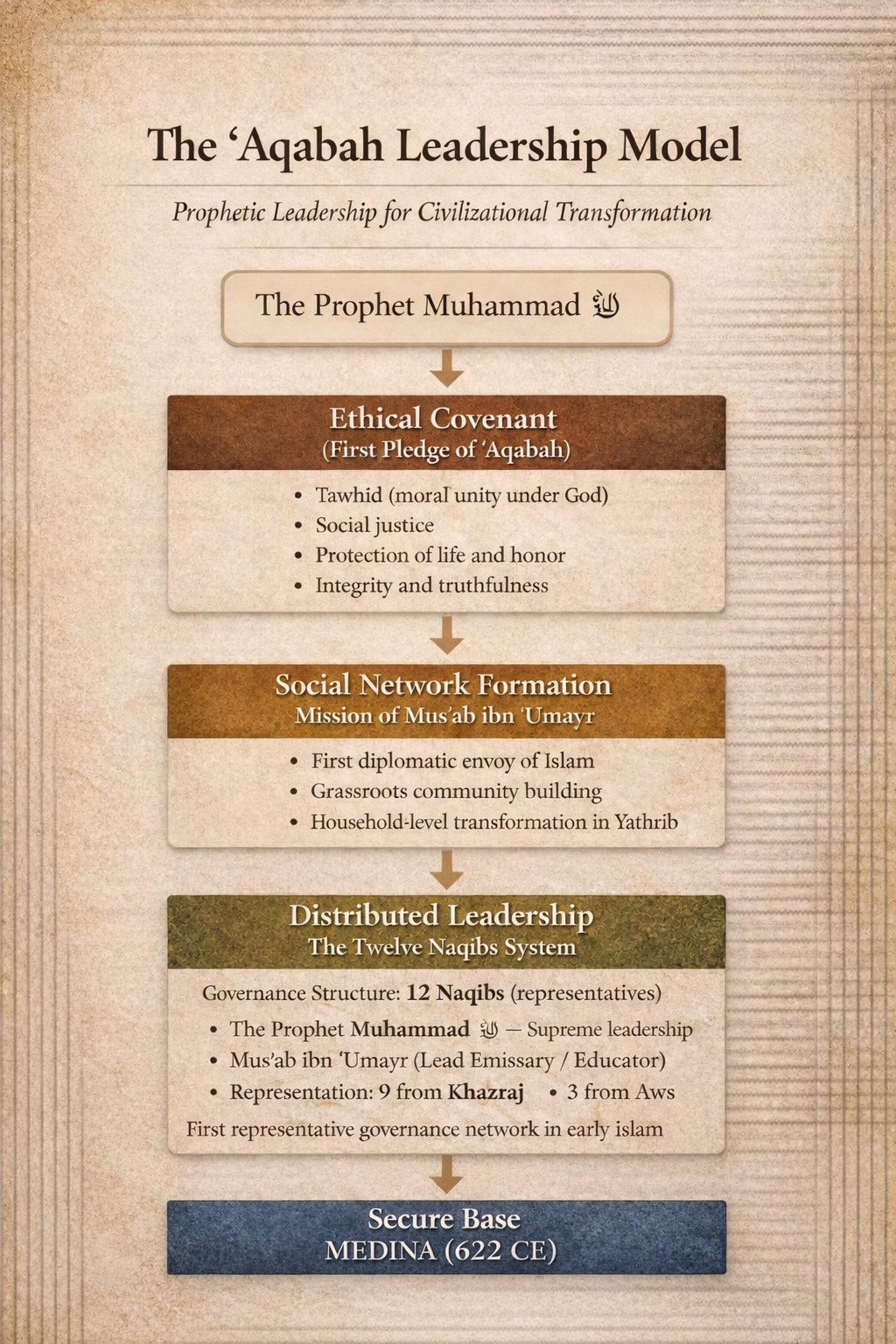
Representative Governance: The Prophet Muhammad ﷺ demonstrated that a leader’s strength is multiplied through delegation. By creating a council of representatives (Naqibs), he fostered local ownership of the mission, demonstrating that a movement’s longevity depends on empowering its members to lead from within.
This council consisted of nine representatives from the Khazraj tribe and three from the Aws tribe, as follows.
- As’ad ibn Zurarah (appointed as the head of the twelve)
- Sa’d ibn al-Rabi’
- Abdullah ibn Rawaha
- Rafi’ ibn Malik
- Al-Bara’ ibn Ma’rur
- Abdullah ibn ‘Amr ibn Haram
- Ubada ibn al-Samit
- Sa’d ibn Ubada
- Al-Mundhir ibn ‘Amr
Representatives from the Aws Tribe (3)
- Usayd ibn Hudayr
- Sa’d ibn Khaythama
- Abu al-Haytham Malik ibn al-Tayyihan (Sometimes also listed as Rifa’a ibn Abd al-Mundhir in varying reports)
The ‘Aqabah Model: Governance Through Consent and the Separation of Authorities
The Prophet Muhammad ﷺ established a revolutionary precedent in political theory: that legitimate authority over a people is not derived from a claim of “divine right” on earth, but through consultation (Shura) and the voluntary election of the citizens. By grounding his leadership in a negotiated civic contract, he effectively separated the “Sacred Mission” of prophecy from the “Civic Administration” of the state.
1. The Election of the ‘Aqabah Covenants
The most striking evidence of this democratic foundation is found in the first and second ‘Aqabah Pledges. In these meetings, the representatives from Yathrib (Medina) were not “commanded” to submit; instead, they voted to offer the Prophet ﷺ protection and residency. This was a bilateral agreement—a “Social Contract”—in which authority was granted by the people to the leader under mutual conditions.
2. The Test of Jurisdictional Boundaries: The Road to Badr
The Prophet’s commitment to this civic boundary was most evident prior to the Battle of Badr. The ‘Aqabah pledges explicitly obligated the Medinans to protect the Prophet ﷺ within the city limits (defensive protection). Because Badr was an external engagement, the Prophet ﷺ recognized that the legal terms of the ‘Aqabah contract did not technically compel the Medinans to fight.
Rather than asserting religious authority to force them into battle, the Prophet ﷺ sought their conscious and voluntary approval. He respected the limits of the law until the leader of the Ansar, Sa’d ibn Mu’adh, offered a new mandate of loyalty:
“O Messenger of Allah, we have believed in you, trusted you, and witnessed that you have brought the absolute truth. We have pledged our loyalty. By the One Who sent you, if you were to lead us to the sea and plunge into it, we would plunge with you; not one of us would stay behind.”
3. Authority Through Consensus
Only after receiving the enthusiastic endorsement of Sa’d ibn Mu’adh, Al-Miqdad ibn ‘Amr, and other tribal leaders did the Prophet ﷺ authorize the engagement. This demonstrates that the decision to go to war was not a “prophetic command,” but a consensus-driven political decision.
Leadership Lesson: The Ethics of Consent
Civic Legitimacy: The Prophet Muhammad ﷺ demonstrated that a leader should never use “God’s name” to override the legal rights and voluntary consent of the people. By honoring the specific terms of his treaties and seeking new mandates to address new challenges, he proved that a just state is built on trust and transparency, not on imposing religious status over civil law.
The ‘Aqabah Model: Governance Through Consent and Civic Authority
The Prophet Muhammad ﷺ established a revolutionary precedent in political theory: that legitimate authority over a people is not a “pillar of faith,” but is derived through consultation (Shura) and the voluntary election of the citizenry. By grounding his leadership in a negotiated civic contract, he effectively separated the “Sacred Mission” of prophecy from the “Civic Administration” of the state.
1. Governance: A Civic Responsibility, Not a Religious Pillar
Establishing a government or a Caliphate is not among the Five Pillars of Islam (Faith, Prayer, Alms, Fasting, and Pilgrimage). As Dr. Adnan Ibrahim elucidates, authority in Islam is a functional necessity for social order, not a theological requirement for salvation. The Quran underscores this by commanding the Prophet ﷺ to engage in a collaborative process with his community:
“Pardon their imperfections, arrange their protection, and consult with them about the conduct of affairs.” (Quran 3:159)
2. Authority Through Election and Consensus
The most striking evidence of this democratic foundation is found in the ‘Aqabah Pledges. As shown in your organizational chart, the representatives from Yathrib (Medina) were not “commanded” to submit. Instead, they voted to offer residency and protection. This was a bilateral “Social Contract” in which authority was granted by the people on mutual terms.
3. The Separation of Personal Holiness from Public Office
The Prophet’s actions—taking a vote and appointing the 12 Naqibs—demonstrated that governance was a “human affair.” By decentralizing power among nine members of the Khazraj and three of the Aws, he ensured that the state was a partnership of the free. This model intentionally opposes the “Theocratic Tyranny” exemplified by the Pharaoh, who claimed divine status to justify absolute power. In Islam, the leader is a steward of the law, and all citizens are equal before it.
Leadership Lesson: The Ethics of Consent
Civic Stewardship: The Prophet Muhammad ﷺ demonstrated that a leader should never use “God’s name” to override the legal rights and voluntary consent of the people. By seeking mandates for state affairs through consultation, he proved that a just society is built on trust, transparency, and the sovereignty of the people, not on imposing religious status on civil life.
The Miraculous Ascent: Jerusalem and the Unity of Prophecy (621 CE)
Following the “Year of Sorrow” and the traumatic events at Ta’if, the Prophet Muhammad’s ﷺ resolve remained unbroken. To fortify his spirit and codify the universal nature of his mission, he was granted the Isra’ and Mi’raj—a miraculous nocturnal journey that bridged the physical and celestial realms.
1. The Night Journey to Jerusalem (Isra’)
The Prophet ﷺ was transported from Mecca to the Al-Aqsa Mosque in Jerusalem. This was not a random destination; Jerusalem served as the spiritual epicenter of the Abrahamic legacy. In a profound demonstration of inter-faith continuity, the Prophet ﷺ was greeted by his predecessors—including Abraham, Moses, and Jesus—whom he led in prayer. This assembly of prophets established Jerusalem as a “Common Ground,” signaling that Islam was not a new invention, but the final restoration of a singular, divine message.
2. The Ascension and the Five Daily Prayers (Mi’raj)
From the sacred rock in Jerusalem, the Prophet ﷺ ascended through the seven heavens, meeting the prophets again in their celestial stations. This journey culminated at the Lote Tree of the Utmost Boundary (Sidrat al-Muntaha), where he received the direct mandate for the Five Daily Prayers. Unlike other obligations, prayer was established in the Divine Presence, highlighting its role as the believer’s primary “ascension” to God.
3. The Radiant Path of Inclusivity
This journey serves as a timeless theological proof of the shared ties between Islam, Christianity, and Judaism. By acknowledging and leading the previous prophets, Muhammad ﷺ established a model of Mutual Recognition. It confirms that the “Radiant Path” is an inclusive journey in which every prophet is honored, and every previous scripture is recognized as part of a grand, unfolding narrative of human guidance.
Leadership Lesson: The Strategic Vision
Universal Perspective: The Prophet Muhammad ﷺ demonstrated that in times of extreme personal and political crisis, a leader must reconnect with their foundational values. By aligning his mission with the global history of prophecy, he transformed a local struggle into a universal movement for all of humanity.
The Integrity of Authority: Rejecting Political Opportunism
During the strategic pilgrimage seasons, the Prophet Muhammad ﷺ undertook a series of high-stakes diplomatic missions to secure a base for his community. His interactions with various tribes reveal a leadership style rooted in moral consistency rather than political expediency. He sought partners in justice, not merchants of power.
1. The Dilemma of Geopolitical Alliances: The Banu Shayban
The Banu Shayban tribe was profoundly moved by the Quran’s intellectual and aesthetic depth. However, they ultimately declined a formal alliance. Their reasoning was strictly geopolitical: they were already bound by a restrictive treaty with the Persian Empire. This episode highlights the Prophet’s transparency; he sought open, committed partnerships, and the Shayban’s honest refusal was met with mutual respect, thereby avoiding a conflict of interest that would have compromised the state’s future independence.
2. The Rejection of the Sa’sa’ Power-Play
A far more significant ethical challenge arose during negotiations with the Banu ‘Amir ibn Sa’sa’. The tribal leaders recognized the potential of the Prophet’s movement and offered their protection, but with a calculated condition: they demanded a guarantee that they would inherit the state’s leadership upon the mission’s success.
The Prophet’s response remains a foundational principle of Islamic political theory:
“The matter of authority belongs exclusively to Allah. He grants it to whom He wills.”
Refusing to treat the “Radiant Path” as a political commodity, he chose the uncertainty of exile over a guaranteed victory bought through the promise of nepotism and elitism. The Sa’sa’ leader’s blunt reply—“Then we have no need for your religion”—revealed that their interest was in personal gain, not spiritual or social reform.
3. The Legacy of the “Dress of Religion.”
This tribe’s obsession with power later manifested in a series of betrayals. Disguising their political ambitions in the “dress of religion,” they orchestrated the brutal massacre of seventy Muslim scholars at the Well of Ma’una. Following the Prophet’s death, they were among the leaders of the Riddah (Apostasy) movement, attempting to dismantle the very system they could not control.
PART V
The Sovereign State (Medina Model)
Leadership Lesson: Inclusive Governance
The Constitution of Medina established that a leader’s primary duty is to protect the “Sovereignty of Choice.” By granting equal rights to all citizens, regardless of creed, the Prophet created a pluralistic society in which security (Amn) was guaranteed by a shared civic contract rather than enforced uniformity.
Leadership Lesson: Authority as a Trust, Not a Trophy
Meritocratic Governance: The Prophet Muhammad ﷺ demonstrated that authority is a sacred trust (Amanah), not a reward for political support. By rejecting the Sa’sa’ demand for guaranteed succession, he ensured that leadership in Islam would be based on consultation and merit, rather than tribal inheritance.
The Great Migration: The Hijrah to Yathrib (622 CE)
Recognizing that the social and political climate in Yathrib was far more conducive to the “Radiant Path” than the systemic hostility of Mecca, the Prophet Muhammad ﷺ authorized the migration of the Muslim community. This exodus, known as the Hijrah, marked the transition of the believers from a persecuted minority to the foundational citizenry of a new sovereign state.
1. Sacrifice for Sovereignty
The migration required an immense sacrifice of personal and material security. To escape the immediate threats of imprisonment and execution, the Meccan Muslims (Muhajirun) were forced to leave behind their ancestral homes, established businesses, and, in many cases, their beloved family members. They chose the uncertainty of exile over the certainty of tyranny, prioritizing the Freedom of Conscience over material wealth.
2. The Shift to a Governance Model
Unlike a disorganized flight of refugees, this migration was a coordinated movement toward a pre-arranged Governance Model. As shown in the Aqaba chart, the ‘Aqabah Pledges had already established a representative system of Twelve Naqibs (9 from the Khazraj and 3 from the Aws tribes) to facilitate the transition. This ensured that when the Meccan Muslims arrived, they were entering a society prepared for pluralistic cooperation rather than chaotic resettlement.
3. Establishing the “Amn” of Medina
Yathrib offered what Mecca could not: Amn (Security). Through the Mu’akhah (Brotherhood) system, the Prophet ﷺ integrated the Meccan migrants with the Medinan hosts (Ansar), creating a social safety net that prevented poverty and social friction. This migration was the first step toward the “Final Consummation” of a state where justice and mercy were the primary laws of the land.
Preservation of Mission: The Prophet Muhammad ﷺ demonstrated that a leader’s duty is to seek an environment where the mission can flourish. By choosing migration over a futile war of attrition in Mecca, he preserved his followers’ lives and established a base of operations where the “Radiant Path” could become a living, legal reality.
The Muslim Migration to Yathrib (613 CE)
Since the Muslims’ conditions in Yathrib were far better than those of Mecca, most Meccan Muslims migrated to Yathrib to escape rejection and execution. They left behind their loved ones and belongings.
The Masterpiece of Planning: The Strategic Hijrah (622 CE)
By late 622 CE, the social and political success of the Muslim community in Yathrib had reached a critical mass. Realizing that his mission required a secure base of operations, the Prophet Muhammad ﷺ initiated a masterclass in meticulous planning and risk management to execute his relocation.
1. The Mechanics of a Secure Transition
The Prophet ﷺ did not leave the migration to chance. He instructed Abu Bakr to secure the necessary logistics, including high-endurance camels and essential provisions. Crucially, the Prophet ﷺ exercised technological and geographic intelligence by hiring Abdullah ibn Urayqit—a highly skilled desert guide—to navigate a non-traditional route, ensuring the convoy could evade detection.
2. The Failure of Tribal Repression
Observing the successful migration and the burgeoning power of the Muslims in Yathrib, the Meccan oligarchy descended into a state of panic. Desperate to maintain their monopoly on power, they transitioned from harassment to a coordinated assassination plot. Their strategy was designed to circumvent the customary laws of tribal reprisal:
♦ The Multi-Clan Strategy: A representative from every major Meccan tribe was to strike simultaneously.
♦ The Goal: By involving all clans, the Banu Hashim (the Prophet’s family) would be legally and militarily unable to seek retribution against the entire city.
3. The night of the Great Escape
The Prophet Muhammad’s ﷺ escape from Mecca was a masterclass in meticulous preparation and tactical deception. Informed of the Quraysh’s intent to terminate his mission through a multi-clan assassination plot, the Prophet ﷺ utilized a sophisticated network of trusted allies and environmental tactics to ensure the community’s transition to sovereignty.
1. The Decoy Strategy: Ali ibn Abi Talib
On the night the assigned assassins surrounded the Prophet’s house, his cousin, Ali ibn Abi Talib, performed a legendary act of sacrifice. By wrapping himself in the Prophet’s green cloak and reclining in his bed, Ali served as a high-risk decoy. This diverted the attention of the hitmen, allowing the Prophet ﷺ and Abu Bakr to depart Mecca undetected and buy the mission-critical hours to secure a lead.
2. Tactical Diversion: Heading South to Cave Thawr
To mislead the Meccan trackers—who expected a northward journey toward Medina—the Prophet ﷺ and Abu Bakr headed south. They took refuge in Cave Thawr, located approximately five miles south of the city, where they remained for three days until the immediate intensity of the pursuit subsided.
3. The Intelligence and Logistics Network
While in hiding, the Prophet ﷺ utilized a coordinated support team:
♦ Asma bint Abi Bakr & Abdullah ibn Abi Bakr: They served as the mission’s intelligence and supply line, delivering food and critical updates on Quraysh’s movements to the cave each night.
♦ Amir ibn Fuhayrah: A shepherd and servant of Abu Bakr, he grazed a flock of sheep over the paths taken by the messengers. This environmental manipulation destroyed their footprints, frustrating the Meccan foot-trace experts and effectively “erasing” the trail to the hideout.
♦ Abdullah ibn Urayqit: A skilled non-Muslim desert guide, he was hired to lead the pair along a rugged, non-traditional coastal route to Medina once it was safe to move.
4. The Divine Assurance
Despite these extensive preparations, the situation remained perilous. When a search party reached the very mouth of the cave, Abu Bakr expressed his profound fear. The Prophet ﷺ reassured him with the timeless words of faith recorded in the Quran: “Do not grieve; indeed, Allah is with us” (Quran 9:40).
Leadership Lesson: The Balance of Strategy and Trust
Holistic Preparation: The Prophet Muhammad ﷺ demonstrated that a leader’s duty is to use every available human resource and tactical advantage—from expert guides to environmental camouflage—before relying on divine intervention. By combining meticulous foresight with absolute conviction, he proved that a mission is most resilient when its leader is both a visionary and a master of detail.
The Great Arrival: The Birth of a Nation (622 CE)
The conspirators in Mecca were met with profound disappointment when Ali ibn Abi Talib emerged from the Prophet’s house, revealing that their target had already departed. In response, the Meccan oligarchy initiated a massive manhunt, offering a lucrative bounty of one hundred camels for the Prophet’s capture. However, the meticulous planning of the Hijrah—including a three-day sanctuary in Cave Thawr and the use of a non-traditional coastal route—ensured the mission’s safe passage to Yathrib.
1. The Transformation into Medina
Upon his arrival on September 27, 622 CE, the Prophet ﷺ was greeted with a historic celebration. The residents of Yathrib immediately renamed their city Madinat-un-Nabi (The City of the Prophet), or Medina, thereby marking it as the center of the new Islamic era.
2. Establishing the First Institutions
♦ Education and Guidance: Delivering the “fountain of knowledge” through the Quranic message.
♦ Social Integration: Implementing the Mu’akhah (Brotherhood) system to bond the Meccan migrants (Muhajirun) with the Medinan hosts (Ansar).
♦ Civic Order: Drafting the Constitution of Medina, a pluralistic charter that guaranteed justice and coexistence for all residents, including Jewish and pagan tribes.
3. The Birth of the Islamic Calendar
Recognizing the Hijrah as the most significant turning point in human history, the second Caliph, Umar ibn al-Khattab, officially established the Islamic (Hijri) calendar years later. He designated the year of the migration as the first year of the era (1 AH), with July 16, 622 CE, serving as the retroactive start of the first lunar month, Muharram.
Leadership Lesson: Building a Just Society
Visionary Statecraft: The Prophet Muhammad ﷺ demonstrated that a leader’s duty is to move from survival to sustainability. By establishing a mosque, a constitution, and a social safety net within days of his arrival, he proved that a healthy nation is built on the pillars of education, pluralism, and collective security.
The Architecture of a Nation: The Urban and Social Transformation of Medina
In the Quranic worldview, humanity is entrusted with the sacred duty of I’mar al-Ard—the building and beautification of the earth. Upon his arrival in Medina, the Prophet Muhammad ﷺ immediately manifested this principle by transforming a fractured settlement into a thriving, metropolitan city-state through six strategic pillars:
1. The Civic and Spiritual Center: Masjid an-Nabawi
The Prophet ﷺ first established a central mosque that served as a “Community Hub.” It was a multipurpose facility designed for spiritual worship, legislative assembly, and social welfare, serving as the heart of the new administration.
2. Conflict Resolution: The Aws-Khazraj Reconciliation
He successfully brokered a peace treaty between the Aws and Khazraj tribes, whose decades of fratricidal warfare had nearly destroyed the city. By replacing tribal blood feuds with a unified civic identity, he established the social stability necessary for growth.
3. Public Health and Sanitation: The Juhfah Project
Faced with a health crisis as Meccan migrants fell ill due to a lack of immunity, the Prophet ﷺ launched a major Public Health Task Force. He ordered a systematic cleaning of the city streets, mandated trash collection, and established a disposal site at Al-Juhfah (far in the countryside). This pioneering sanitation project turned Medina into a safe and healthy environment for all residents.
4. Economic Integration: The Mu’akhah System
To resolve the refugee crisis, the Prophet ﷺ implemented the Transitional League of Brotherhood (Mu’akhah). This was not a simple charity program; it was a sophisticated skills-matching operation. A select committee assessed the professions of the Meccan migrants and matched them with Medinan households:
♦ Skill-Alignment: Traders were matched with merchants, handymen with businesses, and scholars with families in need of education.
♦ Result: This plan was so effective that within one year, the migrants became self-sufficient, and the temporary league was successfully dissolved.
5. Infrastructure and Land Reform: The 54 Wells Project
Recognizing that water is the lifeblood of a city, the Prophet ﷺ worked with hydrological experts to drill 54 water wells in and around Medina. To further stimulate the economy, he introduced a revolutionary land-tenure policy:
“Whoever revitalizes a piece of dead land shall have the right of ownership over it.” (Sahih al-Bukhari)
6. The Constitutional Milestone: Sahifat al-Medina
Perhaps his most significant act was the drafting of the Constitution of Medina. This was a pluralistic social contract between the Muslims and the thirteen Jewish tribes. It guaranteed:
♦ Universal Rights: Freedom of belief, economic enterprise, and political autonomy for all tribes.
♦ The Rule of Law: Codified the sanctity of life, municipal obligations, and the absolute equality of all citizens before the law.
Leadership Lesson: The Master of Coordination
Holistic Governance: The Prophet Muhammad ﷺ demonstrated that a leader’s greatness is found in the ability to balance the sacred with the practical. By managing urban health, irrigation, and constitutional law simultaneously, he proved that the “Radiant Path” is a total system for human flourishing and sustainable progress.
The Political Climate of Medina: Navigating Hypocrisy and External Threats
The physical and social improvements to Medina did not shield the new state from the existential threats on its horizon. For thirteen years, the Muslims had endured systemic humiliation and torture in Mecca without retaliation, upholding a mandate of strategic patience. However, once established in Medina, the Prophet ﷺ recognized that the Meccan oligarchy remained committed to the total liquidation of the “Radiant Path”.
1. Internal Subversion: The Challenge of Abu ‘Amir “Al-Rahib.”
According to research by Hasan Farhan al-Maliki, the Prophet ﷺ had to navigate a complex environment of internal subversion from “faith-haters” in both Medina and Mecca. A primary antagonist was Abu ‘Amir al-Rahib, an elitist from the Aws tribe who had expected to take leadership of the city. Disgusted by the Prophet’s ﷺ arrival, he went into exile to Mecca, where he actively rallied the Quraysh to dismantle the burgeoning Muslim community.
2. External Aggression and the Meccan Confederacy
The Quraysh did not abandon their campaign; they actively rallied a confederacy of surrounding tribes to isolate and destroy Medina. Abu ‘Amir joined these efforts, participating in major military engagements such as the Battles of Uhud and the Trench. When Meccan resistance eventually faltered, he fled further to the Byzantine Empire, seeking assistance from Heraclius to plot a final overthrow of the Islamic state.
3. The Plot of the “Mosque of Harm” (Masjid al-Dirar)
Al-Maliki’s research further highlights the internal plots orchestrated by Abu ‘Amir and his “hypocrite” allies during the Battle of Tabuk. This included an attempted coup and a plot to assassinate the Prophet ﷺ. The centerpiece of this subversion was the construction of Masjid al-Dirar (The Mosque of Harm), designed as a base for division and an outpost for foreign-backed aggression. The Quran decisively addressed this threat:
“And [there are] those who established a mosque to cause harm and disbelief and division among the believers… Do not stand [for prayer] within it ever.” (Quran 9:107-108)
The Birth of a Defensive Strategy and Neutralizing Danger
Recognizing that Amn (Security) is the prerequisite for all progress, the Prophet ﷺ initiated a robust defense strategy. This was not a move toward aggression, but toward Active Deterrence. He established a network of reconnaissance and defensive alliances, ensuring that the sovereign state—built on the ‘Aqabah Model of representative governance—could not be destroyed by its enemies.
Noted historian Karen Armstrong elucidates in Muhammad: A Biography of the Prophet:
“The Muslims needed to display an image of strength and decisiveness to survive… in Medina, whenever the Prophet heard that one tribe, urged by Meccan propaganda, was preparing to invade the Medinan territory, he would march aggressively to forestall the attack. As a result, the opposition tended to melt away as soon as the Muslims arrived.”
Leadership Lesson: Strategic Vigilance
Guardian of the State: The Prophet Muhammad ﷺ demonstrated that a leader’s duty is to be realistic about threats. By balancing the internal work of community-building with the external work of national defense, he proved that a “Radiant Path” requires a “Protective Shield” to survive in a hostile geopolitical environment.
The Doctrine of Necessary Defense: 622–623 CE
The decision to authorize defensive operations was not a departure from the Prophet’s ﷺ pursuit of peace, but a requirement for its survival. Having been driven from their homes and subjected to systemic torture, the Muslims were finally granted the legal right to protect their burgeoning state.
1. The Divine Mandate for Justice
The shift from patience to defense was inaugurated by a Revelation that defined the “Why” of conflict: not for expansion, but for the restoration of justice for the oppressed.
“Permission to fight is given to those who are being fought because they have been wronged. And indeed, Allah is competent to give them victory.” (Quran 22:39)
2. Strategic Deterrence through Expeditions
To maintain Amn (Security), the Prophet ﷺ implemented a “Prevention Strategy.” He initiated several reconnaissance missions and expeditions to the surrounding territories. These were not raids for plunder, but tactical moves designed to:
♦ Neutralize Threats: Forestall tribal invasions before they reach the city of Medina.
♦ Form Alliances: Secure peace accords with neighboring tribes, such as the Banu Damrah and Banu Mudlej, to create a “Covenant of Neutrality.”
3. Economic Deterrence and Restraint
The Muslims also utilized Economic Pressure by monitoring the Quraysh trade routes. This was a non-violent method of asserting sovereignty and reminding the Meccan oligarchy that their aggression carried a cost. Notably, the Prophet ﷺ exercised immense tactical restraint; during these early missions, he prioritized monitoring over capture, ensuring that the “Radiant Path” remained grounded in preventing unnecessary harm.
Leadership Lesson: The Ethics of Defense
Controlled Deterrence: The Prophet Muhammad ﷺ demonstrated that a leader must be prepared but principled. By using expeditions to build alliances and neutralize threats before they could harm the community, he proved that the highest form of defense is preventing war through unwavering resolve and strategic foresight.
The Hierarchy of Sanctity: The Nakhlah Incident and the Ban on Religious Persecution
In early 624 CE, a reconnaissance mission led by Abdullah ibn Jahsh intercepted a Meccan caravan at Nakhlah. During the encounter, a Meccan leader was killed, and two hostages were taken. Critically, this event occurred on the final day of the Sacred Months—a period traditionally reserved for absolute peace and the cessation of all tribal conflict.
1. The Prophet’s Reprimand and the Crisis of Legitimacy
When the expedition returned with hostages and seized goods, the Prophet Muhammad ﷺ expressed deep disappointment and refused to accept the spoils. He stated, “I did not command you to fight in the Sacred Months.” Sensing a propaganda opportunity, the Meccan oligarchy immediately broadcast that Muhammad ﷺ had violated the ancient codes of Arabian sanctity.
2. The Revelation of Ethical Priorities
Before the expedition team could be subjected to further condemnation, a revelation descended that fundamentally reordered the Arabian legal landscape. It acknowledged that while fighting in the Sacred Month was a grave offense, the Meccan campaign of religious persecution was a far greater crime. [2]
“They ask you [O Muhammad] about the Sacred Month—about fighting in it. Say: ‘Fighting in it is a grave offense, but barring people from the path of Allah and disbelief in Him and [preventing access to] the Sacred Mosque and expelling its people from it are even greater in the sight of Allah.’ Persecution is more grave than killing.“ (Quran 2:217)
3. Freedom of Belief as the Supreme Sanctity
This declaration established a monumental precedent: the Freedom of Conscience is the highest sanctity. The Quran argued that those who had tortured, enslaved, and exiled citizens for their beliefs—as depicted in the ‘Aqabah Model of representative governance—could not hide behind “tradition” to justify their tyranny. [1, 2] This revelation signaled that the “Radiant Path” would not allow the obstruction of faith to be protected by the very laws it sought to destroy. [1]
Historians of international law analyze the Nakhlah Incident as a definitive moment where the “Radiant Path” established a hierarchy of ethical priorities. By placing the sanctity of belief above that of tradition, the Quranic Revelation established a revolutionary legal framework for universal human rights. [1]
Leadership Lesson: The Weight of Justice
Moral Proportionality: The Prophet Muhammad ﷺ demonstrated that a leader must be able to weigh conflicting values. By validating the Quranic principle that persecution is worse than conflict, he proved that a just society is one in which the protection of human dignity and freedom of belief outweighs even the most sacred seasonal traditions. [1, 2]
The Sovereignty of Conscience: Re-evaluating the “Riddah” Rule
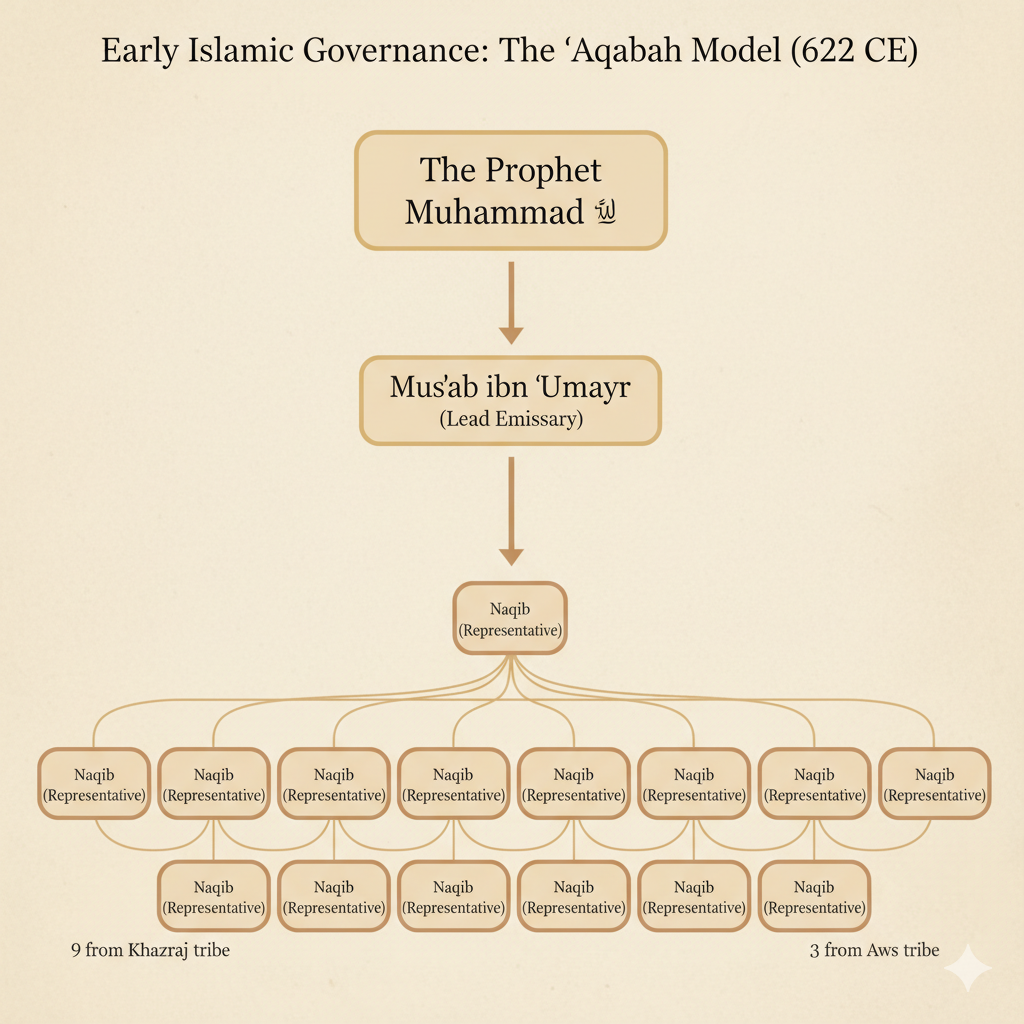 The image represents a primitive model of the Aqaba meeting
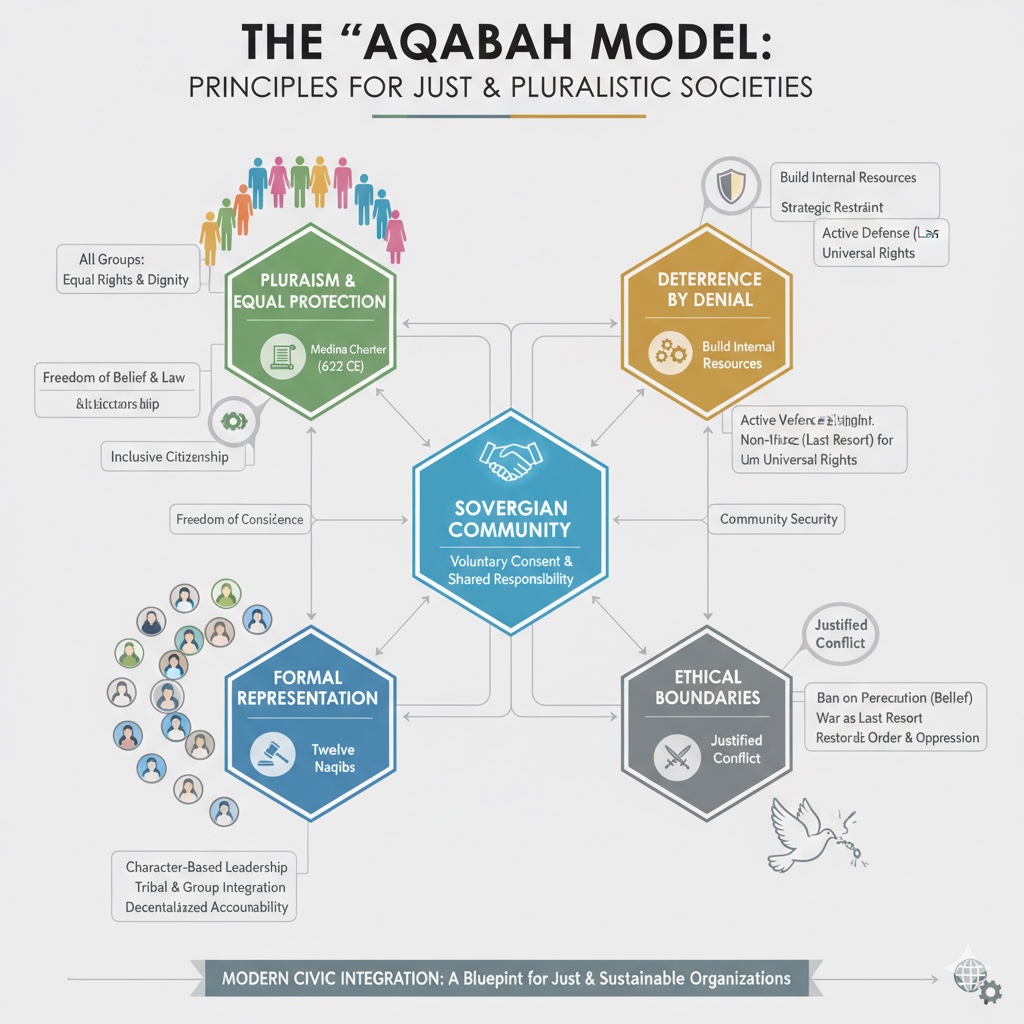 This image represents the extended effect of the Aqba meeting
In his landmark study, The Freedom of Belief in the Qur’an and Sunnah, researcher Hasan Farhan al-Maliki argues that the execution of individuals for renouncing their faith is a politically motivated innovation with no foundation in the primary sources of Islam. This “fanatic conception” directly violates the Quranic mandate of Freedom of Belief.
1. The Quranic Argument for Agency
Al-Maliki explains that while the phenomenon of renouncing faith (Riddah) occurred during the Prophet’s ﷺ lifetime, the Quran never prescribes a judicial penalty for it. Instead, accountability is deferred entirely to the Divine realm, emphasizing that faith is invalid if coerced.
♦ The Cycle of Choice: “Indeed, those who have believed then disbelieved, then believed then disbelieved, and then increased in disbelief—never will Allah forgive them, nor will He guide them to a way.” (Quran 4:137)
The text acknowledges multiple shifts in belief, which would be impossible if the first instance of disbelief had led to execution.
♦ The Promise of Replacement: “O you who have believed, whoever of you should revert from his religion—Allah will bring forth [in place of them] a people He will love and who will love Him.” (Quran 5:54)
2. The Prophetic Precedent: The Case of the Bedouin
Definitive historical proof of the Prophet’s ﷺ Radical Tolerance is found in the story of a Bedouin man recorded in Sahih al-Bukhari and Sahih Muslim. After pledging his loyalty, the man returned the following day and requested to be released from his commitment to Islam.
The Prophet ﷺ did not order his detention, nor did he dispatch the Naqibs (representatives) to pursue him. He simply declined the formal request to revoke the pledge, allowing the man to walk away safely and unharmed. As al-Maliki notes:
“The Prophet acted with sublime composure; he did not order an execution or a pursuit. The ‘Apostasy Rule’ is a foreign innovation that intrudes upon Allah’s exclusive domain of judgment and His rule of Mercy.”
3. Restoring the Radiant Path
The only exception to this tolerance was Muharabah—active, armed hostility against the state—which is a political crime of treason, not a religious crime of conscience. By adhering to the principles shown in the ‘Aqabah Model—where authority is built on consent rather than compulsion—we restore the Prophet’s ﷺ vision of a society where the “Radiant Path” is chosen freely by the heart.
Leadership Lesson: The Freedom to Depart
Ethical Governance: The Prophet Muhammad ﷺ demonstrated that a leader’s greatness is found in the voluntary loyalty of the people. By protecting an individual’s right to leave the faith without fear of violence, he proved that the “Radiant Path” is a journey of conviction that cannot be sustained under the chains of coercion.
Reclaiming the Narrative: The Ethical Dimensions of Jihad
The term Jihad has been subjected to profound distortion by both extremist rhetoric and sensationalist media. To restore the authentic Quranic understanding, we look to the expertise of Dr. Khaled Abou El Fadl, Professor of Islamic Law at UCLA, who argues in The Great Theft that the concept must be rescued from those who have turned it into a symbol of intolerance.
1. The Literal Foundation: Striving for Excellence
Linguistically, Jihad denotes “striving, persevering, and applying oneself diligently.” It is the spiritual and material equivalent of a “work ethic.” In the Quranic worldview, the most vital human achievements—such as the pursuit of knowledge, the cultivation of beauty, and the establishment of justice—are impossible without sustained Jihad. Forms of this “Radiant Striving” include:
♦ The Internal Struggle: Cleansing the self of vanity, pettiness, and base desires.
♦ The Social Struggle: Standing up for truth, curing the ill, and feeding the poor, even at great personal risk.
2. The Prophet’s Hierarchy of Striving
The Prophet Muhammad ﷺ famously distinguished between the “Lesser Jihad” (physical defense) and the “Greater Jihad” (the internal struggle against one’s own ego). He established that physical conflict is only considered Jihad if it is a Just War—one fought to repel oppression and restore Amn (Security).
3. “Holy War” vs. Justified Conflict
Dr. Abou El Fadl clarifies a critical historical distinction: the term “Holy War” is a product of the Crusades and has no linguistic or theological equivalent in Islam.
“War in Islam is never ‘holy’; it is either justified or unjustified. When justified, it is strictly a last resort used to protect the weak and ensure the freedom of belief.”
Leadership Lesson: The Ethics of the Struggle
Internal Sovereignty: The Prophet Muhammad ﷺ demonstrated that a leader’s most important battle is the one within. By prioritizing the “Greater Jihad” of character-building over the “Lesser Jihad” of conflict, he proved that a society’s strength is measured by its moral discipline rather than its military might.
The Jurisprudence of Conflict: Distinguishing Jihad from Qital
A critical misunderstanding in modern discourse is the conflation of Jihad (ethical striving) with Qital (military engagement). As Dr. Khaled Abou El Fadl of UCLA clarifies in The Great Theft, while the Quranic mandate for spiritual and social striving is unconditional, the authorization for warfare is strictly limited and ethically fraught.
According to the Quranic paradigm, war may occasionally be necessary to repel tyranny, but it is never considered an inherent moral or ethical good.
♦ Jihad (The Absolute Striving): This is a perpetual requirement for the believer, equated to a “spiritual and material work ethic.” Striving for knowledge, justice, and self-purification is always good in and of itself.
♦ Qital (The Conditional Conflict): This refers specifically to fighting. Unlike Jihad, Qital is never an unconditional command. Every Quranic reference to combat is restricted by specific conditions of defense and justice.
2. The Doctrine of Non-Transgression
Even when conflict is justified as a last resort, the Quran imposes strict Ethical Boundaries to prevent the corruption of the soul. On every occasion that the scripture permits defensive action, it immediately pairs the command with a mandate for restraint:
“Fight in the way of Allah those who fight you but do not transgress. Indeed, Allah does not like transgressors.” (Quran 2:190)
3. The Priority of Forgiveness and Peace
The ultimate objective of the “Radiant Path” is to restore Amn (Security). Therefore, the Quranic exhortation to fight is always subordinate to the higher commands of forgiveness and reconciliation. A leader must always be prepared to “avert evil with good” and seek peace the moment the threat of oppression is neutralized.
Leadership Lesson: The Ethics of Last Resort
Strategic Restraint: The Prophet Muhammad ﷺ demonstrated that a leader’s duty is to limit the scope of violence. By distinguishing between the constant work of Jihad and the rare necessity of Qital, he proved that the “Radiant Path” is paved with the courage to seek peace, even in the heat of a justified struggle.
The Primacy of Amn: Security as a Divine Mandate
The Quranic paradigm establishes that Amn—the state of absolute security and freedom from fear—is a sacred trust and a prerequisite for human flourishing. Within the “Radiant Path,” infringing upon this security is classified as Thulm (Oppression) and Fasad (Corruption).
1. The Prohibition of “Fatk”: Rejecting Treachery
During the years of systemic persecution, the Prophet ﷺ was often encouraged by his companions to retaliate through clandestine violence. However, as noted by scholar Dr. Adnan Ibrahim, the Prophet ﷺ strictly forbade the use of Fatk—a comprehensive term encompassing betrayal, deception, and assassination. He established a zero-tolerance policy for treachery, stating:
“Faith permits no fatk; the believer does not commit fatk.” — (Sunan Abi Dawood)
By refusing to descend into the “shadow of the sword,” the Prophet ﷺ proved that a just society cannot be built through betrayal. He viewed acts that induce fear—such as assaults or crookedness—as “cracks” that lead to the collapse of the social fabric.
2. Security as the Basis for Civilization
One of the primary purposes of humanity on earth is I’mar al-Ard (building and beautifying the earth). This objective is impossible without Amn. The Prophet ﷺ taught that God made the heavens and earth subservient to humanity, specifically so they could pursue growth and prosperity. Therefore, guarding the peace of all creation is a form of divine grace.
3. The Transition to Autonomous Defense
By maintaining this stance, Muhammad ﷺ demonstrated that a leader must sometimes protect a community from its own impulse for revenge. Once the Muslim community became autonomous in Medina, the strategy shifted from “patience” to Active Deterrence. They gained the legal right to defend themselves from external attackers, but always within the strict Ethical Boundaries of transparency and honor.
Leadership Lesson: The Guardian of Public Order
Strategic Restraint: The Prophet Muhammad ﷺ demonstrated that a leader’s duty is to preserve the collective security (Amn) even at the cost of personal ego. By rejecting the “shortcut” of assassination, he proved that a society’s strength is built on integrity and trust, rather than the cycle of deceptive violence.
The Battle of Badr: A Turning Point in Sovereign Defense (624 CE)
The Battle of Badr was triggered by a strategic attempt, an Active Deterrence, to intercept a massive trade caravan led by Abu Sufyan, which was carrying much of the Meccan Quraysh’s merchandise. This move was an act of economic deterrence intended to reclaim some of the wealth confiscated from the Muslims during their forced exile from Mecca.
1. The Escalation: From Interception to Confrontation
While Abu Sufyan successfully maneuvered his fleet caravan away from the Muslim path to safety in Mecca, he had already dispatched an urgent call for military reinforcements. This request ignited a panic in Mecca, leading to the formation of a heavily armed confederacy of approximately 1,000 warriors.
2. The Refusal of De-escalation
Even after receiving news of the caravan’s safe arrival, the Meccan leadership faced a critical internal choice. Some elders, most notably Utbah ibn Rabee’ah, recognized that the primary objective (protecting the trade) had been met and argued for a return to Mecca to avoid unnecessary bloodshed. However, Abu Jahl, driven by arrogance and a desire to dismantle the burgeoning Muslim state, violently rejected this counsel. He insisted on a show of force at Badr to instill fear in the surrounding tribes and assert Meccan supremacy.
3. The Victory of Faith and Strategy
Faced with this unavoidable threat, the Prophet ﷺ led a vastly outnumbered force of roughly 313 men. Despite being unequipped—possessing only two horses compared to the enemy’s hundred—the Muslims secured a decisive victory. This outcome, often attributed to divine intervention and meticulous strategic planning, firmly established the Muslim community as a viable political and military force in Arabia.
Leadership Lesson: The Ethics of Necessary Conflict
Strategic Deterrence: The Prophet Muhammad ﷺ demonstrated that a leader’s duty is to restrain violence until it becomes the only path to justice. By attempting a bloodless economic interception and engaging in battle only when the opposition forced a total confrontation, he proved that the “Radiant Path” defends the security of its people without ever celebrating war itself.
Strategic Consultation: Rational Command at the Battle of Badr
The Prophet Muhammad ﷺ consistently rejected the model of the despotic ruler, choosing instead a leadership style rooted in Rationality (Aql) and Consultation (Shura). He established that while Revelation guided spiritual law, the technical management of state and military affairs required the community’s active input.
1. The Mandate of Collective Consent
Prior to the engagement at Badr, the Prophet ﷺ did not simply command his followers into battle. Recognizing that the ‘Aqabah Social Contract was primarily defensive, he formally consulted the community to seek a new mandate for an external engagement. Only after the Ansar (Medinan Muslims) and Muhajirun (Meccan Migrants) expressed their unanimous, voluntary willingness to proceed did he authorize the military move.
2. Technical Expertise over Personal Opinion
The Prophet’s ﷺ commitment to reason was most evident in his interaction with Al-Habbab ibn al-Mundhir. After the Prophet ﷺ initially positioned the troops, Al-Habbab asked a critical question: “Is this position a matter of divine Revelation, or is it your personal military opinion?”
When the Prophet ﷺ replied that it was his own opinion, Al-Habbab provided a superior strategic alternative: occupying the wells of Badr so the Muslims could secure the water supply while denying it to the enemy. Demonstrating Sublime Humility and Rationality, the Prophet ﷺ immediately abandoned his original plan in favor of the better tactical advice.
3. The Engagement: Strategic Resolve and Divine Intervention
On March 13, 624 CE (17 Ramadan, 2 AH), the vastly outnumbered Muslim force of 313 met the 1,000-strong Meccan army. Facing an existential threat to the “Radiant Path,” the Prophet ﷺ offered a profound supplication for the survival of the believers before the forces engaged. The ensuing battle was defined by:
♦ The Psychological Factor: A violent sandstorm and the inspired conviction of the believers—often described as the presence of a thousand angels—shattered the Meccan morale.
♦ The Ethical Reminder: Following the victory, the Quran reminded the believers to avoid arrogance, stating: “It was not you who threw [the dust] when you threw, but it was Allah who threw.” (Quran 8:17)
4. Restorative Justice: The Ransom of Education
The aftermath of the battle established a revolutionary precedent in the treatment of Prisoners of War (POWs). Among the seventy captives, those who could not afford a financial ransom were given an Intellectual Ransom: they were required to teach ten Muslim children how to read and write. This decision emphasized that the ultimate goal of the Islamic state was to eradicate ignorance and build a Knowledge-Based Society.
Leadership Lesson: The Strength of Consultation
Collaborative Command: The Prophet Muhammad ﷺ demonstrated that a leader’s greatest asset is the expertise of the team. By prioritizing rational advice over personal ego and valuing education even in the aftermath of war, he proved that a “Radiant Path” is built on consultation, humility, and the pursuit of enlightenment.
Deconstructing the Myth: Martyrdom, Pluralism, and the Ethics of Defense
One of the most persistent and harmful misconceptions is the myth that Islamic doctrine promises Paradise to those who kill Christians or Jews. This claim is not only historically inaccurate but also directly contradicts the foundational principles of the “Radiant Path” and the Medina Charter (622 CE), which prioritized the security and dignity of all faiths.
1. The Context of the Battle of Badr
The source of this myth is often a misunderstanding of the Prophet’s ﷺ call during the Battle of Badr: “All who die today will enter Paradise!” It is vital to note that Badr was an act of Justified Conflict fought exclusively against the pagan Meccan oligarchy—the very group that had orchestrated years of systemic torture and exile. There were no Christians or Jews among the opposing forces. This exhortation was a call to bravery for those defending their Sovereign Community from a lawless aggressor, not a mandate for religious intolerance.
2. The Quranic Mandate for Universal Reward
Far from promoting violence against other faiths, the Quran explicitly recognizes the righteous path of the “People of the Book” (Jews and Christians) and others who strive for goodness:
“Verily, those who have attained to faith, as well as those who follow the Jewish faith, and the Christians, and the Sabians—all who believe in God and the Last Day and do righteous deeds—shall have their reward with their Sustainer; and no fear need they have, and neither shall they grieve.” (Quran 2:62)
3. Abrahamic Solidarity and Prophetic Continuity
As illustrated in the “Pluralism & Equal Protection” pillar of the Aqabah Model, Islam views itself as part of a single, unfolding narrative of guidance. This requires Muslims to revere all biblical prophets equally:
“Say: ‘We believe in God, and in that which has been bestowed upon us… and upon Abraham, Ishmael, Isaac, Jacob, and their descendants, and that which was vouchsafed unto Moses and Jesus and all the other prophets: we make no distinction between any of them and unto Him do we surrender ourselves.‘” (Quran 3:84)
4. Redefining Martyrdom as Ethical Sacrifice
The Islamic concept of martyrdom (Shuhada) is not an invitation to aggression; it is the ultimate sacrifice made in the pursuit of Amn (Security) and the Ban on Persecution. It is a commitment to the “Sanctity of the Soul” shared by Christianity and Judaism—a defense of truth and human dignity against tyranny.
Leadership Lesson: The Guardian of Pluralism
Ethical Boundaries: The Prophet Muhammad ﷺ demonstrated that a leader’s duty is to protect the Freedom of Conscience for all. By establishing the Medina Charter, he proved that a just society is not built on the elimination of the “other,” but on the Equal Rights and Dignity of every group within the community.
The Prophetic Continuity: Biblical Foretelling of the “Radiant Path.”
Islamic theology maintains a profound reverence for the Biblical lineage, viewing the mission of Prophet Muhammad ﷺ as the fulfillment of ancient promises made to the children of Abraham. Scholars frequently point to specific passages in the Hebrew Bible that appear to detail the Hijrah (Migration) and the foundational victory at Badr with remarkable geographic and historical precision.
1. The Burden Upon Arabia: Isaiah 21:13–17
A primary source of this prophetic connection is found in the Book of Isaiah, which describes a “burden upon Arabia” and the flight of a significant spiritual figure:
“The burden upon Arabia. In the forest in Arabia shall ye lodge, O ye travelling companies of Dedanites. The inhabitants of the land of Tema brought water to him who was thirsty, and they provided with their bread him who fled. For they fled from the swords… and from the grievousness of war.”
2. Mapping the Hijrah and the Medina Model
This prophecy mirrors the historical events of 622 CE:
♦ The Flight from the Sword: The Prophet ﷺ and his companions fled Meccan persecution and a literal assassination plot (the “drawn swords”).
♦ The Land of Tema: This region is historically identified with the northern Arabian territories encompassing Medina, where the inhabitants (Ansar) met the refugees with water, bread, and the Amn (Security) depicted in the ‘Aqabah Model.
3. The Diminishing Glory of Kedar
The prophecy concludes with a specific timeline for the downfall of the oppressors:
“Within a year… all the glory of Kedar shall fail: and the residue of the number of archers, the mighty men of the children of Kedar, shall be diminished.”
History records that within one year of the Prophet’s ﷺ arrival in Medina, the “glory” and military prestige of the Meccan Quraysh (descendants of Kedar) were shattered at the Battle of Badr. This victory established the Sovereign Community of Medina as a viable political entity, built on the Voluntary Consent and Formal Representation shown in the Aqaba Model chart.
Leadership Lesson: The Strength of Legacy
Universal Recognition: The Prophet Muhammad ﷺ demonstrated that a leader’s mission is most resilient when it is recognized as part of a greater human story. By grounding the “Radiant Path” in the prophetic traditions of the past, he proved that a just society is the ultimate fulfillment of humanity’s long-standing quest for liberty and truth.
Hypocrisy
In Medina, as in Mecca, the Prophet faced human ill will and hypocrisy. Some people with personal agendas or hate felt that the final Prophet of Islam took away their business, religion, or the opportunity to become leaders, like Abu Aamer, the Priest, and Abdullah ibn Ali Salul. Those individuals have begun to raise animosity towards the Prophet and Muslims insidiously. Some would provoke Jewish individuals to challenge the Prophet. Others would have mobilized Quraysh to attack the Muslims.
The Battle of Uhud: Consultation, Subversion, and Resilience (625 CE)
One year after the decisive victory at Badr, the Meccan Quraysh orchestrated a massive retaliatory campaign, assembling an army of three thousand warriors to dismantle the fledgling state of Medina. This period tested the Sovereign Community’s commitment to its foundational principles of Voluntary Consent and Shared Responsibility.
1. The Challenge of Democratic Decision-Making
In a profound display of Consultative Leadership (Shura), the Prophet Muhammad ﷺ sought the community’s consensus on the location of the battle. While he personally favored a defensive stance within Medina, the majority of the community—driven by the enthusiasm of the youth—voted for an engagement at Mount Uhud. Honoring the democratic outcome over his own strategic preference, the Prophet ﷺ committed to the majority’s choice.
2. Internal Subversion and the Hypocrite’s Dissent
This shift toward collective governance proved unsettling for those accustomed to autocratic tribalism. On the march to the battlefield, Abdullah ibn Ubayy ibn Salul, the leader of the “Hypocrites” (Munafiqun), orchestrated a major desertion. Withdrawing one-third of the army (nearly 300 men), he complained that the Prophet ﷺ had “obeyed the young and disobeyed me.” This act of political sabotage was a direct assault on the state’s internal resources and stability.
3. The Strategic Defeat and Tactical Recovery
The Battle of Uhud resulted in a harrowing defeat for the Muslims. Following a tactical error by the archers on the mountainside, the Meccan cavalry executed a flank maneuver that caused chaos. The Prophet ﷺ was severely injured, and seventy-three companions—primarily the Ansar (Medinan Muslims)—were martyred. Despite the physical and psychological toll, the Prophet ﷺ demonstrated Strategic Restraint and immediate resolve:
♦ The Pursuit at Hamra’ al-Asad: To prevent a Meccan regrouping and a second assault on Medina, the Prophet ﷺ ordered an immediate chase.
♦ Active Defense: The army camped at Hamra’ al-Asad for three days, projecting an image of Strength and Readiness that deterred the Meccans from further aggression.
Leadership Lesson: The Cost of Consensus
Ethical Authority: The Prophet Muhammad ﷺ demonstrated that a leader’s greatness is found in their commitment to Consultation, even when it leads to difficult outcomes. By honoring the majority vote and leading through the ensuing crisis with personal courage, he proved that a “Radiant Path” is built on the integrity of the process, rather than the mere pursuit of victory.
The Mandate of Mercy: Ethical Restraint on the Battlefield
While many leadership models focus on acquiring power, the “Radiant Path” is defined by its commitment to Proactive Mercy, even amid conflict. The Prophet Muhammad demonstrated that the true measure of a leader’s character lies not in victory but in how they treat an opponent in the face of profound personal and communal loss.
1. Transcending Retribution
During the harrowing defeat at the Battle of Uhud (625 CE), the Prophet ﷺ suffered severe physical injuries, including a broken tooth and a bleeding forehead. As his companions watched their leader suffer, they were moved by a natural desire for retribution and urged him to call down a divine curse upon their pagan oppressors.
His response established a timeless Ethical Boundary for all believers:
“I was not sent as a curser, but as a Mercy. O Allah, guide my people, for they know not [the truth].” (Sahih al-Bukhari)
By choosing to pray for his enemies’ guidance rather than their destruction, the Prophet ﷺ proved that his mission was to build and heal, not to conquer and crush.
2. The Gandhian Perspective: Sovereignty Over the Sword
This “utter self-effacement” and scrupulous regard for pledges left a profound impact on history’s greatest advocates for peace. Mahatma Gandhi, reflecting on the Prophet’s life, concluded that the spread of Islam was a result of moral weight rather than military force:
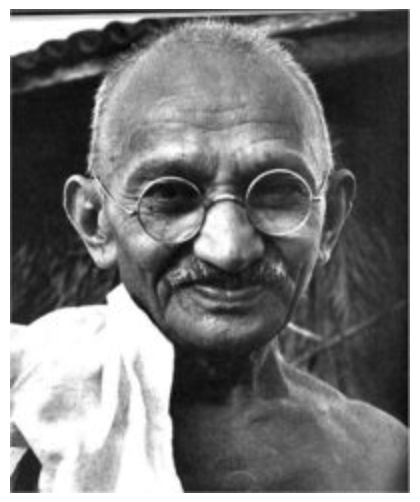
“I became more than ever convinced that it was not the sword that won a place for Islam… It was the rigid simplicity, the scrupulous regard for pledges, his intense devotion to his followers, and his absolute trust in God. These, and not the sword, carried everything before them and surmounted every obstacle.”
3. The ‘Aqabah Model in Action
As depicted in the ‘Aqabah Model chart, the Prophet’s conduct at Uhud was a living manifestation of “Strategic Restraint” and “Active Defense of Universal Rights.” By refusing to let the “Shadow of the Sword” eclipse the “Radiant Path” of mercy, he ensured that the Sovereign Community of Medina remained grounded in the Sanctity of the Soul and the Dignity of Persons.
Leadership Lesson: The Power of Forgiveness
Ethical Resilience: The Prophet Muhammad ﷺ demonstrated that a leader’s most potent weapon is principled compassion. By averting evil with good on the battlefield, he proved that a “Just and Sustainable Organization” is built on the courage to forgive, transforming even the most bitter enemies into future partners in peace.
The Post-War Humanitarian Crisis: Orphans and Economic Security
The aftermath of the Battle of Uhud (625 CE) presented the Medinan state with a profound social crisis. The loss of seventy-three men—the primary breadwinners and protectors of their households—left a significant number of widows and orphans without a means of livelihood. In a tribal society where a woman’s security was tethered to her familial or marital status, these families faced immediate economic and physical vulnerability.
1. The Rationale of Restorative Protection
To ensure Community Security and the preservation of family businesses and properties, the Quran introduced a regulated system of polygamy. This was a tactical solution to a specific demographic crisis:
♦ A Shift from Unlimited to Limited: While ancient world traditions often practiced unlimited polygamy, Islam imposed a strict limit of four wives.
♦ The Mandate of Equity: This allowance was contingent upon the man’s ability to treat each wife with absolute legal and emotional equity.
♦Restoring Dignity: By integrating widows and orphans into established households, the state ensured they received Amn (Security) and tranquility rather than falling into poverty or exploitation.
2. Modern Equivalencies
In the 21st century, modern nation-states address similar social vulnerabilities through institutionalized social safety nets, such as financial aid for single parents and universal healthcare. In the 7th century, however, the “Aqabah Model” of shared responsibility used marriage as a legal and social instrument to fulfill the state’s duty to uphold Equal Rights and Dignity for its most marginalized citizens.
3. The Ethical Boundary of Justice
The Quranic text famously qualifies this allowance with a warning: “But if you fear that you will not be just, then [marry only] one” (Quran 4:3). This establishes that the “Radiant Path” prioritizes Justice (Adl) over social tradition, ensuring that the protection of orphans remains the primary ethical objective.
Leadership Lesson: Crisis Management with Compassion
Adaptive Welfare: The Prophet Muhammad ﷺ demonstrated that a leader’s duty is to innovate solutions for social vulnerability. By transforming a communal tragedy into a structured system of care, he proved that a “Just and Sustainable Organization” leaves no member behind, ensuring that the Sanctity of the Soul is protected even in the wake of war.
The Shura Principle: A Blueprint for Participatory Governance
The Shura (Consultation) principle is a cornerstone of Islamic governance, often cited as a direct parallel to modern democratic deliberation. As depicted in the “Aqabah Model” chart, authority in Islam is derived from Voluntary Consent and Formal Representation rather than hereditary rule or autocratic decree.
1. The Divine Mandate for Consultation
The Quran elevates Shura from a suggestion to an ethical imperative, directing the Prophet ﷺ to involve the community in decision-making:
“Take counsel with them in the matter, and when you are resolved, put your trust in Allah. Allah loves those who trust.” (Quran 3:159)
2. The Test of Democracy at Uhud
The Battle of Uhud (625 CE) serves as a primary historical case study for the application of Shura. Despite the high stakes, the Prophet ﷺ adhered to the majority’s preference to fight outside Medina. This commitment to the democratic process was maintained even when it opened the door to internal subversion by the leader of the “Hypocrites,” Abdullah ibn Ubayy (ibn Abi Salul), who attempted to use traditional tribal influence to undermine the community’s collective decision.
3. Sovereignty and Legal Boundaries
While modern democracy often views the people as the ultimate source of law, the Islamic model distinguishes between Sovereignty and Agency:
♦ The Sacred Boundary: Shura is limited to the interpretation and application of divine law; it cannot be used to override fundamental prohibitions in the Quran.
♦ The Civic Domain: In all other matters—health, infrastructure, and communal welfare—the community is granted full authority to cast votes and reach consensus.
Leadership Lesson: The Strength of Collective Wisdom
Consultative Resilience: The Prophet Muhammad ﷺ demonstrated that a leader’s duty is to trust the process of consultation, even when the results are challenging. By prioritizing the “Shura Principle” over unilateral command, he demonstrated that a just society is one in which power is a shared trust and accountability is a religious obligation.
Strategic Deterrence: Preempting the Confederacy of Aggression (625 CE)
In the wake of the Battle of Uhud, the Meccan Quraysh launched an aggressive propaganda campaign, claiming that the Muslim state was on the verge of collapse. They successfully incited several nomadic tribes to form a confederacy to invade Medina, disrupt its trade, and undermine its growing social stability.
1. The Display of Readiness: Hamra’ al-Asad
To counter the perception of weakness, the Prophet ﷺ immediately ordered the pursuit of the Meccan army to Hamra’ al-Asad. By camping in view of the enemy for three days, the Muslims demonstrated that their core defensive capabilities remained intact. This psychological maneuver signaled that any attempt to invade Medina would be met with an organized and resolute response.
2. Forestalling the Invasion: Banu Asad and Banu Hudhayl
A few months later, Medina learned that the Banu Asad and Banu Hudhayl were mobilizing for a coordinated strike. The Prophet ﷺ responded with preemptive surgical operations rather than waiting for a full-scale war:
♦ The Banu Asad Mission: A dispatch of 150 men arrived at the tribe’s gathering point so swiftly that the aggressors fled to the mountains, dissolving the threat without a battle.
♦ The Neutralization of Khalid al-Huzali: The Prophet ﷺ authorized a mission to neutralize Khalid al-Huzali, the primary architect of the tribal coalition. His removal effectively terminated the campaign of disruption before it could reach the city gates.
3. Preserving “Amn” Through Decisiveness
As illustrated in the “Deterrence by Denial” pillar of the ‘Aqabah Model, these measures were not acts of expansionism, but of active defense. By forestalling meddling and destructive drives, the Prophet ﷺ protected the Amn (God-given security) of the city. These war-preventing measures ensured that the “Radiant Path” remained a sanctuary for progress rather than a victim of tribal lawlessness.
Leadership Lesson: The Strength of Proactivity
Preventive Diplomacy: The Prophet Muhammad ﷺ demonstrated that the best way to maintain peace is to be prepared to forestall aggression. By choosing decisive prevention over reactive warfare, he proved that a leader’s primary duty is to protect the community’s security through anticipatory action and psychological deterrence.
The Plots of Raji’ and Bi’r Ma’una: Treachery and the Cost of Trust (625 CE)
The period following the Battle of Uhud was marked by a series of devastating security breaches orchestrated by tribes who utilized deception as a weapon against the “Radiant Path.” These incidents underscore the immense risks the early Muslims took to provide the “fountain of knowledge” to those who requested it.
1. The Betrayal at Al-Raji
In early 625 CE, the Huzayl tribe, driven by bribery from Mecca, feigned interest in religious instruction. They requested that the Prophet ﷺ send teachers to their territory. Upon arrival at the well of Al-Raji’, the Muslim delegation was ambushed. Most were martyred on the spot; two were taken as political hostages and sold to the Meccan Quraysh, where they were eventually executed in public. This event highlighted the Existential Risk faced by those who prioritized peace and education over tribal caution.
2. The Tragedy of Bi’r Ma’una
Shortly thereafter, a more massive catastrophe occurred involving seventy scholars and missionaries from the Banu Sa’sa’. Despite being granted a “Covenant of Protection” by a tribal leader, the delegation was betrayed at Bi’r Ma’una. Sixty-nine missionaries were liquidated in a coordinated assault. This was not a military engagement, but a crime of treachery against a group of non-combatant scholars.
3. The Demand for Accountability
The Prophet ﷺ was profoundly moved by this loss, particularly as it targeted the intellectual elite of the community. In response, he authorized a defensive pursuit to demonstrate that the Sovereign Community of Medina could not be victimized with impunity. While the perpetrators retreated into the mountains, the recovery of resources served as a Strategic Deterrence, signaling that the “Radiant Path” would defend the Sanctity of the Soul against those who violated the sacred codes of hospitality.
Leadership Lesson: The Vulnerability of Peace
Principled Vigilance: The Prophet Muhammad ﷺ demonstrated that a leader must balance the sincere pursuit of peace with the necessity of security. By honoring requests for education despite the risks, he proved his commitment to humanity; by demanding accountability for betrayal, he ensured that the Amn (Security) of his people remained a non-negotiable priority.
The Expedition of Dhat al-Riqa: Strategy of Active Deterrence
Following the establishment of the Medinan state, the Prophet Muhammad ﷺ continued to monitor threats from nomadic tribes seeking to disrupt the new social order. Upon receiving intelligence that several clans of the Banu Ghatafan (including the Banu Muharib and Banu Tha’labah) were massing forces in the plateau of Nejd, the Prophet ﷺ initiated a preemptive mission to restore stability.
1. The March of the “Patchwork.”
The Prophet ﷺ led a force of approximately 400 to 700 men into the heart of the enemy territory. The expedition earned its name, Dhat al-Riqa (“The Patchwork”), from the desperate conditions of the journey; the terrain was so rugged that the companions were forced to wrap their bleeding feet in scraps of cloth and leather to persevere.
2. Deterrence by Denial
When the Muslim force reached Nakhlah, the Ghatafan tribes panicked and dispersed into the surrounding mountains. By demonstrating Strength and Readiness, the Prophet ﷺ effectively “terminated” the threat of invasion without a full-scale battle. This outcome aligns with the Deterrence by Denial pillar of the ‘Aqabah Model—building internal resources and projecting power to prevent aggression before it occurs.
3. The “Prayer of Fear” (Salat al-Khawf)
It was during this expedition that the Prophet ﷺ introduced the “Service of Prayer in Danger” (Salat al-Khawf). To ensure the camp’s Community Security while fulfilling their spiritual obligations, the Muslims divided into two groups: one prayed while the other stood guard, and they rotated. This innovative practice demonstrated the Prophet’s ﷺ commitment to Sacred Order even in the most perilous environments.
4. The Ethics of Forgiveness
A legendary moment of character occurred when a polytheist man found the Prophet ﷺ resting alone under a tree. The man unsheathed the Prophet’s ﷺ own sword and asked, “Who can protect you from me now?” The Prophet ﷺ calmly replied, “Allah.” Stunned by this absolute conviction, the man trembled and dropped the sword. The Prophet ﷺ picked it up and asked the same question, then chose to forgive the man and set him free. This act of Character-Based Leadership so moved the man that he returned to his people, proclaiming he had met the “best of mankind.”
Leadership Lesson: Preventing Conflict Through Presence
Strategic Resilience: The Prophet Muhammad ﷺ demonstrated that a leader’s duty is to forestall conflict through proactive presence. By marching deep into hostile territory to disperse a threat and introducing the “Prayer of Fear,” he proved that the “Radiant Path” is protected by a combination of meticulous organization and unwavering spiritual trust.
The Battle of the Trench: Deterrence, Innovation, and the Failure of the Confederacy (627 CE)
By 627 CE, the Meccan Quraysh, desperate to extinguish the “Radiant Path,” orchestrated their most formidable campaign: the formation of a Great Confederacy (al-Ahzab). Orchestrated in part by leaders of the exiled Nadir tribe, this alliance united 10,000 warriors from the Quraysh, Ghatafan, Asad, and Sulaym tribes—a force that vastly outnumbered the 2,500-strong Muslim defense.
1. Intellectual Innovation: The Persian Trench
True to the “Formal Representation” and “Decentralized Accountability” shown in the chart above, the Prophet Muhammad ﷺ did not act as an autocrat. He sought the consultation (Shura) of his people. Salman al-Farsi (Salman the Persian) proposed a revolutionary military innovation previously unknown in Arabia: the excavation of a massive defensive trench (Khandaq) to the north of Medina.
The Prophet ﷺ immediately organized a coordinated engineering operation. Within 25 days, the community dug a trench approximately 2,000 meters long, 4 meters wide, and 6 meters deep. This masterstroke of Deterrence by Denial neutralized the Meccan cavalry advantage before they even reached the city.
2. Strategic Restraint Amidst Provocation
For forty days, the Confederacy was forced into a static siege. Meccan knights and poets, including the legendary Amr ibn Abd al-Wud, attempted to goad the Muslims into a reckless, bloody engagement through insults and challenges. Following the pillar of “Strategic Restraint” from the ‘Aqabah Model, the Prophet ﷺ commanded his men to hold their positions, refusing to let ego or provocation lead to unnecessary bloodshed.
3. Crisis and Treason: The Qurayza Betrayal
The siege reached its most critical point when the Banu Qurayza tribe, persuaded by Meccan lobbyists, violated their covenant with the Prophet ﷺ—an act of high treason designed to leave the Muslims vulnerable from the rear. This test of “Community Security” required the Prophet ﷺ to engage in high-level Psychological Warfare and diplomacy, successfully sowing seeds of doubt between the various factions of the Confederacy.
4. The Divine and Natural Resolution
The coalition eventually fractured due to:
♦ Diplomatic Attrition: The withdrawal of the Ghatafan tribe after the Prophet’s ﷺ successful negotiations.
♦ Logistical Collapse: Depleted food and water supplies in the harsh desert environment.
♦ Environmental Deterrence: A violent storm—characterized by freezing winds and blinding sand—decimated the Meccan camp, blowing away their tents and their will to fight.
5. A Victory for Peace and Stability
The Confederacy’s withdrawal marked a permanent shift in the regional balance of power. The Prophet ﷺ famously declared, “Now we shall go to them, and they will not come to us,” signaling that the era of defensive survival had ended. This victory was a triumph for Justified Conflict as a means to Restore Order, proving that the ‘Aqabah Model’s focus on Building Internal Resources is the most effective path to lasting peace.
Leadership Lesson: The Strength of Innovation
Anticipatory Defense: The Prophet Muhammad ﷺ demonstrated that a leader’s greatest tool is the openness to new ideas. By adopting Salman’s “foreign” strategy and maintaining strict discipline under pressure, he proved that a “Radiant Path” is protected not by the size of the army, but by the council’s wisdom and the resilience of the social contract.
PART VI
The Strategic Peacemaker
The Strategic Peacemaker — Governance, Women’s Rights, and Diplomatic Sovereignty
The Architecture of Justice: Sharia as a Civic Constitution
Following the Battle of the Trench (627 CE), the Medinan state transitioned from a period of existential survival to one of long-term institutional stability. This era necessitated a comprehensive legislative framework to manage the day-to-day affairs of a burgeoning, multi-faith metropolitan center. This framework is Sharia—the ethical and social standards that govern the “Radiant Path.”
1. The Constitutional Nature of Sharia
Far from the popular misconception of an inflexible penal code, Sharia functions as a foundational set of principles for lawmakers and civic entities. As Dr. Adnan Ibrahim elucidates, Sharia is analogous to a modern constitution: it provides the “moral North Star” for legislative consultation (Shura). Its primary objective is the absolute Equality Before the Law, ensuring that justice, freedom, and dignity are guaranteed for all citizens, regardless of status or creed.
2. Participatory Governance: The Democratic Legacy
The principle of Voluntary Consent, shown in the ‘Aqabah Model, reached its zenith during the early Caliphates. The inauguration addresses of the first two leaders establish a clear precedent for Participatory Democracy:
♦ Abu Bakr (The First Caliph): Defined leadership as a conditional trust. “If I do well, help me; if I act wrongly, correct me… The weak among you are deemed strong by me until I return what is rightfully theirs.”
♦ Umar ibn al-Khattab (The Second Caliph): Formally recognized the citizenry as partners in governance. “You are my partners in running the state… If I deviate, correct me. Strengthen me with your advice.”
3. Decentralized Justice and Pluralism
As depicted in the “Inclusive Citizenship” icon of the Aqaba model, Sharia introduced a revolutionary system of Communal Autonomy. It decentralized law and justice, allowing non-Muslim communities to remain governed by their own religious decrees.
♦ Jurisdictional Freedom: The Quran explicitly mandates this pluralism: “Let the People of the Gospel judge by what Allah has revealed therein” (Quran 5:47).
♦ The Rabbinical and Ecclesiastical Courts: Scholar Muhammad Hamidullah notes that Islamic judges (Qadis) could not interfere in the private or civil matters of non-Muslims. Jewish and Christian communities maintained their own independent court systems, ensuring that the Sanctity of the Soul and the Freedom of Belief were protected within the state.
Please see “Do you Really Understand Shari’ah,” by Andrew March, Associate Professor of Political Science at the University of Massachusetts, Amherst, presented by, Please visit the
Emir – Stein Center

Leadership Lesson: The Sovereignty of the Law
Inclusive Rule of Law: The Prophet Muhammad ﷺ demonstrated that a leader’s duty is to be subject to the law, not above it. By decentralizing justice and honoring the legal autonomy of other faith groups, he demonstrated that a “Just and Sustainable Organization” protects diversity through a unified commitment to Equal Rights and Dignity.
The Principle of Shura in Islam Comprises Democracy in Some Respects
Democracy, as in people sharing governance, is evident in the first two Caliphate regions. Let the inauguration addresses of both Caliphs speak for themselves. The first Caliph, Abu Bakr, inauguration address:
“O people, I have been appointed over you, though I am not the best among you. If I do well, then help me; if I act wrongly, correct me. Truthfulness is synonymous with fulfilling trust, and lying is equivalent to treason. The weak among you is deemed strong by me until I return to them that is rightfully theirs….”
The Jurisprudence of Pluralism: Sharia in the Global Context
In 2026, legal historians analyze the classical application of Sharia as a pioneer of Legal Pluralism. Unlike modern nation-states that often enforce a single, uniform code, the early Islamic state established a system where multiple legal traditions coexisted—a principle clearly reflected in the “Pluralism & Equal Protection” and “Inclusive Citizenship” pillars of the ‘Aqabah Model.
To understand the Islamic state’s historical success, one must recognize its commitment to Communal Autonomy. As the Encyclopedia Britannica elucidates, classical Sharia was a framework that respected and incorporated the diverse religious laws of the citizens it governed.
1. The Legacy of the Separate Court Systems
From the early Caliphates to Al-Andalus, the Indian subcontinent, and the Ottoman Millet system, the Islamic state empowered minority communities to manage their own civil and religious affairs. The Encyclopedia Britannica notes:
“Classical Shari’ah incorporated the religious laws and courts of Christians, Jews, and Hindus… allowing these communities to maintain their own independent legal identities within the state.”
2. Sharia vs. Western Legal Paradigms
The Encyclopedia Britannica further identifies two fundamental distinctions between Sharia and traditional Western legal systems:
♦ Breadth of Scope: While Western law primarily regulates the individual’s relationship with the State and neighbors, Sharia is a Comprehensive Code of Behavior. It serves as both a legal system and an ethical guide, addressing the individual’s relationship with the State, the community, and their own conscience. It defines not only what one is legally bound to do but what one ought to do in conscience.
♦ The Source of Authority: The second distinction is the foundational concept of law as an expression of Divine Will, rather than purely human legislation. This ensures that the Sovereign Community (as seen in the ‘Aqabah chart) is governed by a set of immutable ethical standards—such as the Sanctity of the Soul and the Ban on Persecution—that no ruler can unilaterally overturn.
3. The “Millet” Model of Inclusion
As depicted in the “Medina Charter (622 CE)” icon in the Aqaba model, the “Radiant Path” established a society in which Equal Rights and Dignity were not just slogans but legal realities. By decentralizing justice and allowing diverse groups to be governed by their own traditions, the Prophet ﷺ created a Just and Sustainable Organization that flourished for centuries.
Leadership Lesson: The Strength of Legal Diversity
Inclusive Sovereignty: The Prophet Muhammad ﷺ demonstrated that a leader’s duty is to protect the Freedom of Belief for all. By allowing other faith groups to maintain their own laws and courts, he proved that a unified state is best built on Mutual Respect and Legal Autonomy, ensuring that every citizen feels a sense of belonging and protection.
The Aesthetics of Faith: Beauty, Flexibility, and Rationality
In 2026, scholars of religious psychology and leadership experts identify stories like these as the definitive proof that the “Radiant Path” is built on Rationality and Empathy. As illustrated in the ‘Aqabah Model under the pillars of Character-Based Leadership and Freedom of Conscience, faith is presented as a restorative force rather than a punitive one.
The Prophet Muhammad ﷺ taught that the essence of faith is not found in rigidity or excessive harshness, but in its ability to adapt to the complexities of the human condition. He emphasized that the most beloved expression of faith is one that is straightforward and compassionate:
“The best religion to Allah is al-Hanafiyya al-Samha—the primordial, simple, easy, and straightforward path.” — (Musnad Ahmad)
1. The Case of the “Ruined Man”: A Masterclass in Mercy
This principle of Sublime Flexibility is perfectly captured in the famous story of an inquirer who approached the Prophet ﷺ in a state of absolute distress. The man had violated the sanctity of the fast, a transgression he believed would lead to his spiritual ruin.
Instead of a harsh condemnation, the Prophet ﷺ led him through a series of rational alternatives for restitution, seeking the path of least resistance for the man’s specific circumstances:
♦ The Path of Liberation: Can you free a slave? (No).
♦ The Path of Discipline: Can you fast for two months? (No).
♦ The Path of Charity: Can you feed sixty poor people? (No).
2. From Judgment to Generosity
When the man confessed his inability to fulfill even the charitable requirement, the Prophet ﷺ remained patient. When a basket of dates was offered to him by another companion, the Prophet ﷺ did not keep it for the state; he transformed the man’s “sin” into an opportunity for Providential Support. When the man noted that he was the poorest person in Medina, the Prophet ﷺ laughed with a “heart of beauty” and instructed him to feed his own family.
3. Faith as Tranquility
This episode reveals that the “Radiant Path” is designed to uplift and restore. The man entered the leader’s presence, expecting a heavy burden, and left with a blessing for his entire household. It proves that:
♦ Graciousness over Judgment: Faith seeks to solve human problems, not exacerbate them.
♦ Ease over Hardship: Divine law is a tool for Amn (Security) and peace, not a means of psychological ruin.
Leadership Lesson: The Beauty of the Heart
Empathetic Management: The Prophet Muhammad ﷺ demonstrated that a leader’s most powerful tool is Understanding (Fahm). By choosing flexibility over rigidity and mercy over condemnation, he proved that a “Just and Sustainable Organization” is one in which members feel safe confessing their flaws, knowing they will be met with a path toward restoration rather than rejection.
The Mandate of Moderation: Rejecting Ghulu (Extremism)
The “Character-Based Leadership” and “Freedom of Conscience” icons provide the perfect visual anchor for the concept of Moderation—showing that the state was built on Inclusive Citizenship rather than religious coercion.
As the “Radiant Path” expanded across diverse civilizations, the Prophet Muhammad ﷺ recognized a recurring human tendency toward Ghulu—excessiveness or religious extremism. He identified this as a destructive force that undermines the very essence of faith, which is designed to provide Amn (Security) and tranquility.
1. The Warning Against Religious Excess
The Prophet ﷺ explicitly linked extremism to the collapse of previous societies, serving as a timeless warning for modern governance:
“Beware of Ghulu in religion; for those who came before you were destroyed only by their extremism in religion.” — (Ibn Majah)
This Prophetic warning is reinforced by the Quranic mandate to maintain the Sovereignty of Truth over ideological distortion:
“Do not commit excess in your religion, nor say anything about Allah except the truth.” — (Quran 4:171)
2. The Principle of Ease (Yusr)
Consistent with the “Freedom of Conscience” pillar of the ‘Aqabah Model, the Divine intent is the facilitation of human flourishing, not the imposition of hardship:
“Allah intends for you ease and does not intend for you hardship.” — (Quran 2:185)
Aisha, the Prophet’s ﷺ wife and a primary scholar of his legacy, noted that his default strategic and personal choice was always the most accessible and reasonable option: “Whenever the Prophet ﷺ was given a choice between two matters, he always chose the easier of the two.” — (Sahih Muslim)
3. The Stainless Character: A Model of Unpretentious Leadership
The Prophet’s ﷺ rejection of Ghulu was reflected in his Character-Based Leadership. As Dr. Gustav Weil notes in History of the Islamic People:
“Muhammad was a shining example to his people… so unpretentious that he would receive no special mark of reverence… He was accessible to all and at all times. Unlimited was his benevolence and anxious care for the community’s welfare.”
Weil, Dr. Gustav, in Brockelmann, Carl (editor): History of the Islamic People, Cornell 1947. Ref 2 Page 158
By refusing the “special marks of reverence” common to despotic rulers, he ensured that the Sovereign Community remained a partnership of equals, grounded in the Decentralized Accountability shown in the Aqaba chart.
Leadership Lesson: The Strength of the Middle Path
Balanced Governance: The Prophet Muhammad ﷺ demonstrated that a leader’s most vital quality is Symmetry. By rejecting the “Shadow of Extremism” and embracing the “Radiant Path” of ease and accessibility, he proved that a sustainable organization is built on Rationality, Humility, and the Prevention of Harm.
The Sovereignty of Choice: The Mandate for Freedom of Belief
‘Aqabah Model is a landmark in Pluralism and Equal Protection.
The “Radiant Path” is built upon a profound acceptance of the human family in all its diversity. Contrary to the claims of extremists, Islam treasures the Freedom of Conscience as a divine gift. As Dr. Mustafa Zayd al-Azhari meticulously documents in his two-volume study, The Abrogated Verses of the Qur’an, there are 141 verses that establish and defend the universal right to believe or disbelieve.
1. The Rejection of Coercion
The Quranic paradigm holds that faith is valid only when it arises from conviction rather than compulsion. It establishes a clear boundary between the “Path of Rectitude” and the “Path of Error,” leaving the choice entirely to the individual:
“The Truth is from your Lord; then whosoever wills, let him believe, and whosoever wills, let him disbelieve.” — (Quran 18:29)
“There shall be no compulsion in religion. Rectitude has become clear from error.” — (Quran 2:256)
2. The Divine Will for Diversity
The Quran explicitly addresses the futility of forced conversion, noting that if the Creator had willed a single, uniform faith, He would have made it so. Thus, any attempt to compel humanity against its will is a violation of the Divine Plan:
“Had your Lord willed, all those on earth would have believed together. Would you then [O Muhammad] compel people until they become believers?” — (Quran 10:99)
3. The “No Authority Over Belief” Doctrine
As illustrated in the “Freedom of Belief & Law” pillar of the ‘Aqabah Model, the role of the Prophet ﷺ—and by extension, any legitimate authority—is not to act as a warden or governor over people’s souls. The Prophetic mission is limited to the Delivery of the Message (Balaghah), not the enforcement of dogma:
♦ The Limitation of Oversight: “I am not a watcher over your doings.” — (Quran 6:104)
♦ The Rejection of Guarding: “We have not sent you [O Muhammad] to be their keeper.” — (Quran 4:80)
♦ The Mandate of Delivery: “Your duty is only to deliver the message.” — (Quran 42:48)
Leadership Lesson: The Guardian of Agency
Inclusive Citizenship: The Prophet Muhammad ﷺ demonstrated that a leader’s duty is to protect the Freedom of Expression for all. By establishing the Medina Charter (622 CE), he proved that a just society is one in which Equal Rights and Dignity apply to all people, irrespective of their creed, ensuring that the Sanctity of the Soul is never compromised by the state.
The Status of Women and Reform
In 2026, historians and sociologists recognize the Prophet Muhammad’s ﷺ reforms as a definitive turning point in the history of human rights. By shifting the status of women from “servile objects” to equal partners, he established a society grounded in the Equal Rights & Dignity pillar of the ‘Aqabah Model.
The Restoration of Dignity: Women’s Rights and Social Reform
The status of women has historically been a site of profound conflict. In 7th-century Arabia—as in many ancient civilizations—women were often relegated to a status of absolute inferiority, treated as objects without legal or social agency. The “Radiant Path” introduced a revolutionary paradigm shift, moving beyond mere “fairness” to the total restoration of a woman’s status, honor, and legal personhood.
1. The Principle of Equal Partnership
The Prophet Muhammad ﷺ dismantled the hierarchy of gendered inferiority with a definitive declaration of equality:
“Women are the twin halves (partners) of men.” — (Sunan Abu Dawud)
He established that the true measure of a man’s nobility is found in his treatment of women, famously stating: “Only a man of noble character will honor women, and only a man of base intentions will dishonor them.”
2. Accessibility and Personal Agency
Consistent with the “Character-Based Leadership” shown in the Aqaba chart, the Prophet ﷺ was uniquely accessible to women. As recorded by his servant Anas, he would stop and listen patiently to even the most marginalized women, ensuring their problems were solved with the same urgency as those of the tribal elite. He codified their Freedom of Choice, making a woman’s explicit consent a mandatory legal condition for marriage.
3. The Sanctity of Motherhood
The Prophet ﷺ elevated motherhood to the highest spiritual rank, prioritizing the mother’s rights above all others. He taught that “Paradise lies beneath the feet of mothers,” transforming the domestic sphere into a gateway for divine reward. In a famous dialogue recorded by Al-Bukhari, he emphasized three times that a mother deserves the “best treatment” before mentioning the father.
4. Legal and Economic Empowerment
As depicted in the “Inclusive Citizenship” and “Freedom of Belief & Law” icons of the Aqaba model, the Quranic Revelation granted women independent economic rights that were centuries ahead of their time:
♦ : “Women shall have a share of what their parents and kinsmen leave… it is legally theirs.” — (Quran 4:7)
♦ Civil Rights: Women were granted the same rights to education, inheritance, and the initiation of divorce as men, ensuring their Community Security was not dependent on male whims.
Leadership Lesson: The Guardian of Equality
Inclusive Justice: The Prophet Muhammad ﷺ demonstrated that a “Just and Sustainable Organization” is impossible if half its members are marginalized. By institutionalizing Equal Rights and Dignity, he proved that a society’s progress is measured by the security and honor it provides to its women.
Emotional Intelligence and the Feminine Identity
In 2026, scholars of Social Intelligence and Relational Leadership analyze the Prophet’s ﷺ conduct not just through legal reform, but through his profound emotional intelligence. As depicted in the ‘Aqabah Model [1], his leadership was built on Character-Based Leadership [1] and the Sanctity of the Soul.
The Prophet Muhammad’s ﷺ advocacy for women transcended formal legislation; it was rooted in a deep, empathetic understanding of the female psyche and individuality. He viewed a woman’s emotions and dignity as divine trusts that required a leader’s anxious care and protection.
1. The Aesthetics of Consideration
A remarkable example of the Prophet’s ﷺ Strategic Consideration was his practice when returning from long military or diplomatic missions. He would command the army to camp outside the city limits before entering Medina [2]. This was a deliberate act of Respect for Privacy and Pride, giving the women of the city time to prepare and receive their husbands with dignity [2]. He prioritized their emotional well-being over the military’s haste to return home.
2. The First Global Feminist
In her work Muhammad: Uncovering the True Story, researcher Anita Rai characterizes the Prophet ﷺ as history’s greatest unrivaled champion for women:
“Muhammad had pulled the woman out of her embarrassing position… he lifted her from her servitude to man to be her own master. He turned her from a beggar to a rightful taker and a strong stakeholder. Muhammad had addressed her complaints in accordance with divine ordinance even before she raised them… He restored the woman’s glory.”
(Rai, Anita, Muhammad, Uncovering the True Story, 2007, Ref. 2, Page 159)
3. Restoring the Lost Identity
As illustrated in the “Pluralism & Equal Protection” pillar of the ‘Aqabah Model [1], the Prophet ﷺ recognized women as Sovereign Individuals. He did not merely “grant” rights; he restored what was rightfully theirs as gifts from God:
♦ From Nonentity to Stakeholder: Shifting the social paradigm from servile objects to Confident Individuals [1].
♦ The Healing of Sorrows: Listening with “loving patience” to rectify systemic injustices [2].
Leadership Lesson: The Strength of Empathy
Relational Integrity: The Prophet Muhammad ﷺ demonstrated that a leader’s duty is to protect the Dignity and Pride of every individual. By treating a woman’s emotional needs as a state priority, he proved that a “Just and Sustainable Organization” [1] is one in which Equal Rights and Dignity [1] are felt in the smallest nuances of daily life.
The Architecture of Reconciliation: The Prophet’s Pursuit of Peace
In 2026, historians of strategic diplomacy analyze the Prophet’s ﷺ later Meccan policy as a masterclass in Conflict De-escalation. As illustrated in the ‘Aqabah Model under the pillars of Strategic Restraint and Ethical Boundaries, the Prophet ﷺ prioritized the restoration of peace over the pursuit of total military victory.
The “Strategic Restraint” and “Justified Conflict” icons serve as a visual anchor for this narrative, showing how the Prophet ﷺ used Ethical Boundaries to transform a potential war into a successful peace mission.
Following the strategic neutralization of external threats at Khaybar and the Meccan Confederacy’s exhaustion after the Battle of the Trench, the Muslim state was positioned for a decisive military offensive against the Quraysh. However, rather than seeking a final subjugation of his enemies, the Prophet Muhammad ﷺ initiated a revolutionary campaign of proactive peace.
1. The Bridge of Compromise
The Prophet’s ﷺ leadership was defined by his ability to build bridges across seemingly impassable chasms. Where others saw an opportunity for conquest, he saw an opportunity for mutual compromise. He recognized that a “Radiant Path” cannot be paved with the blood of unnecessary conflict, even when one holds the military advantage.
2. The Pilgrimage of Peace (Umrah)
The first “brick” in this bridge of reconciliation was his decision to perform the Umrah (the Minor Pilgrimage) to Mecca in 628 CE. By setting out with 1,400 unarmed followers dressed in simple white pilgrim robes, he shifted the geopolitical dynamic from Active Defense to Moral Diplomacy.
3. Restoring the Sacred Order
This move was a manifestation of the “Ethical Boundaries” shown in the Aqabah Model. By approaching Mecca as a pilgrim rather than a general, the Prophet ﷺ challenged the Quraysh to honor their own ancient traditions of sanctuary and peace. This strategic use of non-violent resistance forced a dialogue that would eventually lead to the Treaty of Hudaybiyyah—a landmark in international relations that prioritized Amn (Security) and long-term stability over short-term dominance.
Leadership Lesson: The Strength of the Olive Branch
Strategic De-escalation: The Prophet Muhammad ﷺ demonstrated that a leader’s greatest virtue is the capacity for creative compromise. By choosing the path of the pilgrim over the path of the conqueror, he proved that a “Just and Sustainable Organization” is built on the courage to seek peace from a position of strength.
The Pilgrimage of Peace: The Hudaybiyyah Strategic Maneuver (628 CE)
In 628 CE, the Prophet Muhammad ﷺ initiated a masterclass in non-violent diplomacy. By announcing a journey for the Umrah (Minor Pilgrimage), he drew on the sacred traditions of Arabia to create a bridge of reconciliation. As illustrated in the “Strategic Restraint” pillar of the ‘Aqabah Model, he prioritized the restoration of order over military dominance.
1. The Entitlement of Faith
Historically, the Meccan Quraysh could not legally bar any ethnic group from the Sacred House. As adherents of an Abrahamic faith, the Muslims were entitled to perform these rites. To emphasize his peaceful intent, the Prophet ﷺ invited a diverse group of 1,400 followers, including non-Muslim allies, to join the journey unarmed and dressed in the symbolic white robes of pilgrims.
2. Avoiding Conflict Through Tactical Rerouting
Learning of the Muslims’ approach, the Meccan leadership dispatched a small cavalry unit to intercept them. Rather than engaging in a confrontation—where the 1,400 pilgrims could have easily secured a victory—the Prophet ﷺ chose a path of Tactical De-escalation. He navigated his followers through a grueling, unused canyon route to bypass the blockade and reach the sacred limits of Mecca without a single drop of blood being shed.
3. The Manifesto of Reconciliation
Upon arriving at Al-Hudaybiyyah, the Prophet ﷺ established his camp and issued a profound declaration of intent:
“By the One in Whose hand is my soul, they will not ask me for any plan in which the sanctities of Allah are honored, except that I shall grant it to them.” Al Nihaya, 2/48 Seirah Volume 2, page 99.
This statement signaled his total commitment to Amn (Security) and the Sovereignty of Peace. He proved that the “Radiant Path” values negotiated stability over a triumphant war.
Leadership Lesson: The Strength of the Olive Branch
Strategic Compromise: The Prophet Muhammad ﷺ demonstrated that a leader’s greatest tool is the courage to seek peace. By choosing a difficult, non-confrontational route and committing to a negotiated settlement, he proved that a “Just and Sustainable Organization” is built on the Integrity of Purpose rather than the ease of conflict.
The Treaty of Hudaybiyyah: A Masterpiece of Strategic Diplomacy (628 CE)
In 2026, historians of international relations analyze the Treaty of Hudaybiyyah as a masterclass in De-escalation and Asymmetric Diplomacy. As illustrated in the ‘Aqabah Model chart under Strategic Restraint and Ethical Boundaries, the Prophet Muhammad ﷺ prioritized the long-term goal of peace over immediate tactical victories.
At Hudaybiyyah, the Prophet Muhammad ﷺ initiated a revolutionary diplomatic campaign. His objective was clear: to fulfill the sacred rite of Umrah and bridge the chasm with the Meccan Quraysh through a negotiated settlement. Despite intense provocations designed to spark a conflict within the sacred limits, the Prophet ﷺ remained anchored in the Amn (Security) and Restraint depicted in the Aqaba model.
1. Resisting the Incitement to Violence
The Meccan leadership attempted several maneuvers to derail the peace process:
♦ Tactical Provocation: They dispatched skirmishers to spark a battle, which would have legally barred the Muslims from the pilgrimage.
♦ The Detention of Uthman: They imprisoned the Prophet’s ﷺ emissary, Uthman ibn Affan, to goad the Muslims into a rescue operation.
♦ The Act of Grace: In a stunning display of Character-Based Leadership, the Prophet ﷺ captured and subsequently released eighty attackers unharmed, signaling that the “Radiant Path” would not be baited into bloodshed.
2. The Shift in Tribal Alliances: Al-Hulath ibn Alqamah
Diplomacy gained momentum through Al-Hulath ibn Alqamah, the leader of the Ahbash tribes. Charged with Mecca’s security, Hulath was so moved by the sight of the Muslims in their white pilgrim garments and their sacrificial animals that he recognized the Quraysh were in breach of the sacred code of hospitality. He famously threatened the Quraysh oligarchy:
“By the One who has my soul in His hand, you will allow Muhammad to do what he has come for, or I will lead the Ahbash in rebellion against you.”
3. The Testimony of Urwah ibn Masoud
The Meccans’ second envoy, Urwah ibn Masoud, was an experienced diplomat who had visited the courts of Caesar, Heraclius, and the Negus. After negotiating with the Prophet ﷺ, he returned to Mecca with a startling report on the Muslims’ Voluntary Consent and Shared Responsibility:
“I have seen kings in their kingdoms, but I have never seen a leader loved as Muhammad is by his companions. They will not allow an ounce of harm to reach him. Reconsider your position.”
Leadership Lesson: The Strength of Moral Authority
Strategic Patience: The Prophet Muhammad ﷺ demonstrated that a leader’s most powerful tool is Integrity. By exhausting every diplomatic avenue and returning aggression with grace, he fractured the enemy’s coalition and proved that the “Radiant Path” is a journey of Consensus and Peace, not one of the sword.
Reconciliation as Victory: The Strategic Breakthrough at Hudaybiyyah
After five days of grueling diplomatic negotiations, the Meccan Quraysh found their position untenable. Their attempts to incite the Muslims into a violent confrontation had failed, and they faced mounting pressure from their own allies and the broader Arabian community for obstructing a peaceful pilgrimage. Recognizing the shift in the geopolitical climate, the Quraysh leaders dispatched their primary negotiator, Suhail ibn Amr, to finalize a truce.
1. The Prophet’s Optimism: The Arrival of Suhail
The Prophet ﷺ immediately recognized the significance of this appointment. The name Suhail (derived from the root for “ease”) signaled a shift from Meccan hostility to a readiness for resolution. The Prophet ﷺ remarked to his companions with visionary foresight:
2. Dismantling the Jahiliyyah Mindset
The ensuing reconciliation was a profound test for the Muslim community. The Prophet’s ﷺ willingness to accept terms that appeared on the surface to be disadvantageous met with great dismay among some of his closest companions. This friction highlighted the “hardened mindsets” still influenced by the old Jahiliyyah (ignorance)—a tribal tendency toward pride, reactive violence, and a refusal to reconsider matters through the lens of peace.
3. The Foundation of a Great Victory
As noted historian Karen Armstrong elucidates, the Prophet’s ﷺ ability to transcend this cycle of retaliation was his greatest strength. By building a bridge where others saw only a chasm, he transformed a moment of potential conflict into what the Quran would later call a “Manifest Victory” (Fathan Mubeena). This victory was not achieved through the sword, but through the Strategic Restraint and Ethical Boundaries depicted in the Aqaba model—principles that eventually opened the gates of Mecca through hearts rather than arms.
Leadership Lesson: The Courage to Compromise
Visionary Peacebuilding: The Prophet Muhammad ﷺ demonstrated that a leader’s most difficult task is to choose Reconciliation when the community demands Retaliation. By prioritizing the “Radiant Path” of peace over the immediate gratification of war, he proved that a “Just and Sustainable Organization” is one built on the Sovereignty of Peace.
The Primacy of the Social Contract: When Treaties Supersede Individual Interests
In 2026, legal historians and political theologians analyze the Hudaybiyyah Treaty as the foundational precedent for International Law in Islam. As illustrated in the “Ethical Boundaries” and “Strategic Restraint” pillars of the ‘Aqabah Model (Image Sent), the Prophet Muhammad ﷺ established that the sanctity of a sovereign treaty is the primary instrument for maintaining Amn (Universal Security).
A cornerstone of any just society is its unwavering commitment to its international obligations. The ability to resist the temptation of breaking a covenant—even for a seemingly noble cause—is what prevents a state from descending into a cycle of insecurity and distrust.
1. The Ethical Paradox of Abu Jandal
The most difficult test of this principle occurred at Hudaybiyyah when the Prophet ﷺ denied asylum to Abu Jandal, who had escaped Meccan persecution to join the Muslims. While this act appeared “unfair” on a personal level, it was a profound manifestation of Strategic Restraint. To protect the Sovereign Community and the long-term peace of the region, the Prophet ﷺ prioritized the integrity of the signed treaty over the immediate rescue of an individual.
2. Peace as the Ultimate Goal
As Dr. Adnan Ibrahim elucidates, the maintenance of regional and international stability is a supreme Islamic objective:
“Political agreements for the maintenance of peace and security supersede all other general principles. Preserving the Amn (security) of nations is more crucial than the assistance of individuals if such assistance violates a truce and endangers the collective peace.”
After Hudaybiyah – Stability A Fundamental Religious Principle
Muhammad realized that peace could achieve much more than violence. Over time, the Treaty of Hudaybiyah proved an even greater triumph. It opened the doors to building the peace and stability that Muslims had craved for the past 18 years.
Moreover, civilization requires peaceful, social, and economic stability. To this end, the Prophet Muhammad eschewed violence and helped create harmonious societies.
Now, Muslims practice their faith in a peaceful and caring atmosphere. Many people have converted to Islam. Bedouin tribes were no longer under the shackles and grip of the Quraysh. Many tribes freely joined the Islamic alliance. See, https://www.youtube.com/watch?v=jwKDCb-U70Y
Strategic Diplomacy: The Power of Negotiation and Reconciliation
Violence is fundamentally a tool of erosion; it destroys alliances, property, and the essential trust between people. The “Radiant Path” of the Prophet Muhammad ﷺ established that Diplomacy and Reconciliation are the most resilient means of effecting social and political change.
1. The Wisdom of Strategic Compromise
A definitive example of this approach was the Treaty of Hudaybiyyah. The Prophet ﷺ accepted a condition that seemed “humiliating” to many: the return of Meccan converts who sought asylum in Medina. However, this commitment to Strategic Restraint ultimately turned the tide. The converts who were barred from Medina formed an independent community along the Red Sea, naturally disrupting the Meccan trade routes.
2. Responding with “Amn” (Security)
When the Quraysh—desperate to restore their trade—eventually begged the Prophet ﷺ to remove this clause and bring those men to Medina, he did not seek revenge or use the leverage to humiliate them. He immediately accepted the request, prioritizing the Restoration of Order and the Amn (security) of the region. He lived by the principle he taught:
“Faith permits no fatk (betrayal, vicious assault, or annihilation); the believer does not commit fatk.” — (Sunan Abi Dawood)
3. The Call to be “Amenders,” Not Tyrants
The Quran emphasizes that the highest human aim is to be a Reconciler. Even in the story of Moses, the distinction is made between a “tyrant in the land” and an “amender” (Musliheen) who seeks to heal social rifts:
“Do you intend to kill me as you killed a man yesterday? You only want to be a tyrant in the land, and you do not want to be of the amenders!” — (Quran 28:19)
Leadership Lesson: The Strength of the Negotiator
Ethical Networking: The Prophet Muhammad ﷺ demonstrated that a leader’s greatest victory is not found in the “crushing” of an enemy, but in the negotiation of a sustainable peace. By choosing reconciliation over retaliation, he proved that a “Just and Sustainable Organization” is one that builds security even for its detractors.
Fulfilling the Minor Pilgrimage Pledge (629 CE)
One of the most accurate tests of the effectiveness of compromise had arrived. The time had come for the Umra to fulfill the Hudaybiyah terms, which stated that the Muslims could return to Mecca one year after signing the treaty and performing the Umra. The Muslims, however, have a valid concern. What if Quraysh did not fulfill its promise of the Truce and attacked the pilgrims as they entered Mecca or while they performed the rituals?
Muslims
Strategic Readiness: The Defensive Safeguards of the Compensatory Pilgrimage
According to the Treaty of Hudaybiyyah, the Muslims were permitted to perform their compensatory pilgrimage (Umrah al-Qada) one year after the initial truce. However, the Prophet ﷺ remained acutely aware of the era’s geopolitical volatility. To ensure the Community Security of 2,000 unarmed pilgrims, he implemented a sophisticated “Active Defense” strategy.
1. The Doctrine of Proactive Deterrence
To mitigate the risk of a Meccan breach of contract, the Prophet ﷺ mobilized a specialized unit of two hundred knights to remain stationed just outside the sacred limits of Mecca. This move was not an act of aggression but a manifestation of the “Deterrence by Denial” pillar of the Aqabah Model. By building internal resources and maintaining a high state of readiness, he ensured that any sudden Meccan assault would be met with an immediate, organized response.
2. The Revelation of Non-Aggression
It was during this high-stakes mission that the Quranic mandates for Ethical Boundaries in conflict were further codified. The revelation established that while defense is a right, transgression is a sin:
“And fight in the way of Allah those who fight you, but do not commit aggression, for Allah does not love aggressors… And do not fight them at the Sacred Mosque unless they fight you therein.” (Quran 2:190-191)
3. Correcting the Historical Misinterpretation
Modern scholars, including Fakhr al-Din al-Razi in Al-Tafsir al-Kabir, emphasize that these verses must be read within their specific historical and defensive context.
♦ The Target of Defense: These instructions were directed exclusively at the Meccan oligarchy—the specific group that had orchestrated years of systemic torture, exile, and “temptation” (persecution) against the Muslims.
♦ The Rejection of Fanaticism: Applying these verses to Jews, Christians, or other peaceful non-Muslims is a grave distortion of the “Radiant Path.” As depicted in the “Pluralism & Equal Protection” pillar of the Aqaba model, the Islamic state was built on Inclusive Citizenship and a Ban on Persecution, not on indiscriminate warfare.
Leadership Lesson: The Strength of Vigilance
Balanced Sovereignty: The Prophet Muhammad ﷺ demonstrated that a leader’s duty is to trust in the peace but prepare for the breach. By securing the pilgrimage through a “Protective Shield” while maintaining a strict policy of non-aggression, he proved that a “Just and Sustainable Organization” is built on the Integrity of the Social Contract and the Sanctity of the Soul.
Strategic Branding: Countering Propaganda through the “Radiant” Display
In 2026, historians and leadership experts analyze the Umrah al-Qada (629 CE) as a definitive masterclass in Strategic Communications and Counter-Propaganda. As illustrated in the “Character-Based Leadership” and “Strategic Restraint” pillars of the ‘Aqabah Model (Image Sent), the Prophet Muhammad ﷺ prioritized the long-term perception of Islam over rigid adherence to ritualistic norms.
The Umrah al-Qada (Compensatory Pilgrimage) was more than a religious rite; it was a high-stakes opportunity for Social Diplomacy. Recognizing that the pilgrimage season acted as a global stage for poets, tribal leaders, and merchants, the Prophet Muhammad ﷺ sought to utilize this period to dismantle the negative stereotypes cultivated by the Meccan oligarchy.
1. Countering the “Yathrib Fever” Narrative
To prevent Meccan citizens from engaging with the Muslims, the Quraysh leadership launched a campaign of disinformation, claiming the Muslims were physically debilitated by the “Yathrib Fever” (Malaria). This was a classic attempt at Social Ostracization through fear. While the Meccan elite withdrew to the mountains to avoid “infection,” many citizens remained, curious to observe the reality of the Muslim community.
2. Tactical Adaptation: The Athletic Display
In response to this psychological warfare, the Prophet ﷺ demonstrated profound Strategic Flexibility. He ordered a deviation from the traditional pilgrimage attire and posture to project an image of Vigor and Strength:
♦ The Bare Shoulder (Idtiba): He commanded the 2,000 pilgrims to expose their right shoulders, a visual signal of athletic readiness that directly refuted the “fever” propaganda.
♦ The Jogging (Raml): He instructed the Muslims to jog during the first three circuits of the Kaaba, particularly as they passed the “Yemeni Corner” where the Meccan crowds were gathered.
3. Prioritizing Mission over Ritual
This prophetic action established a critical precedent in Islamic thought: the preservation of the faith’s integrity and appeal (Maslaha) can supersede the rigid form of a ritual. By modifying the Umrah to “win the hearts” of the people, the Prophet ﷺ proved that the ultimate goal of the “Radiant Path” is the Enlightenment of Humanity, not mere mechanical adherence. This was an act of Innovation for Advocacy, ensuring that the “glory of Kedar” continued to fail in the face of Muslim excellence.
4. The Legacy of Ingenuity
Today, millions of Muslims continue to expose their right shoulders and jog during the initial circuits of the Hajj and Umrah. This is done in Reverence for the Prophet’s ﷺ Strategic Wisdom. It serves as a permanent reminder that whenever a believer must choose between a narrow ritualistic view and the broader success of the Islamic mission, they must prioritize the Beauty, Strength, and Rationality of the faith.
Leadership Lesson: Managing the Narrative
Adaptive Excellence: The Prophet Muhammad ﷺ demonstrated that a leader’s duty is to falsify the lies of the oppressor through excellence. By transforming a religious ritual into a display of athletic and spiritual vitality, he proved that a “Just and Sustainable Organization” is one that remains accessible, attractive, and resilient amid disinformation.
Contextual Integrity: Correcting the Misinterpretation of Defensive Revelation
A critical challenge in modern discourse is the “out-of-context” interpretation of Quranic verses, which can lead to the false application of defensive mandates against peaceful non-Muslim communities. As illustrated in the “Ethical Boundaries” and “Justified Conflict” pillars of the Aqabah Model, Islamic law establishes a strict hierarchy of responses grounded in the Restoration of Order rather than religious aggression.
1. The Scope of Defense: Quran 2:190-191
The often-misunderstood verses regarding conflict were revealed in the context of the Umrah al-Qada (629 CE). They addressed a specific strategic concern: a potential Pagan breach of the Hudaybiyyah treaty.
♦ The Mandate of Proportionality: “And fight in the way of Allah those who fight you but do not commit aggression… Allah does not love the aggressors.” (Quran 2:190)
Interpretation: Aggression is defined here as causing more damage than was initially inflicted, thereby expanding the circle of war—a direct violation of the Strategic Restraint shown in the Aqaba chart.
♦ The Target of Reciprocity: “And slay them wherever you overtake them and expel them from where they have expelled you… for persecution is worse than killing.” (Quran 2:191)
Interpretation: This is a direct reference to the Meccan Quraysh, who had systematically expelled and persecuted Muslims for 14 years. It establishes the Ban on Persecution as the primary ethical driver for defensive action.
2. Protecting the Sanctity of the Shrine
The Quranic narrative explicitly protects the Sanctity of the Soul and the Holy Shrine of the Ka’ba. Muslims were commanded to preserve the peace of the sanctuary unless forced into a defensive struggle within its limits. This ensures that the Sovereign Community remains a guardian of public order and sacred space.
3. The Grammatical and Historical Specificity
As noted by Dr. Fathi Othman in The Concepts of the Quran, the term kafireen (disbelievers) in verse 2:191 is grammatically and historically specific:
♦ It refers exclusively to those members of the Quraysh who violated the sanctity of the Inviolable House of Worship.
♦ It does not apply to Christians, Jews, or any other community. These groups were never the targets of these revelations, as they were not the ones who orchestrated the expulsion or the breach of the sacred sanctuary.
Leadership Lesson: The Sovereignty of Context
Ethical Proportionality: The Prophet Muhammad ﷺ demonstrated that a leader’s duty is to apply justice within its proper boundaries. By ensuring that defensive measures were limited to the specific perpetrators of oppression, he proved that a “Just and Sustainable Organization” is built on the Integrity of the Law and the Prevention of Harm to the innocent.
Strategic Kinship: Building Bridges Through Marital Diplomacy
The Prophet Muhammad’s ﷺ dedication to his mission was matched by his profound Relational Intelligence. He understood that the “Radiant Path” could be advanced not just through discourse, but through the sacred bonds of family. In the cultural context of 7th-century Arabia, marriage was a highly respected institution used to solidify peace accords and reconcile with former adversaries.
1. The Union with Maymonah al-Hilaliyah
Following the compensatory pilgrimage (Umrah al-Qada) in 629 CE, the Prophet ﷺ married Maymonah al-Hilaliyah, a noble lady from a prominent Qurayshi clan. This union was not merely a private affair; it was a public act of Tribal Integration. By entering into this kinship, the Prophet ﷺ effectively converted a long-standing “chasm” into a “bridge” of mutual respect.
2. Diffusing Enmity Through Celebration
The wedding served as a high-level diplomatic gathering, attended by many high-ranking members of the Quraysh, including her influential relatives. This event achieved three critical objectives:♦ Neutralizing Hostility: The “fire of enmity” was extinguished as the Prophet ﷺ became part of their extended family.♦ Humanizing the Mission: It allowed the Meccan elite to witness the Prophet’s ﷺ Character-Based Leadership in a social, non-combatant setting.♦ Strengthening Alliances: It broadened the Sovereign Community’s reach, demonstrating that the “Radiant Path” sought to include, rather than exclude, its neighbors.
Leadership Lesson: The Diplomacy of the Heart
Strategic Harmony: The Prophet Muhammad ﷺ demonstrated that a leader’s duty is to seek integration over isolation. By using respected social customs to turn “opponents into kin,” he proved that a “Just and Sustainable Organization” is one that builds security by restoring human bonds and pursuing shared peace.
The Sanctity of the Soul: The Core Pillar of Islamic Ethics
At the heart of the “Radiant Path” is the revolutionary principle that the human soul is a divine endowment. The Quran teaches that the Creator breathed His own spirit into humanity, elevating human life to an absolute sacredness. This principle is reflected in the “Ethical Boundaries” and “Universal Rights” pillars of the ‘Aqabah Model (Image Sent), which establish that the primary duty of any community is the preservation of life.
1. The Divine Prohibition of Harm
The Prophet Muhammad ﷺ taught that the violation of a human soul is one of the gravest moral transgressions possible. He sought to instill a deep “moral brake” within his followers, establishing that even the smallest contribution to the loss of life carries a profound spiritual consequence:
“Anyone who assists in the unlawful loss of a soul’s life—even by as little as half a word—shall meet God with ‘Hopeless from the Mercy of God’ written upon his forehead.” — (Ibn Majah)
2. The Sanctuary of the Soul
This teaching emphasizes that a person’s Amn (Security) is not just a civil right but a divine right. As depicted in the Aqaba model’s “Ethical Boundaries” section, the “Ban on Persecution” and “Restoration of Order” are designed to protect this sanctity. The Prophet ﷺ demonstrated that:
♦ Life is Inviolable: No individual or authority has the right to “drain” or diminish the dignity of another except through the strictest and most transparent due process of law.
♦ Shared Responsibility: The entire Sovereign Community is accountable for the safety of every individual, as the loss of one is a loss to all.
Leadership Lesson: The Guardian of Life
Ethical Stewardship: The Prophet Muhammad ﷺ demonstrated that a leader’s supreme success is measured by the lives they preserve, not the battles they win. By elevating the sanctity of the soul above tribal or political interests, he proved that a “Just and Sustainable Organization” is one in which Universal Rights and Dignity are safeguarded as a sacred trust.
The Sovereignty of Intent: Judicial Restraint at Mayfa’ah (629 CE)
In 2026, historians of human rights and judicial ethics analyze the Expedition of Mayfa’ah as a definitive moment where the “Radiant Path” established the Sovereignty of Intent. As illustrated in the ‘Aqabah Model under the pillars of Ethical Boundaries and Decentralized Accountability, the Prophet Muhammad ﷺ proved that no strategic objective justifies the violation of a human soul.
The Expedition of Mayfa’ah was originally authorized as an accountability mission against those who had violated the community’s security. However, it is remembered primarily for a profound ethical crisis involving Usama ibn Zayd, a young and beloved companion of the Prophet ﷺ. During the engagement, Usama killed an opponent who had declared his faith at the very moment he was overtaken.
1. The Sanctity of the Word
Upon hearing of the event, the Prophet ﷺ was deeply disturbed, manifesting the “Ethical Boundaries” depicted in the Aqaba model. He rejected the tactical justification that the profession of faith was a “ploy” to avoid death. His reprimand established a foundational principle of Islamic jurisprudence:
“Did you open his heart to know if he spoke with sincerity or deceit? Who will protect you from God on the Day of Judgment for this act? You must pledge to God never to kill anyone who professes the faith.”
2. Restorative Justice and Compensation
The Prophet’s ﷺ commitment to Amn (Security) went beyond words. To rectify the breach of the “Radiant Path,” he dispatched his son-in-law, Ali ibn Abi Talib, to the deceased’s family with a significant sum of blood money (Diyah). This act proved that the state is accountable for the conduct of its agents and that the Sanctity of the Soul outweighs any military success.
3. The Criteria of Human Genius
This “forbearance in victory” and anxious care for justice moved the French historian Alphonse de Lamartine to conclude that Muhammad ﷺ was the greatest human to ever live. In Histoire de la Turquie, he writes:
“If greatness of purpose, smallness of means, and astounding results are the three criteria of human genius, who could dare compare any great man in modern history with Muhammad? … Philosopher, Orator, Apostle, Legislator, Warrior, Conqueror of Ideas, Restorer of Rational Beliefs… As regards all standards by which human greatness may be measured, we may ask, is there any man greater than he?“
Alphonse de La Martaine ‘Historie de la Turquie,’ v. ii, Paris, 1854 ref 2 p 164
Leadership Lesson: The Ethics of Accountability
Moral Sovereignty: The Prophet Muhammad ﷺ demonstrated that a leader’s most vital duty is to guard the integrity of the law over the loyalty of his followers. By holding even his most beloved companion accountable for an ethical breach, he proved that a “Just and Sustainable Organization” is one where Universal Rights and Dignity are never sacrificed for political or military convenience.
The Savior of Humanity: George Bernard Shaw on Prophetic Leadership
The Prophet Muhammad’s ﷺ ability to harmonize conflicting social forces while maintaining an uncompromising commitment to Universal Rights has earned him accolades from the world’s most critical thinkers. George Bernard Shaw, known for his rigorous intellectual standards, viewed the Prophet’s ﷺ life as the definitive blueprint for modern global stability.
In his work, The Genuine Islam, Shaw concluded:
“He [Muhammad] must be called the Savior of Humanity. I believe that if a man like him were to assume the leadership of the modern world, he would succeed in solving its problems in a way that would bring it the much-needed peace and happiness.”
(The Genuine Islam, Singapore, Vol. 1, No. 8, 1963.)
1. Solving the Global Crisis
Shaw’s observation aligns with the “Aqabah Model” shown in the Aqabah image. The “problems” of the modern world—injustice, inequality, and social friction—find their solutions in the Prophet’s ﷺ foundational pillars:
♦ Pluralism & Equal Protection: Establishing a Medina Charter where all groups have equal rights.
♦ Ethical Boundaries: Prioritizing a Ban on Persecution and the Restoration of Order over personal or political gain.
♦ Formal Representation: Utilizing Character-Based Leadership and Decentralized Accountability to empower the community.
2. The “Radiant Path” to Peace
Shaw’s endorsement was not of an autocrat, but of a “Conqueror of Ideas” who built a Sovereign Community based on Voluntary Consent. By modeling his governance on the Sanctity of the Soul, the Prophet ﷺ proved that true “salvation” for a society comes through the institutionalization of mercy and the Freedom of Conscience.
Leadership Lesson: The Universal Prototype
Visionary Integration: The Prophet Muhammad ﷺ demonstrated that a leader’s duty is to unify humanity through justice. By creating a system in which diverse tribes and faiths could flourish under a single “Covenant of Peace,” he proved that the “Radiant Path” is a universal heritage and remains the most viable blueprint for global prosperity.
The Khaybar Settlement: From Military Confrontation to Economic Integration
In 2026, historians of strategic diplomacy analyze the Battle of Khaybar (628 CE) as a definitive model for Restorative Justice and Conflict Resolution. As illustrated in the ‘Aqabah Model under the pillars of “Ethical Boundaries” and “Deterrence by Denial,” the Prophet Muhammad ﷺ prioritized the neutralization of threats and the restoration of order over the typical conquest and subjugation of his era.
The oasis of Khaybar, situated 90 miles north of Medina, was a formidable network of eight major fortresses atop volcanic hills. Each stronghold was a self-sustaining colony with significant arsenals, food reserves, and thriving agricultural estates. However, this wealth was frequently utilized to fund a paramilitary regime that posed an existential threat to the burgeoning state of Medina.
https://en.wikipedia.org/wiki/Battle_of_Khaybar
1. Addressing the Source of Instability
The leadership in Khaybar had been instrumental in orchestrating the Great Confederacy (The Pact) that besieged Medina during the Battle of the Trench. Recognizing that the mission of the “Radiant Path” required regional stability and having secured a truce with Mecca at Hudaybiyyah, the Prophet ﷺ moved to address the threat posed by Khaybar. In his diplomatic outreach, he emphasized the Freedom of Conscience shown in the Aqabah Model, stating:
2. The Siege and the Fall of the Fortresses
In 629 CE, the Muslims began a siege by attacking the fortress of Al-Na’im. Following its fall, the remaining strongholds surrendered in succession. While tribal norms of the 7th century often dictated the total displacement or enslavement of the defeated, the Prophet ﷺ implemented a revolutionary Settlement of Peace.
3. The Terms of Restorative Justice
Instead of subduing the captors, the Prophet ﷺ negotiated a contract of Shared Responsibility:
♦ Demilitarization: The Jewish tribes dismantled their armaments, effectively “terminating” the threat of future conspiracy.
♦ Economic Autonomy: The residents remained in the oasis to cultivate their orchards.
♦ Strategic Resource Realignment: The 50% of the harvest previously used to bribe the Ghatafan tribe for war was redirected to the state treasury to fund internal resources and community security.
https://en.wikisource.org/wiki/Muhammad_and_the_Jews_According_to_Ibn_Ishaq
http://www.lastprophet.info/letter-of-invitation-from-prophet-muhammad-to-the-khaybar-jews
Leadership Lesson: The Strength of the Negotiated Settlement
Ethical Sovereignty: The Prophet Muhammad ﷺ demonstrated that a leader’s greatest victory is the transformation of a “foe” into a “stakeholder.” By choosing Reconciliation over conquest and ensuring the Dignity of his former opponents, he proved that a “Just and Sustainable Organization” builds security through Fairness and Integration.
The Doctrine of Disarmament: Safeguarding Communal Stability
Throughout history, paramilitary factions have often utilized armed force to pursue narrow political gains, frequently at the catastrophic expense of civilian security. The early Medinan state faced a similar challenge from groups that prioritized personal interests over the “Sovereign Community” and its shared covenants.
1. The Case of the Banu al-Nadir (625 CE)
Despite a formal alliance guaranteeing mutual protection and peace, Huyay ibn Akhtab, the leader of the Banu al-Nadir, orchestrated a clandestine plot to assassinate the Prophet Muhammad ﷺ. By attempting to liquidate the head of state without provocation, the group effectively declared war on the Medina Charter. In response, the Prophet ﷺ did not initiate a massacre; instead, he enforced a policy of Strategic Disarmament, neutralizing their paramilitary capacity and requiring their relocation to restore the city’s Amn (Security).
2. Restoring Order: Banu Qurayza and Khaybar
The Prophet ﷺ applied this same principle of Deterrence by Denial to the Banu Qurayza and the tribes of Khaybar. In both instances, the primary cause for intervention was the breach of the social contract and the violation of public safety.
♦ Neutralizing the Threat: By disarming these groups, the Prophet ﷺ deprived them of the ability to coordinate further violence.
♦ Restorative Justice: These actions were designed to preserve the Sanctity of the Soul and the Integrity of the Law, ensuring that no group could use “religious dress” as a shield for political treachery.
3. The Elimination of Hostility
As depicted in the “Ethical Boundaries” section of the Aqaba model, these measures served as a Last Resort to stop oppression. By systematically disarming those who had proven untrustworthy, the Prophet ﷺ ensured that the Just and Sustainable Organization of Medina remained a sanctuary for all its residents, regardless of their creed.
https://en.wikisource.org/wiki/Muhammad_and_the_Jews_According_to_Ibn_Ishaqhttp://www.lastprophet.info/letter-of-invitation-from-prophet-muhammad-to-the-khaybar-jews
Leadership Lesson: The Sovereignty of the Contract
Principled Authority: The Prophet Muhammad ﷺ demonstrated that a leader’s duty is to protect the peace by enforcing the law. By disarming those who violated their oaths, he proved that a “Radiant Path” is built on the Integrity of Pledges and the Uncompromising Security of the entire human family.
Transcendence through Kinship: The Marriage to Safiyya (628 CE)
In 2026, historians and sociologists analyze the Prophet’s ﷺ marriage to Safiyya bint Huyayy as a definitive masterclass in Relational Transcendence. As illustrated in the ‘Aqabah Model under the pillars of “Tribal & Group Integration” and “Inclusive Citizenship,” the Prophet ﷺ used the sacred bond of marriage to transform a legacy of bitter conflict into a bridge for future reconciliation.
Following the fall of the Khaybar fortresses, the Muslim community faced the challenge of integrating former adversaries into the new regional order. Among the captives was Safiyya, the daughter of the Nadir leader Huyayy ibn Akhtab and the widow of Kenana ibn al-Rabi. Safiyya’s lineage was defined by the highest tribal status, yet her life had been marked by the tragic consequences of the Meccan confederacy’s failure.
In a move that transcended the standard tribal practices of the 7th century, the Prophet Muhammad ﷺ offered Safiyya her freedom or the opportunity to join his household. By choosing to marry her, he performed an act of Restoration of Order, preserving her prestige and elevating her from the status of a captive to one of the Mothers of the Believers.
Humanitarian Diplomacy: Honoring the Jewish Heritage
The Prophet’s ﷺ leadership was built on the principle that the health of a Sovereign Community improves when it honors and integrates diverse religious groups. This was manifested through two profound events:
♦ The Mass Emancipation: Out of respect for Safiyya’s new status and her Jewish heritage, the Prophet’s ﷺ companions freed all Jewish captives from Khaybar. They recognized that it was no longer appropriate to hold the kinsfolk of a Mother of the Believers in bondage.
♦ The Legal Precedent of Inclusivity: As noted by scholar Dr. Adnan Ibrahim, Safiyya remained deeply connected to her family’s roots. She eventually bequeathed a significant portion of her estate to her Jewish brother—an act that was sanctioned and protected by the Prophet’s ﷺ household.
Dr. Adnan Ibrahim emphasizes that this is the ultimate rebuttal to those who claim Islam seeks “bitter relations” with Jews and Christians. If the household of the Prophet ﷺ legislated that a Muslim could financially support their Jewish siblings, it proves that the “Radiant Path” is one of Common Ground and Compassion.
Leadership Lesson: The Power of Integration
Strategic Harmony: The Prophet Muhammad ﷺ demonstrated that a leader’s duty is to restore the dignity of the defeated. By moving beyond the “Shadow of the Sword” to the “Sanctity of the Soul,” he proved that a “Just and Sustainable Organization” builds security through Inclusive Citizenship and the Integration of all Groups into the social fabric.
Strategic Kinship: The Prophet’s Marriages as Bridges to Peace
In 2026, historians and sociologists analyze the Prophet’s ﷺ domestic life as a cornerstone of Relational Diplomacy and Social Protection. As illustrated in the “Aqabah Model” under the pillars of Pluralism & Equal Protection and Tribal & Group Integration, his marriages functioned as instruments to dismantle prejudice and institutionalize the Equal Rights and Dignity of all people.
The marital history of the Prophet Muhammad ﷺ transcends personal union, serving as a profound symbol of transcendence and bridge-building between disparate faiths, tribes, and social classes. His marriages were calculated acts of mercy and diplomacy designed to weave a fragmented society into a unified Sovereign Community.
1. A Timeline of Monogamy and Mission
To understand the nature of his unions, one must look at the chronological context:
♦ The Foundation of Loyalty: At age 25, the Prophet ﷺ entered a strictly monogamous marriage with Khadijah, a widow 15 years his senior. He remained exclusively devoted to her for 25 years until her death when he was 50.
♦ The Humanitarian Phase: Following the “Year of Sorrow,” he married Sawdah, another widow in need of protection.
♦ The Diplomatic Era: Between the ages of 53 and 58—the height of the conflict with the Meccan Confederacy—the Prophet ﷺ entered into marriages that functioned as “Living Treaties.”
2. Dissolving Enmity through Relationship
By marrying Umm Habibah, the daughter of his then-archenemy, Abu Sufyan, he used the sacred Arabian bond of kinship to reduce tribal animosity and create a channel for future reconciliation. Similarly, his marriages to Safiyya (of Jewish heritage) and Maria (a Coptic Christian) were definitive acts of Inclusive Citizenship, signaling that the “Radiant Path” sought to integrate the “People of the Book” as honored members of the household.
3. The Expert Perspective: Beyond the Sword
As Dr. John Esposito of Georgetown University elucidates in The Legacy of Peace:
“The marriages of the Prophet occurred for several reasons; he married widows and women with no protection, but he was also involved in marriages that cemented relationships with other tribes.” The Legacy of Peace documentary
Global Outreach: The Expansion of Diplomatic Sovereignty (629 CE)
By 629 CE, having established a stable and Sovereign Community in Medina, the Prophet Muhammad ﷺ looked toward the wider geopolitical horizon. This was a critical phase of Character-Based Leadership, where he aimed to engage the neighboring empires—the Byzantines, Persians, Abyssinians, and others—through formal, respectful diplomacy.
1. The Selection of Strategic Ambassadors
The Prophet ﷺ did not send his messages at random; he used strategic intelligence by selecting ambassadors whose temperament and linguistic skills best suited each recipient. Each letter was crafted with “special consideration” for the recipient’s dignity, reflecting the pillar of Inclusive Citizenship shown in the Aqabah Model.
2. Diverse Reactions: Wisdom vs. Tyranny
The response from the world’s superpowers revealed the clash between the “Radiant Path” and traditional autocracy:
♦ The Persian Response: The Emperor of Persia, Khosrow II, responded with Tyrant-based Hostility. In an act of profound diplomatic disrespect, he tore up the Prophet’s ﷺ letter and ordered the Governor of Yemen to arrest him. This reaction highlighted the very “Order and Oppression” that the Aqabah Model sought to dismantle.
♦ The Roman Response: In contrast, the Byzantine Emperor, Heraclius, demonstrated Rational Wisdom. He engaged in a lengthy, reasoned dialogue with the Muslim envoy and Meccan merchants to understand the Prophet’s ﷺ character, reflecting a willingness to consider Freedom of Belief and Law.
3. Formalizing the Sovereign Identity
As depicted in the “Formal Representation” icon of the Aqaba model, this diplomatic move was the “Final Consummation” of the Medinan state’s identity. By reaching out to world leaders as an equal, the Prophet ﷺ proved that the “Radiant Path” was a universal mission intended to replace the cycle of tribal war with a global Covenant of Peace and Security.
Leadership Lesson: The Strength of the Envoy
Strategic Communication: The Prophet Muhammad ﷺ demonstrated that a leader’s duty is to engage the world through reason. By choosing the pen over the sword and selecting the right messengers for the right audience, he proved that a “Just and Sustainable Organization” is built on the Sovereignty of the Word and the Integrity of Diplomacy.
The Art of the Envoy: Strategic Selection in Prophetic Diplomacy
In 2026, historians of international relations analyze the Prophet’s ﷺ diplomatic outreach as a pioneering study in Strategic Intelligence and Social Psychology. As illustrated in the ‘Aqabah Model under the pillars of “Formal Representation” and “Character-Based Leadership,” he matched the specific traits of his envoys to the cultural and personal landscapes of world leaders.
The Prophet Muhammad ﷺ understood that the success of a diplomatic mission depends as much on the messenger as the message. By moving beyond a “one-size-fits-all” approach, he used a sophisticated set of criteria to select ambassadors with the eloquence, appearance, and personal history needed to build bridges with global superpowers.
1. Dihyah al-Kalbi: Cultural Aesthetic and Eloquence
When reaching out to Emperor Heraclius of the Byzantine Empire, the Prophet ﷺ selected Dihyah al-Kalbi. His choice was rooted in two strategic insights:
♦ Cultural Appeal: Dihyah was noted for his height and striking appearance, traits that aligned with the Byzantine court’s aesthetic values for high-ranking dignitaries.
♦ Symbolic Integrity: It is recorded that the Angel Gabriel often took a form resembling Dihyah when appearing to the Prophet ﷺ, signaling a unique “Radiant” quality in his character.
♦ The Result: Heraclius received Dihyah with profound respect, engaging in a reasoned dialogue about the Prophet’s ﷺ character and concluding, “If what you say is true, this Prophet will soon stand where I am standing.”
2. Amr al-Dhumari: The Power of Relational History
In contrast, the selection of Amr al-Dhumari for the mission to King Negus of Abyssinia was based on Relational Intelligence. Amr was not chosen for his looks or fame, but for his deep personal history with the King.
♦ Shared Origins: During his youth in exile, Negus had worked as a shepherd for Amr’s tribe in Arabia. Their childhood bond created an “unbreakable handle” of trust.
♦ The Personal Touch: Amr utilized this history by addressing the King by his childhood name, Asmahah. This candid, intimate approach broke through royal protocol, with Amr stating: “You are in kindness to us as if you were one of us; our trust in you is the same as your trust in yourself.”
♦ The Result: Negus embraced the message, and upon his death, the Prophet ﷺ honored their bond by performing the funeral prayer for him in absentia in Medina.
3. Human Agency and Divine Success
As depicted in the “Formal Representation” icon of the Aqaba model, these successes were not the result of “miraculous chance.” They were the fruit of the Prophet’s ﷺ Hard Work and Rational Planning. He demonstrated that a leader must meticulously determine the “right course of action” to achieve the goals of a Just and Sustainable Organization.
See Habash, Muhammad, Sirat Rasouliallah, Page 233
Leadership Lesson: The Precision of Personnel
Strategic Matching: The Prophet Muhammad ﷺ demonstrated that a leader’s duty is to know the audience. By matching his ambassadors’ specific strengths to the hearts of kings, he proved that a “Sovereign Community” is most effectively represented when its envoys embody both Professional Competence and Personal Relatability.
PART VII
The Defensive Shield
The Expansion of Peace: Beyond the Boundaries of Conflict
A common historical misconception is that the unification of the Arabian Peninsula was achieved primarily through military force. However, a rigorous examination of the Prophet’s ﷺ later years reveals a different reality: the “Radiant Path” was broadened through Diplomacy, Education, and Moral Excellence.
1. The Reconciliatory Nature of Expeditions
In his scholarly work, Sirat Rasuli-llah, Dr. Muhammad al-Habash elucidates that the Prophet’s expeditions were geographically limited to the Hijaz and predominantly reconciliatory or defensive in nature. They were designed to secure the Amn (Security) of the community, as depicted in the “Deterrence by Denial” pillar of the Aqaba model, rather than to conquer new territories.
2. The Missionary Network
Dr. Habash maintains that the broad and rapid acceptance of Islam across the entire peninsula—reaching Yemen, Oman, the Gulf region, and the Levant—was driven by Missionary Dispatches. These envoys were teachers and diplomats who:
♦ Established Common Ground: Following the “Inclusive Citizenship” pillar of the Aqaba model to integrate diverse tribes.
♦ Promoted Voluntary Consent: Empowering local populations to choose the mission based on its Rationality and Justice.
3. Sovereignty Through Persuasion
Except for the specific defensive confrontation with the Byzantine-allied forces in the north, no military expeditions were sent to the vast regions that embraced Islam. This proves that the “Sovereign Community” of Medina grew because it offered a Just and Sustainable Organization that neighboring peoples found more attractive than the prevailing tribal lawlessness.
Leadership Lesson: The Power of the Idea
Intellectual Sovereignty: The Prophet Muhammad ﷺ demonstrated that a leader’s most durable conquest is the capture of hearts and minds. By choosing the “Pen of the Missionary” over the “Sword of the Conqueror,” he proved that a “Radiant Path” flourishes most when it is shared through Wisdom, Kind Counsel, and Intellectual Diplomacy.
The Battle of Mu’tah: Defending Diplomatic Integrity (629 CE)
In 2026, military historians analyze the Battle of Mu’tah as a definitive case study in Asymmetric Defense and Sovereign Deterrence. As illustrated in the ‘Aqabah Model under the pillars of “Active Defense” and “Justified Conflict,” this engagement was a direct response to the systemic violation of international diplomatic norms.
The Byzantine Frontier: When Geopolitics Disrupts Abrahamic Solidarity
In the Meccan era, the relationship between Muslims and the “People of the Book” (Christians and Jews) was characterized by profound collaboration against the prevailing paganism. Grounded in their shared Abrahamic heritage, the Prophet Muhammad ﷺ viewed these communities as natural allies in the quest for social justice. This spirit of cooperation was the cornerstone of early diplomatic missions to Abyssinia and within the Arabian Peninsula.
The systemic assassination of Muslim envoys and the execution of the governor of Ma’an by Byzantine-aligned forces necessitated a decisive response from the Medinan state. To uphold the “Ethical Boundaries” of international conduct and protect the Universal Rights of his ambassadors, the Prophet Muhammad ﷺ dispatched a force of 3,000 men to the Syrian frontier.
1. A Conflict of Proportionality
At Mu’tah, the Muslim expeditionary force encountered a massive Byzantine-allied army, reportedly numbering over 100,000. Despite being vastly overpowered, the Muslims demonstrated Strategic Restraint and resilience. After losing three of their primary commanders, the tactical genius of Khalid ibn al-Walid allowed the force to execute a brilliant retreat, preserving the remaining army and returning to Medina.
2. The Byzantine Fear of a Sovereign Arabia
The Battle of Mu’tah and the subsequent rapid unification of the Arabian Peninsula under the “Radiant Path” profoundly alarmed Emperor Heraclius. The fall of Mecca and the conversion of the Quraysh elite signaled the birth of a new, organized Sovereign Community that challenged Byzantine hegemony.
3. Ideological Clash: Tolerance vs. Dominance
This geopolitical tension was exacerbated by the religious intolerance prevalent in early medieval Europe. While the ‘Aqabah Model prioritized Pluralism and Equal Protection, the Byzantine “ecclesiastical dominance” viewed any ideological rival as an existential threat. This fear prompted Heraclius to amass even larger forces to attempt the total liquidation of the Medinan community, leading to the subsequent Tabuk expedition.
Leadership Lesson: The Cost of Sovereignty
Principled Defense: The Prophet Muhammad ﷺ demonstrated that a leader’s duty is to demand accountability for aggression. By refusing to allow the murder of his envoys to pass without a response, he proved that a “Just and Sustainable Organization” is one that possesses the courage to defend its Amn (Security) against even the most formidable global powers.
Strategic Allocation: Prioritizing Community Welfare over Personal Rites
In 2026, historians and leadership experts identify the Prophet’s ﷺ exchange with Abdullah ibn Abi Rawahah as a foundational lesson in Strategic Priority and Community Welfare. As illustrated in the ‘Aqabah Model under the pillars of Shared Responsibility and Decentralized Accountability, the Prophet ﷺ established that the security of the state often takes precedence over individual spiritual rites.
The Prophet Muhammad ﷺ possessed a profound understanding of Human Resource Management, recognizing that the success of a mission depends on the right people being in the right place at the right time. This principle of Strategic Effectiveness was most clearly demonstrated during the mobilization for the mission to the Syrian frontier to address the assassination of Muslim envoys.
1. The Absence of the Strategic Asset
The Prophet ﷺ had ordered the expeditionary force to assemble north of Medina immediately after the dawn prayer. Upon his arrival after the Friday congregational prayer, he noted the absence of Abdullah ibn Abi Rawahah. Abdullah was not merely a soldier; he was a “grand knight” whose poetic eloquence and commanding voice served as a vital tool for Military Morale—a primary internal resource depicted in the Aqaba model.
2. The Conflict of Profitability: Personal vs. Communal
“Do you know the difference between you and those who assembled before you? By God, the difference is greater than the distance between the East and the West.”
3. The Supremacy of the Common Good
The Prophet’s ﷺ rebuke established a revolutionary hierarchy of values:
♦ Communal Security (Amn): The collective welfare and the preparation for the defense of the state constitute the highest form of worship.
♦ The Opportunity Cost: A single individual’s personal spiritual “profit” must never compromise the community’s Strategic Readiness.
♦ Effective Allocation: In modern management terms, the Prophet ﷺ identified Abdullah as a critical resource. His absence from the assembly point diminished the “Community Security” and moral strength of the entire group.
Leadership Lesson: The Ethics of Presence
Organizational Effectiveness: The Prophet Muhammad ﷺ demonstrated that a leader’s duty is to ensure that private piety does not hinder public duty. By emphasizing that the distance between the punctual and the tardy is as wide as the “East and West,” he proved that a “Just and Sustainable Organization” is built on the Shared Responsibility of every member to prioritize the collective over the self.
The Expedition of Dhat al-Salasil: Strategic Deterrence on the Northern Frontier (630 CE)
Following the tactical retreat at Mu’tah, the northern frontier remained a volatile zone of “Order and Oppression.” Sensing a perceived weakness in the Medinan state, a Christian-Arab confederacy including the tribes of Bali and Quda’a—allied with the Byzantine (Roman) empire—began massing forces on the Syrian border with the intent to invade Medina.
1. The Doctrine of Active Defense
In response to this imminent threat, the Prophet Muhammad ﷺ initiated an Active Defense mission to neutralize the gathering confederacy. He selected Amr ibn al-‘As—a leader known for his strategic acumen and tribal connections in the region—to lead an initial force of three hundred men. This move was a direct application of the “Deterrence by Denial” pillar shown in the Aqaba model.
2. Tactical Reinforcement and Unity
Upon reaching the border, Amr realized the enemy’s strength was significantly greater than intelligence had suggested. Demonstrating Shared Responsibility, the Prophet ﷺ immediately dispatched a reinforcement of two hundred veteran warriors under the command of Abu Ubaydah ibn al-Jarrah. This unified force of five hundred projected an image of Strength and Readiness that reached the enemy long before the soldiers did.
3. Deterrence through Presence
When the combined Muslim force arrived at the border, they found the enemy camps deserted. The tribes had panicked and dispersed into the safety of the interior, realizing that the defeat at Mu’tah had not broken the Muslim resolve. As depicted in the “Ethical Boundaries” section of the Aqabah Model, the mission achieved its primary goal: restoring order without bloodshed. By forcing the enemy to “vanish” through mere presence, the Prophet ﷺ terminated the invasion plan and secured the Amn (Security) of Medina.
Leadership Lesson: The Power of Presence
Strategic Deterrence: The Prophet Muhammad ﷺ demonstrated that a leader’s duty is to dissolve threats through decisive action. By reinforcing his commanders and maintaining a high state of readiness, he proved that a “Just and Sustainable Organization” is one that prevents war by being unwaveringly prepared for it.
The Collapse of Diplomacy: The Meccan Breach of Hudaybiyyah (629 CE)
The Treaty of Hudaybiyyah had established a fragile ten-year peace, predicated on the Voluntary Consent of all parties to abstain from aggression. However, just two years into this “Social Contract,” the Meccan Quraysh orchestrated a clandestine violation that fundamentally undermined the regional Amn (Security).
1. The Night Attack and the Violation of Sanctuary
In late 629 CE, the Quraysh provided clandestine military support and weaponry to their allies, the Banu Bakr, for a nighttime assault on the Banu Khuza’ah. This act was a double betrayal:
♦ A Breach of the Truce: The Banu Khuza’ah had formally aligned themselves with the Muslim camp under the treaty’s Freedom of Alliance clause.
♦ The Desecration of the Haram: Even when the Khuza’ah retreated into the Holy Sanctuary of Mecca—a space traditionally recognized as a zone of absolute safety—twenty of their members were massacred.
2. The Failure of the Social Contract
As depicted in the “Ethical Boundaries” section of your chart, the “Radiant Path” is built on the Integrity of Pledges. By participating in the slaughter of protected citizens within a sacred sanctuary, the Quraysh committed an act of Order and Oppression that effectively “terminated” the peace treaty.
3. The Prophet’s Response: Demanding Accountability
The Prophet Muhammad ﷺ recognized that the Quraysh had “grossly violated” the foundations of trust. Consistent with the “Justified Conflict” icon in the ‘Aqabah Model, he viewed this not as a religious disagreement, but as a severe criminal breach of international law. This event shifted the state’s posture from Strategic Restraint to Active Defense, setting the stage for the bloodless liberation of Mecca.
Leadership Lesson: The Sanctity of the Word
Ethical Integrity: The Prophet Muhammad ﷺ demonstrated that a leader’s duty is to enforce the integrity of the law. By refusing to ignore the murder of his allies and the breach of a sacred covenant, he proved that a “Just and Sustainable Organization” is one where Universal Rights and Dignity are protected by an uncompromising commitment to the truth.
The Liberation of Mecca: A Masterpiece of Strategic Peace (630 CE)
In 2026, historians of statecraft and peace studies analyze the Liberation of Mecca not as a conquest, but as a masterpiece of Non-Violent Diplomacy. As illustrated in the ‘Aqabah Model under the pillars of “Strategic Restraint” and “Ethical Boundaries,” the Prophet Muhammad ﷺ prioritized the Restoration of Order over the instinct for tribal retribution. [1, 2]
Following the Meccan breach of the Hudaybiyyah Treaty, a delegation from the Banu Khuza’ah arrived in Medina, providing an eyewitness account of the massacre within the Sacred Sanctuary. They appealed to the Prophet ﷺ for justice and the fulfillment of the Sovereign Community’s obligation for mutual protection. Recognizing the gravity of the betrayal, the Prophet ﷺ committed to a decisive response. [3, 4]
1. The Failure of Meccan Diplomacy: Abu Sufyan’s Mission
Sensing the looming political and military consequences of their breach, the Meccan leadership dispatched Abu Sufyan to Medina in a desperate attempt to renew the truce. However, the Prophet ﷺ maintained a stance of Principled Silence. By refusing to engage in a hollow appeal for a treaty, the Quraysh had already “terminated” through violence, he proved that a Just and Sustainable Organization cannot be built on broken promises. [5, 6]
2. The Strategy of “Amn” (Security) over Conflict
While the Prophet ﷺ had every legal right to mount a retaliatory war, he remained the Guardian of Peace. His objective was the bloodless liberation of the city, not a campaign of vengeance. He implemented a strategy of Deterrence by Denial:
♦ Total Mobilization: He assembled a massive force of 10,000 to project overwhelming strength. [7]
♦ Tactical Secrecy: He ensured the mission remained a surprise to prevent the Quraysh from preparing for a bloody siege. [8]
♦ Strategic Restraint: He ordered his commanders to avoid all violence unless they were physically attacked, ensuring that the Sanctity of the Soul was preserved even in victory. [9]
3. Restoring the Sanctuary
As depicted in the “Ethical Boundaries” section of the Aqaba model, the move to Mecca was a Last Resort to stop oppression. By entering the city without a fight, the Prophet ﷺ “opened the gates of victory” for the inclusive citizenship and freedom of belief that would define the final stage of his mission. [10, 11]
Leadership Lesson: The Strength of the Non-Violent Return
Ethical Sovereignty: The Prophet Muhammad ﷺ demonstrated that a leader’s greatest victory is the one achieved without shedding blood. By utilizing overwhelming deterrence to secure a peaceful surrender, he proved that the “Radiant Path” is won through the restoration of human dignity and order, not the destruction of the enemy. [12]
The Strategic Opening: Liberating Mecca While Preserving “Amn” (630 CE)
In 2026, historians and political strategists analyze the Liberation of Mecca as a masterclass in Psychological Deterrence and Conflict De-escalation. As illustrated in the ‘Aqabah Model under the pillars of “Deterrence by Denial” and “Strategic Restraint,” the Prophet Muhammad ﷺ prioritized the Restoration of Order over the instinct for tribal conquest [10, 12].
Faced with a desperate Meccan leadership prone to reactive violence, the Prophet ﷺ implemented a sophisticated campaign of overwhelming deterrence designed to eliminate the necessity for physical combat [3, 5, 11].
The Prophet Muhammad ﷺ faced a profound strategic challenge: how to reclaim the spiritual center of the “Radiant Path” while ensuring the absolute Amn (Security) of its inhabitants. Faced with a Meccan leadership that was desperate and prone to reactive violence, he implemented a sophisticated campaign of overwhelming deterrence designed to eliminate the necessity for a physical battle [10, 11].
1. Deterrence by Denial: The 10,000 Lights
To project a level of strength that made resistance appear futile, the Prophet ﷺ employed a psychological tactic while camping at the city’s outskirts. He ordered each of his 10,000 men to light an individual fire [2, 5]. This “Sea of Lights” conveyed a message of unmatched resources and unity, effectively breaking the morale of the Meccan defenders before an arrow was fired [1, 5, 6].
2. Tactical Deception and Strategic Restraint
To prevent a protracted siege and protect the city’s infrastructure from factions willing to choose “war at any price,” the Prophet ﷺ maintained strict operational secrecy until the final moment [1]. As depicted in the “Ethical Boundaries” section of the Aqaba model, he issued a mandate of Total Restraint to his commanders, prohibiting engagement unless strictly in self-defense [1, 9, 13].
3. The Universal Decree of Safety
To ensure the Equal Rights and Dignity of all citizens—including his former oppressors—the Prophet ﷺ issued a revolutionary decree of sanctuary [2, 11]:
♦ The Sanctuary of the Home: Anyone who remained behind closed doors was safe.
♦ The Sanctuary of the Leader: Anyone who entered the house of Abu Sufyan (the Meccan leader) was safe [5].
♦ The Sanctuary of the Sacred House: Anyone who entered the Kaaba was safe [11].
4. Achieving the Impossible: The Great Amnesty
By choosing the “Restoration of Order” over the “Shadow of the Sword,” the Prophet ﷺ successfully achieved the bloodless liberation of Mecca [1, 2]. Entering the city with his head bowed in humility, he granted a general amnesty to those who had persecuted him for decades, proclaiming: “Go about, for you are set free.” [2, 9].
As Dr. John Esposito of Georgetown University observes:
“The genius of the Prophet here as a leader is fascinating… he did not choose what many at that time would have chosen—to subdue and then slaughter—he took the high ground.” [12]
Leadership Lesson: The Strength of Overwhelming Peace
Non-Violent Sovereignty: The Prophet Muhammad ﷺ demonstrated that a leader’s greatest victory is one where the opponent chooses peace over war. By projecting irresistible strength and offering absolute sanctuary, he proved that a “Just and Sustainable Organization” is achieved by protecting life and restoring dignity [11, 12].
The Magnanimity of the Prophet: Six Strategic Insights from the Opening of Mecca
The bloodless liberation of Mecca (630 CE) was not a mere military success; it was a profound demonstration of the “Radiant Path.” These six insights reveal a leader dedicated to Amn (Universal Security) and the absolute Dignity of Persons. [3, 9]
1. The Sanctity of All Creation: Rerouting for the Vulnerable
On the march with 10,000 soldiers, the Prophet ﷺ encountered a dog nursing her puppies. Demonstrating that the “Radiant Path” encompasses all of God’s creation, he ordered the entire army to reroute to avoid disturbing them. He even stationed a guard to ensure their God-given right to security was not violated. This act proves that in a Just and Sustainable Organization, no strategic objective justifies the callous disregard for the weak. [1, 6]
2. Power as a Trust: Maintaining Local Leadership
Upon securing the city, the Prophet ﷺ did not install himself as a monarch. Instead, he appointed ‘Attab ibn Asid, a member of the Umayyad clan, to govern Mecca. This move reflected the “Decentralized Accountability” shown in your chart; it proved that his mission was the Restoration of Order, not the acquisition of personal power or the displacement of existing tribal eminence. [1, 10]
3. The Rhetoric of Reconciliation: From Slaughter to Mercy
When a high-ranking commander, Sa’d ibn Ubadah, attempted to incite the troops with the slogan “Today is the day of slaughter,” the Prophet ﷺ immediately intervened. He removed Sa’d from his post and replaced him with his son, while famously correcting the slogan to: “Today is the day of Mercy.” This quick action maintained the mission’s Ethical Boundaries and ensured the Meccans’ right to well-being. [1, 11]
4. Rationality in Ritual: Prioritizing Human Welfare
During the grueling march under the desert sun, the Prophet ﷺ observed that the fast was becoming an unbearable hardship for his followers. Consistent with the Quranic principle that “Allah intends for you ease,” he publicly broke his own fast to encourage others to do the same. He labeled those who stubbornly continued to fast despite their exhaustion as “disobedient,” emphasizing that Reason and Health are integral parts of a balanced faith. [1, 12]
5. The Scope of Amnesty: Forgiveness for the Aggressor
While the Prophet ﷺ initially exempted ten individuals from the general amnesty due to their roles in fermenting systemic violence, he remained the Guardian of Mercy. When these individuals later appealed for pardon, he accepted their pleas. This demonstrates that in the ‘Aqabah Model, the door to Reconciliation is never permanently closed to those who seek peace. [1, 5]
6. Judicial Integrity: The Case of Hatib ibn Balta’ah
When Hatib ibn Balta’ah was caught attempting to leak strategic secrets to the Meccans, the Prophet ﷺ modeled Fair Judgment. Instead of a summary execution for treason, he examined Hatib’s life facts and history. Recognizing Hatib’s past service at Badr and his desperate desire to protect his vulnerable family in Mecca, the Prophet ﷺ granted him a full pardon. He proved that a Lawmaker and Judge must consider the “human element” to achieve true justice. [1, 13]
Leadership Lesson: The Savior of Humanity

Universal Vitality: As George Bernard Shaw prophesied, the Prophet Muhammad ﷺ possessed an “assimilating capacity” that appeals to every age. By solving the problems of his era through Peace and Happiness rather than the sword, he established a Sovereign Community that remains the ultimate prototype for modern civic integration. [1]
The Battle of Hunayn: Resilience, Restoration, and the Diplomacy of Mercy (630 CE)
Following the liberation of Mecca, the tribes of Hawazin and Thaqif—the predominant powers of the southeastern and northeastern regions—viewed the emerging Sovereign Community as an existential threat. Driven by tribal pride, they orchestrated a massive offensive, employing a high-risk psychological tactic: they brought their families, livestock, and entire fortunes to the battlefield to ensure their warriors fought with the desperation of men protecting their total existence.
1. The Ambush and the Crisis of Command
The confederacy of 4,000 expertly utilized the geography of the Hunayn Valley, launching a devastating ambush from the high rocky cliffs. The 12,000-strong Muslim force, caught in the narrow passes, descended into a state of panic and disorder. Amidst the chaos, the Prophet ﷺ demonstrated Character-Based Leadership, standing his ground with a small cadre of companions and calling the retreating forces back to their mission.
2. Tactical Recovery and the Siege of Ta’if
The Muslims responded with Strategic Resilience, regrouping around the Prophet ﷺ to secure a decisive victory. While the enemy retreated to the fortress of Al-Ta’if, the Prophet ﷺ initiated a 30-day siege. However, demonstrating the “Ethical Boundaries” of his mission, he lifted the siege to avoid a war of attrition, choosing instead to pray for the guidance of the Thaqif: “O Allah, guide the Thaqif and bring them to us in peace.”
3. The Stewardship of Booty: A Strategy of Integration
The resulting spoils were staggering, yet the Prophet ﷺ treated them as an instrument of Tribal Integration rather than personal gain. He delayed the distribution for thirteen days at Al-Ji’ranah, specifically waiting for the defeated Hawazin to arrive and negotiate.
♦ Winning the Hearts: He allocated massive portions of the wealth—including his own personal share—to the formerly hostile Meccan nobles, a move designed to “soften their hearts” and integrate them into the new Sovereign Community.
♦ The Restorative Gesture: When the Hawazin delegation eventually arrived, the Prophet ﷺ seized the “golden opportunity” for reconciliation. He and his followers voluntarily returned 6,000 prisoners of war, including women and children, transforming a defeated foe into a grateful ally.
Leadership Lesson: Beyond the Battlefield
Strategic Magnanimity: The Prophet Muhammad ﷺ demonstrated that a leader’s ultimate victory is achieved through restorative justice. By returning the spoils of war and prioritizing the Dignity of Persons, he proved that a “Just and Sustainable Organization” is built on the power of forgiveness and communal integration.
The Anatomy of Mercy: Character-Based Leadership in Conflict
In 2026, historians of military ethics analyze the aftermath of the Battle of Hunayn as a definitive moment where the “Radiant Path” established the universal laws of non-combatant immunity. As illustrated in the ‘Aqabah Model under the pillars of Ethical Boundaries and Character-Based Leadership, the Prophet Muhammad ﷺ proved that the sanctity of the soul is absolute, even in the heat of a defensive struggle.
The Prophet Muhammad’s ﷺ conduct during and after military engagements reveals a heart anchored in Amn (Security) and humanism. His actions demonstrate that even at the height of war, the “Radiant Path” remains committed to preserving life and restoring human dignity.
1. Transcending Enmity through Grace
When the Prophet ﷺ decided to lift the siege of Al-Ta’if, some followers—still moved by the intensity of the battle—urged him to continue the fight or to curse the defiant Thaqif tribe. His response manifested the Character-Based Leadership shown in your chart:
By choosing a prayer of guidance over a curse of destruction, he proved that his ultimate goal was Tribal Integration rather than elimination.
2. The Absolute Prohibition of Collateral Harm
The Prophet ﷺ established strict Ethical Boundaries regarding non-combatants. Unlike the warriors of his era who measured victory by the slaughter of their opponents, he prioritized the Sanctity of the Soul.
A. Protecting the Innocence of Children
During the pursuit of the Hawazin forces, some soldiers killed the young sons of the enemy. Learning of this cruelty, the Prophet ﷺ sternly contested: “What led you to kill their children?” When they replied that they were only “the sons of pagans,” he corrected them with a profound theological truth:
He reminded his followers that every child is born in a state of Natural Purity, and the “labels” of their parents do not strip them of their God-given right to security.
B. Protecting Women and Non-Combatants (‘Aseef)
Upon discovering the body of a woman killed on the battlefield, the Prophet ﷺ expressed immediate disapproval. He dispatched a messenger with a direct command to his generals:
The term ‘Aseef encompasses all non-combatants—including medics, cooks, servants, and laborers. This mandate established a Universal Standard of Protection that remains a cornerstone of humanitarian law.
Leadership Lesson: The Integrity of the Mission
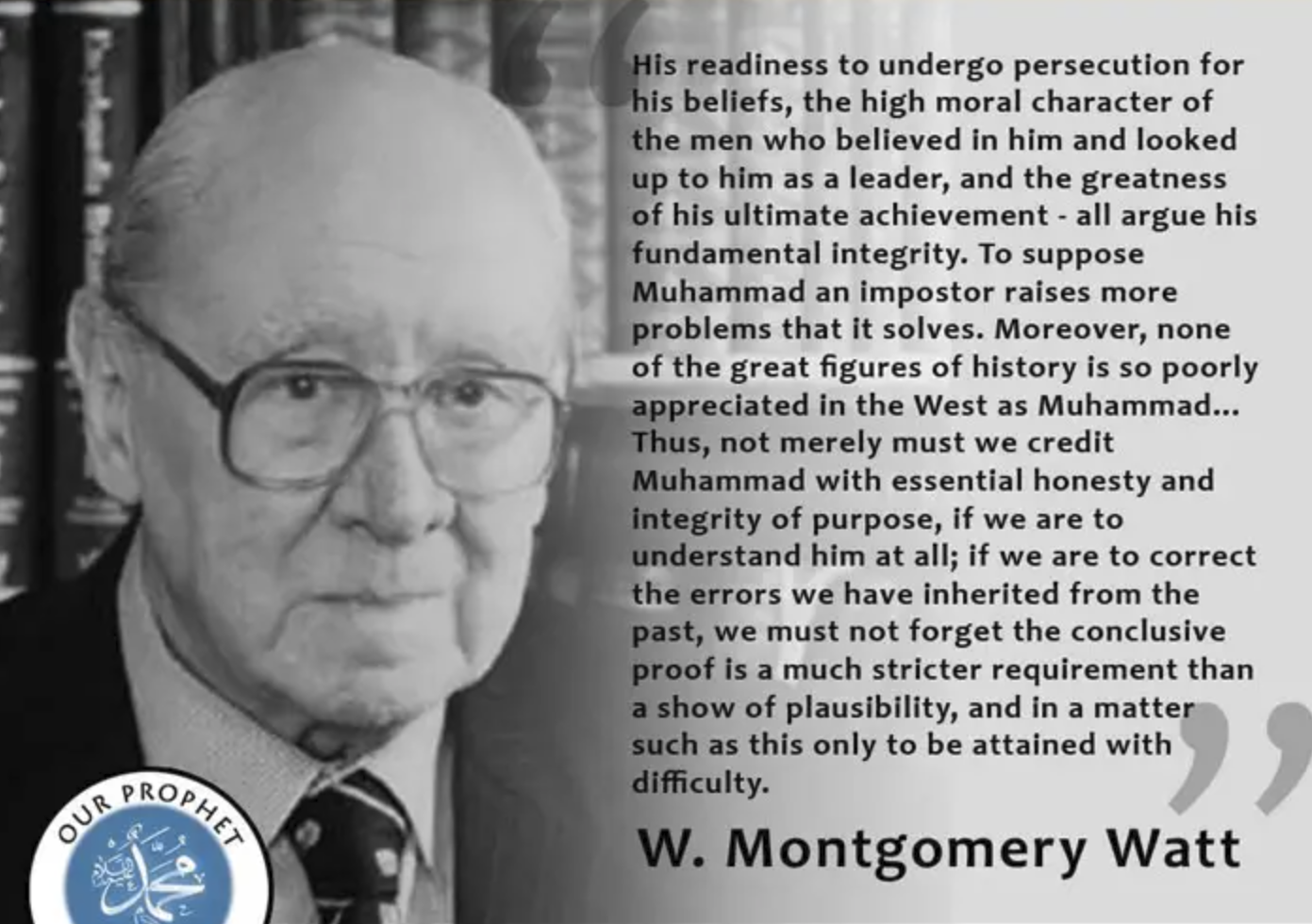
As noted historian W. Montgomery Watt observed, the Prophet’s ﷺ conduct was a testament to his fundamental integrity:
“His readiness to undergo persecution for his beliefs, the high moral character of the men who believed in him and looked up to him as a leader, and the greatness of his ultimate achievement – all argue his fundamental integrity.”
3. Sovereignty over Spoils
As depicted in the “Deterrence by Denial: Build Internal Resources” pillar, the Prophet ﷺ viewed war resources not as personal wealth but as instruments for Shared Responsibility. At Al-Ji’ranah, he delayed the distribution of massive booty for thirteen days, hoping the defeated Hawazin would return to claim their property. He demonstrated total self-effacement, taking a single hair from a camel and declaring:
“I have no claim even to this hair from your booty, except for the fifth part—and even that fifth I return to you.” — (Ibn Hisham)
4. The Generosity of the Secure Heart
Finally, the Prophet ﷺ utilized his portion of the wealth to “win the hearts” of the Meccan nobles and tribal chieftains. He distributed hundreds of livestock and gold with such unreserved benevolence that observers remarked: “Muhammad gives as one who fears no poverty.” This was not just charity; it was a strategic effort to build a Just and Sustainable Organization where former enemies became stakeholders in a unified peace.
Leadership Lesson: The Strength of the Humane Soul
Ethical Stewardship: The Prophet Muhammad ﷺ demonstrated that a leader’s greatest power is the capacity for mercy. By protecting the vulnerable and returning the spoils of victory, he proved that a “Sovereign Community” is built on Integrity, Compassion, and the Absolute Sanctity of Life.
Conquering the Heart: The Strategy of Magnanimous Giving
In 2026, historians of statecraft identify the aftermath of the Battle of Hunayn as a masterclass in Relational Diplomacy. As illustrated in the ‘Aqabah Model under the pillars of “Character-Based Leadership” and “Tribal & Group Integration,” the Prophet Muhammad ﷺ proved that the ultimate conquest is not of territory, but of the human heart.
The true “treasure chest” of the Prophet Muhammad ﷺ was not filled with the material spoils of war, but with the profound moral capital of benevolence. He understood that the “Radiant Path” could not be sustained through military dominance alone; it required the active Reconciliation of former adversaries through radical acts of grace.
1. Beyond the Sword: The Power of Benevolence
Following the victory at Hunayn, the Prophet ﷺ transitioned from a military commander to a Relational Architect. He sought to “win the hearts” of those who had spent decades in opposition. This was not a move of political desperation, but a manifestation of Character-Based Leadership intended to dissolve the very roots of tribal enmity.
2. Radical Generosity as Diplomacy
The Prophet ﷺ distributed the gains of the battle with a level of unreserved generosity that stunned his contemporaries. He provided Safwan ibn Umayyah—a man who had been one of his most bitter opponents—an entire valley filled with livestock. Similarly, he granted hundreds of camels and significant sums of gold to the prominent elite of Mecca, including:
♦ Abu Sufyan and his sons, Yazid and Mu’awiyah.
♦ Hakim ibn Huzam and al-Harith ibn al-Harith.
3. The Reputation of Fearless Giving
This display of Strategic Magnanimity left both friends and foes with a singular characterization of the Prophet ﷺ: he was a man who “never fears poverty.” By treating his former enemies as respected stakeholders in the new Sovereign Community, he proved that the “Radiant Path” is paved with the Restoration of Dignity rather than the shadow of defeat.
Leadership Lesson: The Wealth of the Soul
Inclusive Integration: The Prophet Muhammad ﷺ demonstrated that a leader’s greatest asset is an abundance of Character. By choosing to “give as if indigence were never on his mind,” he proved that a “Just and Sustainable Organization” is built by transforming “foes into kin” through the power of Selfless Generosity.
The Legitimacy of Governance: Acknowledging Social and Political Stature
In 2026, historians of statecraft identify the ‘Aqabah Model (shown in your image) as a landmark in Decentralized Accountability. By maintaining local leadership structures and honoring existing tribal eminence, the Prophet Muhammad ﷺ proved that the “Radiant Path” was a mission of Restoration, not a quest for personal power.
The Prophet Muhammad ﷺ operated with the profound understanding that a visionary leader seeks to empower the community, not to monopolize its authority. He viewed himself primarily as a conveyor of Divine Guidance, ensuring that every action and word served the collective welfare rather than personal ambition.
1. Preserving Local Leadership
Consistent with the “Character-Based Leadership” pillar of the ‘Aqabah Model, the Prophet ﷺ did not seek to displace existing social or political hierarchies. After the liberation of Mecca, he demonstrated this by:
♦ Confirming Authority: He allowed the noble houses of the Quraysh to retain their social stature, proving that the “Radiant Path” respects established leadership.
♦ Decentralized Accountability: By appointing local leaders like ‘Attab ibn Asid to govern their own people, he institutionalized a system where authority remained close to the citizenry.
2. Building Trust through Magnanimity
Instead of extracting wealth from his former opponents, the Prophet ﷺ utilized the gains of the state to build internal resources and secure the loyalty of his people. His unprecedented generosity toward the Meccan elite was a strategic act of Tribal Integration:
♦ Transforming Adversaries into Allies: By bestowing wealth and honor, he converted former detractors into stakeholders of the new Sovereign Community.
♦ Gaining the “Covenant of Hearts”: This magnanimity ensured that the leaders and the people alike upheld the mission out of Voluntary Consent rather than coercion.
3. The Prophet as the “Conveyor,” Not the Autocrat
As depicted in the “Formal Representation” icon of the Aqaba model, the Prophet’s ﷺ role was to facilitate a Just and Sustainable Organization. He proved that true sovereignty is found in the Shared Responsibility of the community, where every individual’s “God-given dignity” and social stature are acknowledged and protected by the state.
Leadership Lesson: The Strength of Empowerment
Inclusive Sovereignty: The Prophet Muhammad ﷺ demonstrated that a leader’s duty is to elevate others. By honoring his peers’ existing authority and prioritizing the common welfare, he proved that a “Sovereign Community” is built on Mutual Trust and the Recognition of Merit.
The Synergy of Faith: Divine Intervention and Human Responsibility
A central tenet of the “Radiant Path” is that divine support is not a replacement for human effort, but a fulfillment of it. The Quranic narrative establishes that when a Sovereign Community fulfills its duties of piety, sincerity, and strategic performance, it unlocks a unique form of “Amn” (Security)—the direct intervention of Divine Mercy.
1. The Lesson of Hunayn: From Overconfidence to Tranquility (630 CE)
At the Battle of Hunayn, the Muslim force was initially blinded by its numerical superiority (12,000 men), which led to a strategic setback. The Quran uses this moment to teach that material resources alone do not guarantee victory:
“Allah has helped you on many battlefields, and on the day of Hunayn, when your great numbers made you proud, but they availed you nothing… then Allah sent down His Sakinah (tranquility) upon His Messenger and upon the believers and sent down hosts [angels] whom you did not see.” — (Quran 9:25-26)
♦ Raising Morale: The first form of aid was psychological—the descent of Sakinah, a profound calm that allowed the retreating believers to regroup and find their resolve.
♦ Invisible Reinforcement: The second was the “unseen hosts,” signaling that the Sovereign Community is never truly alone when standing for the Ban on Persecution.
2. The Miracle of Badr: Victory in Vulnerability (624 CE)
In contrast to Hunayn, the Battle of Badr saw a vastly outnumbered and unequipped force. Here, the divine aid served as a reassurance for hearts that had already committed to Character-Based Leadership and the Restoration of Order:
“Allah had already given you victory at Badr while you were few… Is it not enough for you that your Lord should support you with three thousand angels sent down? … And Allah made it not but as good news for you and to satisfy your hearts thereby.” — (Quran 3:123-126)
3. The “Believer’s Bonus”: Piety as a Strategic Asset
As depicted in the “Deterrence by Denial” pillar of the Aqaba model, building internal resources includes cultivating spiritual integrity. The promise of “three thousand” or “five thousand” angels is not a license for passivity; it is a “bonus” for those who are “firm and mindful of Allah.”
Leadership Lesson: The Balance of Agency
Spiritual Resilience: The Prophet Muhammad ﷺ demonstrated that a leader’s duty is to exhaust every rational preparation while maintaining an absolute trust in a higher purpose. By teaching that victory comes only from the “Almighty, All-Wise,” he proved that a “Just and Sustainable Organization” is one where Hard Work and Faith work in a perfect, unbreakable symmetry.
Part VIII
The Final Consummation
Leadership Lesson: The Legacy of Universal Humanity
In his Farewell Sermon, the Prophet Muhammad ﷺ codified the “Universal Declaration of Human Rights.” He taught that the highest form of leadership is to leave behind a system where no person is superior to another except through their contribution to the common good and the prevention of harm.
The Expedition of Tabuk: Achieving the “Impossible” through Strategic Deterrence (630 CE)
By late 630 CE, the unification of Arabia under the Sovereign Community of Medina had shifted the geopolitical balance, alarming the Byzantine (Roman) Empire. Intelligence from returning trade caravans indicated a massive military buildup at the frontier fortress of Tabuk, involving an initial force of 40,000 Roman and allied Ghassanid soldiers equipped with the era’s most advanced weaponry.
1. A Climate of Existential Fear
The threat of a Byzantine invasion created a palpable atmosphere of anxiety in Medina. As recorded in Sahih al-Bukhari, when Umar ibn al-Khattab was woken by an urgent knock late at night, his immediate, instinctive reaction was: “Have the Ghassans [Byzantine allies] come?” This reflects the high state of alert maintained by the community to protect their Amn (Security).
2. Radical Mobilization and Shared Responsibility
Rather than waiting for an invasion to “corrupt the peace,” the Prophet ﷺ initiated a proactive move to the frontier. This required an unprecedented mobilization of Internal Resources during a period of severe drought and intense heat:
♦ Voluntary Contribution: In a stunning display of Shared Responsibility, the companions provided the necessary capital. Abu Bakr contributed his entire estate, Umar gave half of his wealth, and Uthman ibn Affan equipped 3,000 riders, including 950 camels and significant gold reserves.
♦ The Force of 30,000: This collective effort birthed a force of 30,000, signaling to the world that the “Radiant Path” was now a formidable Sovereign Community.
3. Deterrence by Denial: The Empty Camp
Upon arriving at Tabuk, the Muslims found the Roman encampments abandoned. The Byzantine high command, stunned by the Muslims’ ability to assemble and march such a massive force through the desert’s harshest conditions, opted for a strategic retreat. The consensus among the Roman scouts was clear: “If they can achieve this, they can achieve the impossible.”
4. Diplomatic Consolidation and Peace Accords
During twenty days at Tabuk, the Prophet ﷺ transitioned from military deterrence to Rational Diplomacy:
♦ Peace Treaties: He negotiated solidarity accords with local tribes, expanding the network of Inclusive Citizenship.
♦ Strategic Acquisition: The acquisition of Dumat al-Jandal as a confederate post secured the vital trade route between Medina and Syria.
Leadership Lesson: The Strength of Unity
Strategic Resilience: The Prophet Muhammad ﷺ demonstrated that a leader’s duty is to thwart aggression through overwhelming readiness. By mobilizing every internal resource and meeting the threat at the frontier, he proved that a “Just and Sustainable Organization” achieves peace not just through battle, but through the unbreakable resolve of its people.
https://www.al-islam.org/the-message-ayatullah-jafar-subhani/chapter-53-battle-tabuk
The Covenant of Sinai: A Global Charter for Religious Freedom
In 2026, historians and human rights experts analyze the Covenant with the Christians of St. Catherine as a foundational masterpiece of Interfaith Pluralism. As illustrated in your ‘Aqabah Model under the pillars of “Pluralism & Equal Protection” and “Freedom of Belief & Law,” this charter transformed the “Radiant Path” into a global sanctuary for all people of faith.
As the expedition at Tabuk (630 CE) drew to a close, the Prophet Muhammad ﷺ engaged in a historic diplomatic encounter with the monks of St. Catherine’s Monastery. Recognizing the need for a “Universal Covenant of Peace,” he granted them a charter that expanded the inclusive principles of the Medina Charter to the global Christian community. As documented by Dr. John Morrow in The Covenants of the Prophet Muhammad with the Christians of the World, this document established the “unbreakable handle” of interfaith protection.
1. The Pillars of the Saint Catherine Covenant
The main terms of this charter codified the “Inclusive Citizenship” shown in your chart:
♦ Protection of Sanctity: The state committed to protecting Christian churches and monasteries, explicitly prohibiting the demolition of ecclesiastical property for any purpose.
♦ Economic Autonomy: All church properties were granted full tax exemption, ensuring their financial independence.
♦ Institutional Integrity: The state pledged never to interfere with ecclesiastical authority or force a Christian leader to abandon their post.
♦ Absolute Freedom of Belief: Forcing a Christian to convert was strictly forbidden, upholding the “Freedom of Conscience” pillar.
♦ Gender-Based Religious Rights: In cases of interfaith marriage, Christian women were guaranteed the right to follow their own faith without interference.
2. The Consummation of the “Radiant Path.”
This covenant was the “Final Bridge” built during the Tabuk campaign. It transformed the border from a zone of “Order and Oppression” into a zone of “Amn” (Security) and mutual respect. By granting these rights at a moment of supreme military strength, the Prophet ﷺ proved that his mission was the Restoration of Dignity for all humanity.
Leadership Lesson: The Guardian of the Other
Universal Pluralism: The Prophet Muhammad ﷺ demonstrated that a leader’s duty is to protect the minorities of the world. By institutionalizing the rights of Christians in St. Catherine, he proved that a “Just and Sustainable Organization” is one in which Equal Rights and Dignity are guaranteed to every person of faith as a sacred trust.
The Sanctification of Mecca: Restoration and the Declaration of Disassociation
In 2026, historians of constitutional law analyze Surah at-Tawbah (Chapter 9) not as a call to global aggression, but as a masterclass in Territorial Sovereignty and Jurisdictional Integrity. As illustrated in your ‘Aqabah Model under the pillars of “Ethical Boundaries” and “Restoration of Order,” these measures were designed to establish Mecca as a unified sacred sanctuary, free from the contradictions of polytheistic rituals.
Two years after the bloodless liberation of Mecca (631 CE), the transition from a pluralistic city to a dedicated spiritual sanctuary was finalized. While the Prophet Muhammad ﷺ had initially allowed a gradual shift in religious practice, the continued presence of idols within the Inviolable House necessitated a definitive legal framework to establish Mecca as the permanent Qibla (Center of Orientation) for the Muslim world.
1. The Legal Framework: The Declaration of Disassociation
The Revelation of Chapter 9 (Surah at-Tawbah) established a tiered approach to Restoring Order and terminating the era of polytheistic rituals within the city limits. The Prophet ﷺ dispatched Ali ibn Abi Talib to the Major Pilgrimage to announce four critical steps of the new legislation:
♦ Step 1: Termination of Breached Covenants. The state formally disassociated itself from those tribes that had historically violated their treaties with the Muslims.
♦ Step 2: Honoring Integrity. Conversely, the Muslims were commanded to strictly honor existing contracts with tribes that had remained faithful to their oaths.
♦ Step 3: Sanctuary Sanctification. Mecca and its sacred precincts were designated as an exclusive sanctuary, establishing a zone of Amn (Security) similar to the modern-day Vatican City.
♦ Step 4: The Respite of Choice. A four-month “Grace Period” was granted to those still practicing polytheism, allowing them to either embrace the mission or relocate safely to other territories.
2. Correcting the “Sword Verse” Misinterpretation (9:5)
♦ The Specific Target: The term Mushrikeen refers exclusively to the Meccan Idolaters who had a history of treaty violation and religious persecution. It does not apply to Christians, Jews, or peaceful non-believers. As noted in the Oxford World Press translations, the word is accurately rendered as “Idolaters.”
♦ Deterrence by Denial: The harsh language was intended to “terminate” the possibility of internal conflict through an overwhelming display of legal resolve. Historically, the strategy was successful: there was no war, no bloodshed, and no mass exodus. The “threat” served as a final nudge toward communal integration.
See, Reflections on Punishment in the Islamic Law.”
3. The Precedence of Justice over Retaliation
As depicted in the “Ethical Boundaries” icon of the Aqaba model, the Quranic mandate prioritized Justified Conflict only as a Last Resort. Even in this stern declaration, the path to reconciliation remained open: “But if they should repent… let them go on their way. Indeed, Allah is Forgiving and Merciful.” (Quran 9:5)
The Year of Delegations: Consolidating the Covenant of Peace (630–631 CE)
The Year of Delegations (Am al-Wufud) represents the geopolitical climax of the Prophet’s ﷺ mission. Following the bloodless liberation of Mecca and the strategic neutralizations at Hunayn and Tabuk, hundreds of tribal delegations from across the Arabian Peninsula descended upon Medina. This movement signaled the end of tribal lawlessness and the birth of a unified society based on Shared Responsibility.
1. The Voluntary Expansion of Sovereignty
The conversion of the most powerful Arabian confederacies—including the Quraysh, Hawazin, and Thaqif—created a gravitational pull that drew tribes from the furthest reaches of the peninsula. These tribes did not submit to a conqueror; they pledged loyalty to a Sovereign Community that guaranteed the Equal Rights and Dignity depicted in the Aqaba model.
2. The Case of Najran: Pluralism in Practice
A landmark example of this Inclusive Citizenship was the visit of the Christian delegation of Najran. Their stay in Medina manifested the core pillars of the ‘Aqabah Model:
♦ The Sanctuary of the Mosque: Proving that the “Radiant Path” is a zone of Common Ground, the Prophet ﷺ allowed the Najran Christians to perform their liturgical rituals and prayers directly inside the Prophet’s Mosque.
♦ The Covenant of Protection: Although the delegation chose not to embrace Islam, the Prophet ﷺ maintained their Freedom of Conscience. He granted them a historic charter of safety, ensuring that their religious identity would remain untouched by the state.
3. The Charter of Najran: Codifying Religious Freedom
As documented in the “Medina Charter” tradition, the Prophet’s ﷺ covenant with Najran was a formal legal commitment:
“Our covenant with Najran is that God and His Prophet protect them. Their homes, churches, monks, and priests—whether present or absent—and their alliances shall be safe and secure.” — (As-Seerah)
Leadership Lesson: The Strength of the Open Door
Inclusive Pluralism: The Prophet Muhammad ﷺ demonstrated that a leader’s duty is to protect the minorities of the world. By honoring the Christians of Najran and granting them a covenant of safety within his own mosque, he proved that a “Just and Sustainable Organization” is one in which Universal Rights are guaranteed to all as a sacred trust.
The Farewell Pilgrimage: A Global Manifesto for Humanity (632 CE
In 2026, historians and leadership experts look to the Farewell Pilgrimage not as a conclusion, but as the final constitutional seal on a society built for all humanity. As illustrated in your ‘Aqabah Model under the pillars of Inclusive Citizenship and Ethical Boundaries, the Prophet Muhammad ﷺ spent his final moments ensuring that the Equal Rights and Dignity he established would remain an unbreakable “Firmest Handle” for future generations.
Two years after the liberation of Mecca, the Prophet Muhammad ﷺ embarked on his final journey—the Farewell Pilgrimage (Hajjat al-Wada). This event was the living consummation of the Sovereign Community; over 114,000 pilgrims gathered to witness the final synthesis of the “Radiant Path.” At Mount Arafat, the Prophet ﷺ delivered a sermon that codified the universal rights of mankind:
1. The Sanctity of the Person
“O people, your blood, your property, and your honor are sacred and inviolable until you meet your Lord… Do not do injustice to yourselves, and let nothing belonging to another be lawful to a Muslim unless it is given willingly and freely.” — (Sahih al-Bukhari)
2. The Mandate for Gender Equity
“O people, you have rights over your women, and they have rights over you. I command you to be good to them.”
By placing women’s rights at the heart of his final address, he ensured that the Equal Rights and Dignity pillar would serve as the measuring stick for any just and sustainable organization.
3. The Universal Brotherhood of Man
He dismantled tribal elitism forever, stating that
“A Muslim is a brother to every Muslim,” and that no race or ethnicity holds inherent superiority over another except through character and piety.
The Passing of the “Radiant Path”: Humility in Death
How does one capture the essence of a man who moved millions? As Prof. K. S. Ramakrishna Rao observed:
“His soul is as clear as a morning sky revealing a wondrous day.”
Despite being the most influential man in history—ranked number one by Michael H. Hart in The 100—the Prophet ﷺ died as he lived: in absolute simplicity and humility.

On June 8, 632 CE, the man who had unified the peninsula and established a global empire passed away in a modest room. There was no oil in his lamp to light the darkness, and his armor was pawned to a Jewish neighbor to feed his family. He left behind no gold or silver—only a legacy of Knowledge, Dignity, and Mercy for all creation.
A Legacy for All Creation
Beyond statecraft, the Prophet ﷺ left a bounty of compassion that extended to the most vulnerable:
♦ Amiability toward Children: Hastening prayers to soothe a crying child.
♦ Mercy to Animals: Forbidding hunting for sport and warning that “Animals are not to be used as targets.”
Final Leadership Lesson: The Unextinguished Light
Sustainable Impact: The Prophet Muhammad ﷺ demonstrated that a leader’s true power is not found in what they accumulate, but in what they bequeath. By passing away in poverty while leaving a world “lit with dignity,” he proved that the “Aqabah Model” is a blueprint for eternity—a path of Voluntary Consent and Shared Responsibility that remains humanity’s hope today.
“How do you capture the true essence of the Prophet Muhammad within a few pages? It has been quite effortless – as expressed through his writings [scribes] and deeds، his soul is as clear as a morning sky reveals a wondrous day.” – Image
The Paradox of the Radiant Path: Poverty in the Presence of Power
In his landmark analysis, Muhammad: The Prophet of Islam, Prof. K. S. Ramakrishna Rao identifies a striking ontological contrast that defines the Prophet’s legacy: the man who illuminated the world with the “Light of Knowledge” died in a dark room because there was no oil for his lamp. This is not merely a detail of history; it is the ultimate proof of a Sovereign Community governed by virtue rather than vanity.
1. The Metaphorical Lamp: Illuminating the Global Conscience
Prof. Rao highlights the irony of the Prophet’s ﷺ final moments. While his teachings were “lighting the world” by dismantling tribal lawlessness and establishing a Manifesto for Humanity, his own physical space lacked the most basic amenity. This serves as a permanent metaphor: the “Radiant Path” is an internal illumination of the soul that does not require the artificial glow of material luxury.
2. A Life of Pure Utility: Power Without Possession
Despite his undisputed sway over the Arabian Peninsula, the Prophet ﷺ lived as a common citizen. As illustrated in the “Decentralized Accountability” pillar of the ‘Aqabah Model, he viewed leadership as a burden of service (I’mar al-Ard) rather than a means of accumulation.
♦ The Simple Home: He transformed a chaotic society into a Just and Sustainable Organization from a room made of mud-bricks.
♦ The Pawned Shield: At the moment of his death, his only armor was pawned to a neighbor to provide food, proving that the state’s resources were dedicated to the Community Security of the people, not the household of the leader.
3. The Definition of True Greatness: Strategic Detachment
For Prof. Rao, this contrast is the “Final Seal” on the Prophet’s ﷺ genius. It showcases a leader who remained unspoiled by power. In a world where “greatness” is often measured by the display of wealth and force, the Prophet ﷺ proved that true sovereignty lies in Strategic Detachment from material spoils.
Leadership Lesson: The Unextinguished Light
Ethical Stewardship: The Prophet Muhammad ﷺ demonstrated that a leader’s duty is to bequeath a legacy, not a fortune. By passing away in a dark room while leaving the world “lit with dignity,” he proved that the ‘Aqabah Model is powered by the Sanctity of the Soul and the Integrity of Character, ensuring that his light remains as clear as a “morning sky” for all ages.
Discussion Point: How does the Prophet’s ﷺ detachment from wealth serve as the ultimate “Active Defense” against the corruption of power in modern governance?
References:
1- https://books.google.com/books?id=3ZK98cShxwYC&pg=PA170&lpg=PA170&dq=Gerbert+Of+Aurillac+studied+at+Vich&source=bl&ots=IivBERjAOK&sig=a-4ganZh7jkR9Galup3ChXLuWGg&hl=en&sa=X&ved=0ahUKEwii_5mW_63QAhWqjlQKHaY9ChMQ6AEISzAJ#v=onepage&q=Gerbert%20Of%20Aurillac%20studied%20at%20Vich&f=false https://www.britannica.com/biography/Sylvester-II Richard Erdoes, 1000 AD (Berkley: Seastone, 1998), 60-61.http://everything2.com/title/Historical+Evidence+Regarding+the+Libraries+of+Muslim+Spain Muslim Spain http://www.webpages.uidaho.edu/engl257/Don%20Quixote/moorish_influence_on_renaiss.htm 2- www.supremecourt.gov/about/figures of justice.pdhttps://en.wikipedia.org/wiki/United_States_Supreme_Court_Building https://blogs.wsj.com/law/2015/01/14/muhammad-sculpture-inside-supreme-court-a-gesture-of-goodwill/ 3- http://www.newworldencyclopedia.org/entry/Muhammad Byzantium Viewed by the Arabs, By Nadia Maria El-Cheikh, Harvard CMES. Copyright. https://books.google.com/books?id=QC03pKNpfaoC&pg=PA48&lpg=PA48&dq=abu+sufyan+meeting+with+heraclius&source=bl&ots=Bk2IYjbC8U&sig=-TSOe6jfbQ2I4bLrQNWrL25QeFc&hl=en&sa=X&ved=0ahUKEwjH9PuV953SAhUOzmMKHSKxDoMQ6AEIPzAG#v=onepage&q=abu%20sufyan%20meeting%20with%20heraclius&f=false Byzantium Viewed by the Arabs Author: Nadia M El Cheikh-Saliba. Publisher: Cambridge, Mass. [u.a.]: Harvard Univ. Press, 2004. 4- https://en.wikipedia.org/wiki/Kaaba