

Teacher’s Version of the Legacy of Peace Video Documentary
The Legacy of Peace documentary offers clear explanations and thoughtful answers on a wide range of mainstream Islamic topics relevant to today’s world. By shedding light on these subjects, the documentary helps reduce the “fear of the unknown” and fosters greater understanding of Islam and Muslim communities. This column introduces the documentary as a valuable resource for educators and teachers in a series of parts/chapters.
The Legacy of Peace documentary is designed to be modular and menu-driven, making it easy for educators in churches, synagogues, mosques, schools, and other organizations to select and share specific segments as time and context allow. While individual chapters can be shown independently, viewing the entire documentary provides a comprehensive understanding of mainstream Islam—distinct from extremist or misrepresented interpretations.
The documentary consists of approximately four 30-minute parts, each divided into chapters ranging from 1 to 7 minutes. A detailed list of all parts and chapters is available below the YouTube video series.
The Legacy of Peace Documentary
About the Documentary: Legacy of Peace is a scholarly and fair exploration of mainstream Islam and its common ground with Christianity and Judaism. It moves beyond stereotypes to focus on the faith’s inner dimensions and its historic role in civilizational progress.
Key Themes & Highlights:
-Inclusivity: The early alliances between Muslims and other faiths and the theological basis for coexistence.
-The Prophet Muhammad (p): His mission of knowledge and purification, his rationality, and the development of the Constitution of Medina.
-Peace vs. Violence: A deep dive into the principles of mercy, diplomacy, and the rejection of terrorism and aggression.
-Social Justice: The dignity and rights of women, the penal system, and the ethics of war through the example of Saladin.
-Scientific & Economic Legacy: Islam’s contribution to the modern world, including breakthroughs in mathematics, optics, shipbuilding, and the invention of essential tools like the camera and the clock.
Documentary’s Parts and Chapters
The ‘Legacy of Peace‘ documentary features a modular, menu-driven presentation. Educators—whether in religious institutions, public entities, or classrooms—can easily select and share specific content tailored to their needs. However, watching the whole documentary ensures an overall comprehension of mainstream Islam, offering a vital alternative to fanatical or misrepresented views of the faith.
Production Details: Legacy of Peace consists of four 30-minute parts, each broken down into specific chapters. These chapters vary from 1 to 7 minutes each, making them easy to integrate into lesson plans. The four parts and their respective chapters are listed below:

Part 1: Introduction to Islam
Common Ground and Collaboration – The beginning of the Revelation and the rise of Islam – Continuity of the messages of God – The Qur’an and the teachings of the Prophet Muhammad – Muslims under torture and execution – Peaceful approaches to violence – Collaboration between Muslims and Christians – Christians and Jews in the Qur’an – The siege of Muslims and a genuine Christian act.
Part 2: Outstanding Achievements through Peace
Muhammad’s endeavors and journeys – The Constitution of Medina – The social and urban development of the city-state vs. religion – The Meccans attack the Muslims in Medina – No compulsion in religion – Interpretation of the verses of the Holy Qur’an – The meaning of the word “Jihad” – War is dreadful / Reconciliation and diplomacy – Muhammad’s marriages.
Part 3: Building on Rationality
Denouncing terrorism – The rationale behind the Islamic Law and the penal system – Diplomacy and communication, Fraternity of all people – The Muslim leader, Saladin and the Crusaders – The status of women in Islam – The limitation of polygamy.
Part 4: Muslim Contributions / Faith at Work
Early Muslims’ contributions to the world – Invention of the Clock – Establishing excellent world trade, Shipbuilding, navigation, and geography – Invention of the check and municipal administration – The birth of the sciences and the Renaissance – Islam and the West – The rationale for coexistence.
Meet the Legacy of Peace Guests
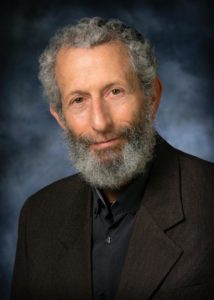
Rabbi Reuven Firestone, Ph.D.
Rabbi Reuven Firestone, Ph.D., is a renowned scholar specializing in medieval Judaism and Islam. He is the Regenstein Professor at the Hebrew Union College-Jewish Institute of Religion (HUC-JIR) in Los Angeles. Also, he serves as a professor of religion at the University of Southern California (USC).
Rabbi Firestone holds a bachelor’s degree from Antioch College, a master’s in Hebrew Literature, and rabbinic ordination from HUC-JIR, as well as a Ph.D. in Arabic and Islamic Studies from New York University. His academic career includes teaching Hebrew literature and directing language programs at Boston University, as well as research fellowships in Jerusalem.
His scholarship covers Jewish studies, the Hebrew Bible, the Quran, Islamic-Jewish relations, religious violence, and interfaith dialogue. He has published extensively, including Journeys in Holy Lands, Jihad: The Origin of Holy War in Islam, Children of Abraham: An Introduction to Judaism for Muslims, An Introduction to Islam for Jews, and Holy War in Judaism.
Rabbi Firestone is deeply committed to interfaith engagement. He founded the Center for Muslim-Jewish Engagement, a partnership between HUC-JIR, the Omar Ibn Al-Khattab Foundation, and USC. He has also served as vice president of the Association for Jewish Studies and president of the International Qur’anic Studies Association.
Having lived in Israel, Egypt, and Germany, Rabbi Firestone regularly lectures internationally and is recognized for his expertise in Jewish-Muslim relations and fostering interfaith understanding.
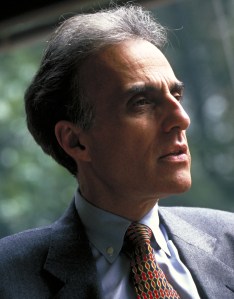
John Esposito, Ph.D.
John L. Esposito, Ph.D., is a distinguished American scholar in Islamic studies, religion, and international affairs. He is a University Professor at Georgetown University, where he serves as Professor of Religion and International Affairs and Professor of Islamic Studies. Dr. Esposito is also the founding director of the Prince Alwaleed Bin Talal Center for Muslim-Christian Understanding at Georgetown’s Walsh School of Foreign Service.
He has authored over 35 books on Islam and its global impact, including influential works such as Islam and Politics and Islam: The Straight Path. Dr. Esposito has served as editor-in-chief for primary Oxford reference works, including The Oxford Encyclopedia of the Modern Islamic World and The Oxford History of Islam.
Throughout his career, Dr. Esposito has held leadership roles in organizations such as the Middle East Studies Association of North America and the American Council for the Study of Islamic Societies. He has been a consultant to the U.S. Department of State, various governments, and international organizations. He has participated in the World Economic Forum’s Council of 100 Leaders and the United Nations Alliance of Civilizations.
Dr. Esposito’s work has been recognized with numerous awards, including the American Academy of Religion’s Martin E. Marty Award for the Public Understanding of Religion and Pakistan’s Quaid-e-Azam Award for Outstanding Contributions in Islamic Studies. As a practicing Catholic, he has played a significant role in fostering understanding between Muslim and Christian communities.
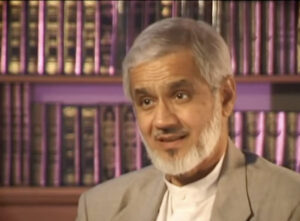
Muzamil Siddiqi, Ph.D.
Dr. Muzammil H. Siddiqi, Ph.D., is a highly respected Indian-American Muslim scholar and community leader. Born in 1943 in Rampur, India, he received his early education at Aligarh Muslim University and Darul Uloom Nadwatul Ulama, then graduated from the Islamic University of Medina in Saudi Arabia. He later earned an M.A. in Theology from Birmingham University in England and a Ph.D. in Comparative Religion from Harvard University.
Dr. Siddiqi has served in several prominent roles, including Director of the Islamic Center of Washington, D.C., and President of the Islamic Society of North America (ISNA) from 1997 to 2001. Since 1981, he has been the Imam and Religious Director of the Islamic Society of Orange County in California. He also chairs the Fiqh Council of North America and the Islamic Shura Council of Southern California.
In academia, Dr. Siddiqi has taught Islamic Studies at Chapman University and served as an external examiner for universities in South Africa and Pakistan. Internationally, he is a member of the Supreme Islamic Council of Egypt, the Supreme Council of Mosques in Mecca, and a founding member of the Council of 100 of the World Economic Forum.
Dr. Siddiqi is deeply involved in interfaith dialogue, having participated in major events with the National Council of Churches and the National Council of Christians and Jews. President George W. Bush invited him to lead Muslim prayers at significant interfaith services following the 9/11 attacks.
He has published widely in Islamic and academic journals, conducted a weekly religious radio program for over two decades, and writes a regular column on Islamic law and social issues. Dr. Siddiqi is recognized for his lifelong dedication to interfaith understanding and leadership within the Muslim community.
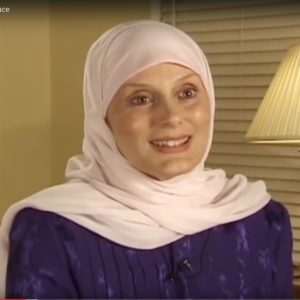
Nancy Lydick, Ph.D.
Nancy Lydick, Ph.D., also known by her Arabic name Nasiha Sakina, is a psychotherapist and educator who hosted a weekly television show about Islam in the early 1990s. Based in the San Fernando Valley, California, she converted to Islam in 1982 after exploring various religious traditions. On her TV show, she used her Arabic name, which means “tranquil adviser,” to educate viewers about Islamic beliefs and practices, address common misconceptions, and promote understanding.
Professionally, Dr. Lydick worked as a psychotherapist in a Long Beach mental health program and led the psychology and human behavior department at the Los Angeles branch of National University. Her dedication to her faith and to educating others about Islam has been central to her career and personal journey.
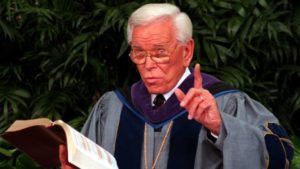
Robert Schuller, Ph.D.
Robert Harold Schuller, Ph.D. (1926–2015), was a renowned American Christian televangelist, pastor, motivational speaker, and author. He is best known for founding the Crystal Cathedral in Garden Grove, California, and for hosting the influential television program “Hour of Power,” which began in 1970 and reached millions worldwide.
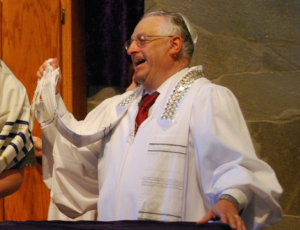
Rabbi Ira Book
Rabbi Ira Book is a Jewish chaplain who has served in several California correctional institutions, including Folsom State Prison and Mule Creek State Prison. In the late 1990s, he was the Jewish chaplain at Folsom State Prison, where he supported Jewish inmates—many of whom concealed their identity due to fears of neo-Nazi activity. He estimated that while there were 60 to 100 Jewish inmates, only a small number openly practiced Judaism.
In the early 2010s, Rabbi Book continued his chaplaincy at Mule Creek State Prison in Ione, California. He was known for his inclusive approach, offering support to any prisoner in need, regardless of their religious background. Rabbi Book’s services were recognized for their historical depth and compassion, reflecting his background as a civil rights activist who had even been arrested alongside Martin Luther King Jr.
Rabbi Ira Book’s work has made a significant impact on the spiritual and emotional well-being of inmates in California’s correctional system.
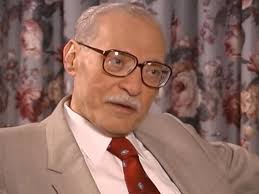
Hassan Hathout, M.D.
Dr. Hassan Hathout (1924–2009) was an Egyptian-born physician, ethicist, poet, and a leading figure in interfaith dialogue and Islamic scholarship. He was educated at the University of Edinburgh. He earned advanced degrees from the Royal College of Surgeons and the Royal College of Obstetricians and Gynecologists, as well as a Ph.D. in reproductive genetics.
Dr. Hathout served as professor and chairman of obstetrics and gynecology at Kuwait University from 1973 to 1988. He co-founded the Islamic Organization of Medical Sciences, where he worked to integrate ethical principles into medical practice, especially in reproductive medicine and genetic engineering.
After moving to the United States in the late 1980s, Dr. Hathout became a prominent leader in the Southern California Islamic community. He was deeply committed to interfaith work, co-founding the Interfaith Center to Reverse the Arms Race and participating in many interfaith initiatives. In 1998, he delivered a sermon at the first White House celebration of Eid al-Fitr.
As an author, Dr. Hathout wrote several books, including Reading the Muslim Mind, which sought to demystify Islam for Western audiences. He was known for emphasizing “Love in God” and advocating compassion and understanding among people of all faiths. Dr. Hathout is remembered for his dedication to medicine, ethics, and promoting harmony across diverse communities.
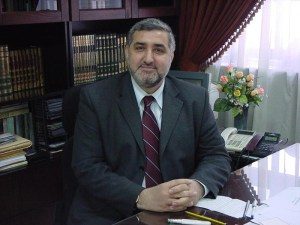
Sheik Salah Kuftaro, Ph.D.
Sheik Salah Kuftaro, Ph.D., is a respected Sunni cleric and the son of the late Grand Mufti of Syria, Sheik Ahmad Kuftaro. He serves as the Chief Director of the Abu Anour Islamic Foundation in Damascus, Syria, which is the country’s largest Islamic education and charitable foundation. Under his leadership, the foundation has seen significant growth, with student enrollment rising from 5,000 to 7,000 in just three years.
Sheik Salah Kuftaro is well known for his commitment to interfaith dialogue and collaboration. Notably, in September 2000, he participated in a historic event at the Crystal Cathedral in Garden Grove, California, alongside Dr. Robert Schuller. There, he emphasized the shared roots of Islam, Christianity, and Judaism, stating, “Islam is not new but completes the beliefs of Christ, Moses, and Abraham. The fountain of these religions is Almighty Allah.”
He has also contributed to the “Legacy of Peace” documentary, which explores Islamic themes and features experts from the world’s three major religions. Through his educational leadership and interfaith outreach, Sheik Salah Kuftaro continues to promote peace, understanding, and cooperation among diverse religious communities.
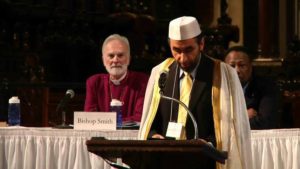
Imam Basher Arafat, Ph.D.
Imam Mohamad Bashar Arafat is a Syrian-born Islamic scholar and interfaith activist based in the United States. He holds degrees in Islamic Studies, Arabic Language, and Islamic Law from Damascus University. In the 1980s, he served as an Imam in Damascus before moving to the U.S. in 1989, where he became the Imam of the Islamic Society of Baltimore and co-founded the An-Nur Mosque.
Imam Arafat is the founder and president of the Civilizations Exchange and Cooperation Foundation (CECF), an organization dedicated to fostering interfaith dialogue and cultural exchange. He is actively involved in interfaith initiatives, delivering lectures and participating in discussions worldwide. For example, he has addressed religious leaders in Jordan on topics such as cultural and religious diversity in Islam and Islamophobia.
He has also been a guest speaker at various religious institutions, including the Oseh Shalom Reconstructionist Synagogue in Maryland, where he discussed shared lessons from the stories of Jacob in the Qur’an and Torah for Muslims and Jews today. Imam Arafat is featured in the “Legacy of Peace” documentary, which explores Islamic teachings and interfaith relations.
Through his work, Imam Arafat emphasizes the importance of understanding, cooperation, and collaboration among diverse religious and cultural communities.
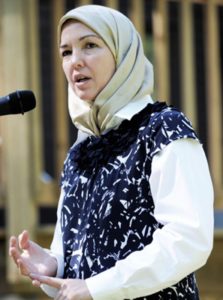
Ingrid Mattson, Ph.D.
Dr. Ingrid Mattson is a Canadian scholar and activist recognized for her influential work in Islamic studies and interfaith dialogue. Born in Kingston, Ontario, in 1963, she studied Philosophy and Fine Arts at the University of Waterloo. She converted to Islam in 1987 after encountering West African Sufi Muslims during a study period in Paris.
She earned her Ph.D. in Near Eastern Languages and Civilizations from the University of Chicago in 1999. Dr. Mattson then joined Hartford Seminary in Connecticut, where she served as Professor of Islamic Studies and Christian-Muslim Relations from 1998 to 2012. At Hartford, she founded North America’s first accredited graduate program for Muslim chaplains and directed the Macdonald Center for the Study of Islam and Christian-Muslim Relations.
From 2001 to 2010, Dr. Mattson served as vice-president and then president of the Islamic Society of North America (ISNA), becoming the first woman and first convert to Islam to hold these positions. She established the Office of Interfaith and Community Engagement in Washington, D.C., building partnerships with faith-based and civic organizations.
Since 2012, Dr. Mattson has held the London and Windsor Community Chair in Islamic Studies at Huron University College, University of Western Ontario. Her academic focus includes Qur’anic studies, Islamic theological ethics, and interfaith engagement. She is the author of the widely acclaimed book The Story of the Qur’an: Its History and Place in Muslim Life.
Dr. Mattson is also the founder and director of The Hurma Project, which addresses spiritual and sexual abuse by religious authorities in Muslim communities. Throughout her career, she has been a strong advocate for women’s roles in Islam, interfaith cooperation, and ethical leadership.
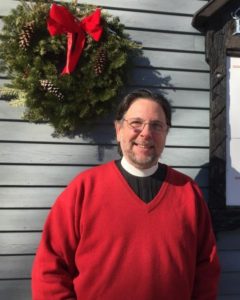
Paul Tunkle, Ph.D.
The Reverend Dr. Paul D. Tunkle is an Episcopal priest known for his diverse background and deep commitment to both faith and social justice. Born in New York City in 1950 to a secular Jewish family, he initially studied theoretical mathematics before moving to Colorado, where he met his wife, Judy. At age 24, after relocating to Maine, he was baptized into the Episcopal Church.
Dr. Tunkle earned a Bachelor of Science in Business Administration from the University of Maine and a Master of Divinity from the General Theological Seminary in Manhattan. He later received his Doctor of Ministry degree from Drew University. His ministry has included roles as Assistant Rector, Rector, and Priest in Charge at various Episcopal churches across the United States.
In 2001, Dr. Tunkle became Rector of the Church of the Redeemer in Baltimore, Maryland. After the tragic loss of his daughter, Lea, in 1997, he and his wife became active advocates for suicide prevention, facilitating support groups and conducting workshops for clergy and youth workers.
After retiring in 2014, Dr. Tunkle and his wife returned to Maine, where they embraced sustainable living and continued their ministry work. Throughout his career, Dr. Tunkle has been a strong advocate for social justice, interfaith dialogue, and community service, often addressing essential and sometimes controversial topics from the pulpit.
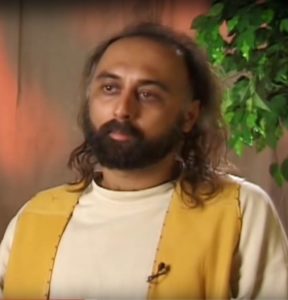
Amir Husain, Ph.D.
Amir Husain, Ph.D., is a Pakistani-American entrepreneur, inventor, and author renowned for his work in artificial intelligence (AI) and technology innovation. Born in Lahore, Pakistan, in 1977, he developed an early passion for computing and earned his first bachelor’s degree in computer science at age 15. He later completed another bachelor’s degree at the University of Texas at Austin.
In 2013, Husain founded SparkCognition, an AI company based in Austin, Texas, which achieved unicorn status under his leadership. He served as CEO until the end of 2023 and continues as an Executive Board Member. He also holds leadership roles at WorldQuant Foundry, SpecFive, and Navigate.
Husain is a prolific inventor with over 30 patents in AI and distributed systems. He has received numerous accolades, including Austin’s Top Technology Entrepreneur of the Year and the University of Texas at Austin’s Presidential Citation Award in 2025.
As an author, Husain has written bestsellers such as The Sentient Machine: The Coming Age of Artificial Intelligence and Generative AI for Leaders. His work has been featured in major publications like the BBC, Fortune, and Forbes.
He is active in academia and defense, serving on advisory boards for the University of Texas at Austin, NATO, and the Council on Foreign Relations. In 2025, he joined the University Advisory Board of the Lahore University of Management Sciences (LUMS), furthering his commitment to advancing education and technology globally.
Amir Husain’s entrepreneurial ventures, inventions, and thought leadership continue to shape the future of AI and technology worldwide.
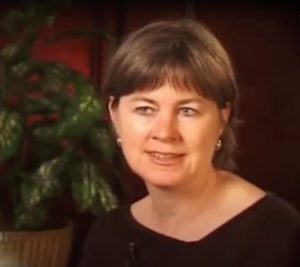
Sharon Kugler.
Sharon M.K. Kugler served as the University Chaplain at Yale University from 2007 until her retirement in June 2023. She was the first woman, first layperson, and first Roman Catholic to hold this position at Yale. Before her time at Yale, she was the University Chaplain at Johns Hopkins University from 1993 to 2007.
With over three decades of experience in higher education ministry, interfaith collaboration, and pastoral care, Kugler focused on supporting the diverse religious and spiritual traditions on campus. She initiated programs such as a Hindu prayer space, “Global Grounds” (a social coffee house), and “Breathing Space” (a relaxation room for students). In 2012, she hosted the Global Conference of Chaplains in Higher Education at Yale.
Kugler holds a Master’s degree from Georgetown University and has received honorary doctorates from several institutions. She has also served as president of national chaplaincy organizations and was active in international chaplaincy leadership. In retirement, she continues to explore new interests and values learning from life’s experiences. She is married, with two daughters and eight grandchildren.
Dr. K. Ajram (Kasem Khaleel), M.D, is the author of “The Miracle of Islamic Science,” a book that highlights the significant contributions of Muslim scholars to various scientific fields and emphasizes that many scientific advancements attributed to the West were pioneered by Muslim scientists centuries earlier.

Moustafa al-Qazwini, Ph.D.
Dr. Sayed Moustafa al-Qazwini is an Iraqi-American Shia imam, author, and educator, born in 1961 in Karbala, Iraq. He is the founder and director of the Islamic Educational Center of Orange County (IECOC) in California.
Dr. al-Qazwini comes from a prominent religious family and began his religious education at the Islamic seminary in Qom, Iran. He later earned a Ph.D. in Islamic Studies from the United Kingdom. His career has included teaching at the Islamic seminary in Damascus, serving as an associate imam and professor in London, and founding the Islamic Cultural Center of San Diego—the first Shia mosque in San Diego County.
In 1996, he established the IECOC in Orange County, providing educational, religious, and social services to the Muslim community. Dr. al-Qazwini is a founding member of the Council of Shia Muslim Scholars of North America, co-chair of the West Coast Dialogue of Muslims and Catholics, and senior advisor for the United Muslim American Association. He also founded the Ahlulbayt Islamic Seminary of California.
He has authored several books, including Discovering Islam, Inquiries About Shi’a Islam, and When Power and Piety Collide, all of which aim to educate readers about Islamic beliefs and practices. Dr. al-Qazwini is active in interfaith dialogue, lecturing across the U.S. and internationally to promote understanding and cooperation among diverse religious communities.
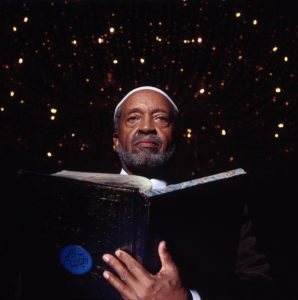
Imam W. Deen Mohammed
Imam Warith Deen Mohammed (1933–2008), born Wallace D. Muhammad, was a transformative African American Muslim leader, theologian, and philosopher. As the son of Elijah Muhammad, he succeeded his father as leader of the Nation of Islam (NOI) in 1975. He initiated major reforms to align the organization with mainstream Sunni Islam.
Imam Mohammed disbanded the NOI’s military branch, eliminated its strict dress code, introduced the Five Pillars of Islam, and embraced racial inclusivity—accepting whites as fellow worshippers and rejecting the previous deification of Wallace Fard Muhammad. These changes led to the largest mass conversion to Islam in U.S. history.
He renamed the organization the World Community of Al-Islam in the West, later known as the American Society of Muslims. He fostered closer ties with global Muslim communities while promoting interfaith dialogue. In 1992, he became the first Muslim to deliver an invocation on the floor of the U.S. Senate.
Imam Mohammed was a champion of intellectual freedom and independent thinking, frequently speaking at major universities and public forums on religion, government, education, and social values. In 2003, he founded The Mosque Cares, a non-profit dedicated to supporting Islamic community efforts.
He passed away in 2008, leaving a legacy of religious reform, interfaith cooperation, and a commitment to universal human excellence.
For more, you can watch: Imam W Deen Mohammed – Message To All People Of The World.
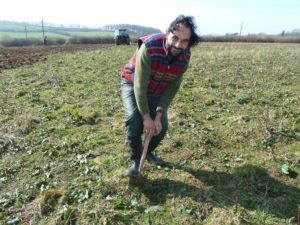
Dr. K. Ajram (Kasem Khaleel), M.D.
Dr. K. Ajram (Kasem Khaleel), M.D, is the author of “The Miracle of Islamic Science,” a book that highlights the significant contributions of Muslim scholars to various scientific fields and emphasizes that many scientific advancements attributed to the West were pioneered by Muslim scientists centuries earlier.
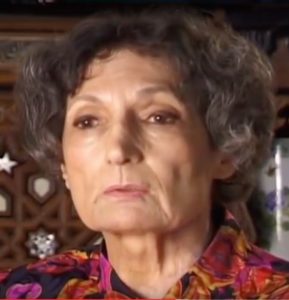
Afaf Morsot, Ph.D.
Afaf Lutfi al-Sayyid-Marsot, Ph.D., is an Egyptian-born historian and professor emerita of history at the University of California, Los Angeles (UCLA). Born in Cairo in 1933, she is renowned for her extensive research and publications on Egypt’s history since the eighteenth century. Dr. al-Sayyid-Marsot earned her B.A. in sociology from the American University in Cairo, an M.A. in political science from Stanford University, and a D.Phil. in oriental studies from Oxford University—becoming the first Egyptian woman to earn a doctoral degree from Oxford.
She joined UCLA’s history department in 1968 and has authored several influential books, including:
- Egypt and Cromer: A Study in Anglo-Egyptian RelationsEgypt’s Liberal Experiment, 1922-1936
- Society and the Sexes in Medieval Islam
- Egypt in the Reign of Muhammad Ali
- A Short History of Modern Egypt
- Women and Men in Late Eighteenth-Century Egypt
- A History of Egypt: From the Arab Conquest to the Present
Dr. al-Sayyid-Marsot is also featured as one of the experts in the “Legacy of Peace” documentary, which addresses various Islamic-related subjects and includes contributions from scholars of the world’s major religions.
The Story of How the Legacy of Peace Documentary Started
Although a documentary expressing the dignity and ingenuity of Islam was long overdue before the horrific event of 9/11, the need for making one was a must after 9/11, 2001.
A few months after 9/11, in December 2001, the first step toward actualizing the documentary took place at an Eid luncheon, when Mr. Burhan tested the idea with Mr. Donovon Taylor, a videography student at Antelope Valley Community College in Lancaster, California. Mr. Taylor was filming the Eid events for a Lancaster news station. The two reached an agreement under which Mr. Burhan would provide the script and editing equipment, and Mr. Taylor would develop the film.
After Mr. Burhan purchased the equipment and transported it to an old, shaggy small trailer where Mr. Taylor lived, the two discovered that the place was not suitable for the equipment. The next area was Mr. Burhan’s car garage, where the Legacy of Peace Documentary was finally completed.
The Director and Producer
Inspired by his deep religious faith, Mr. Burhan wrote the script for the Legacy of Peace Documentary and directed and crafted the film. Mr. Burhan is the director of the Institute of Arabic and Islamic Studies, IAIS, and author of the book, The Solution to the Muslim Crisis. He is an Electrical Engineer by profession.
Major Setbacks
As beginners producing a two-hour documentary film, there were many ups and downs throughout. The worst of these setbacks was when Mr. Taylor, halfway through production, was unable to continue his job due to legal issues arising from his private life. The project was then in limbo. Mr. Burhan had to hire videographers, editors, animators, voice-over artists, etc., to finish the job, yet there was no budget consideration for all of this.
Another difficulty Mr. Burhan had to face was the replacement of 13 minutes of background footage from the film “The Message” for copyright issues after its producer, Mr. Akkad, died during the horrific terrorist bombing in Amman, Jordan, in November 2005. Before this incident, Mr. Burhan and Mr. Akkad had a verbal understanding to use the footage.
Thus, for the next several months, Mr. Burhan was searching for an alternative background until he found a good artist, AFAFA in Zabadani, Syria, who would draw the backgrounds. Over the next 12 months, the artist drew nearly 125 original paintings depicting the early history of Islam.
After six years of labor of love at the cost of over $400,000, the film was finally available. Mr. Burhan and his friends provided the extra funding.