

The Shattering of God-Given Rights to (Amn) Safety Security and Peace
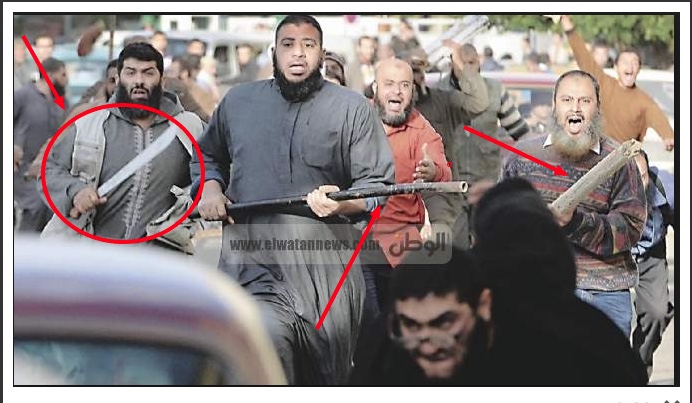
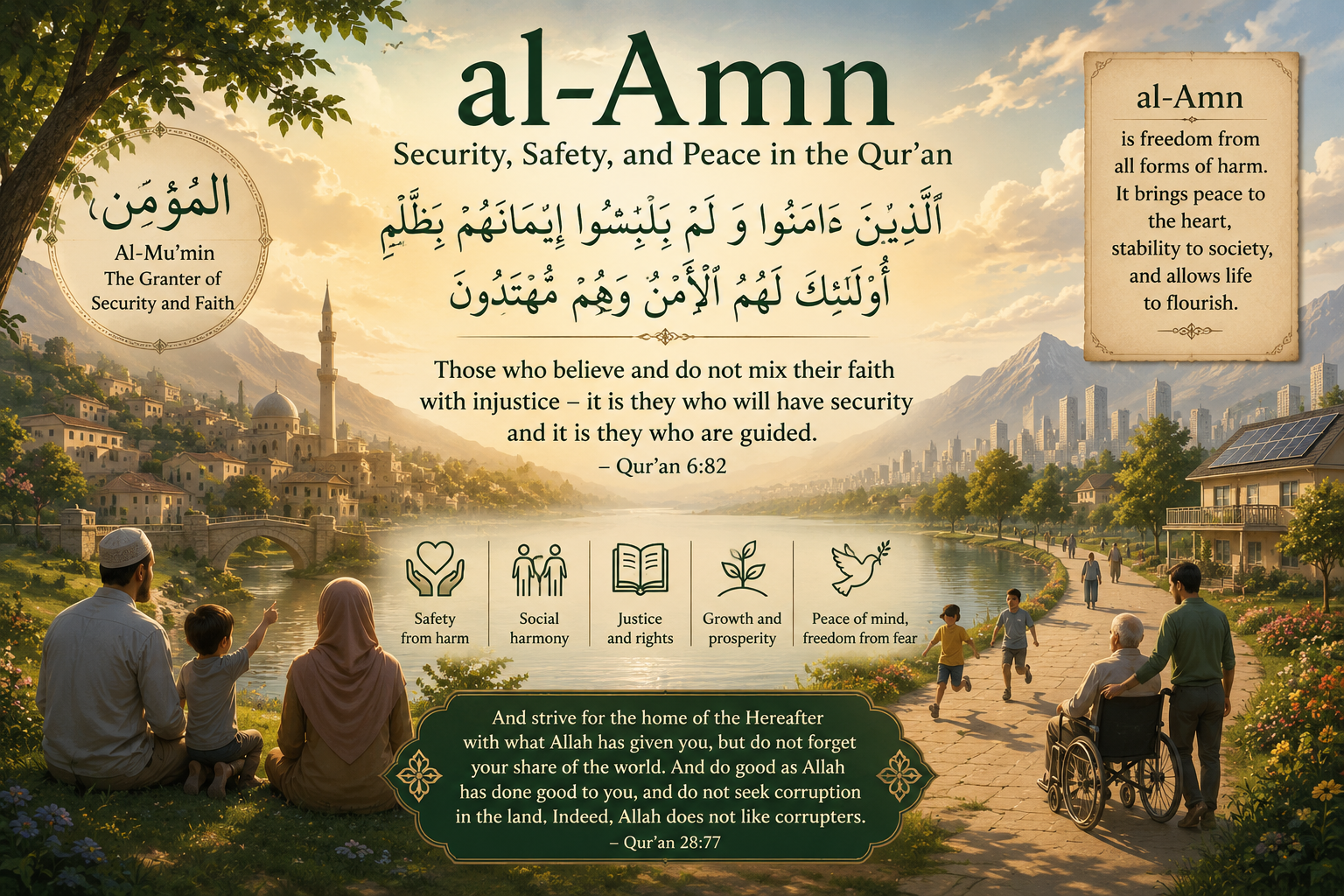
You may hover over a subtitle and click to go directly to it.
Part I The Doctrines of Peace and Security
Disclaimer
Abstract
Definitions
Thulm (Oppression) and Fassad (Corruption)
Introduction
Qur’anic Principles of Embracing Peace and Avoiding Rancor
Bringing the Positive Impact on the Hearts of Opponents
Extremists Arrogantly Assume the Position of God
Infringing upon Public Security: Thulm (Injustice) and Fassad (Corruption)
a) The Case of Prophet Abraham
b) The Case of Prophets Moses and Aaron
Breaking Apart Societies: Acts of Fassad (Corruption and Social Destruction)
Moses Acts Wisely without Contention
Part II Realization of Peace and Security
Achieving Peace and Security (Al-Amn) through Peace Accords
Moses Addresses the Pharos Sensibly
Banning Violent Civil Wars and Social Disruption
The Pursuit of Benevolence
The Good Word Eliminates Discord
Fighting Is Permissible Only under Legitimate and Just Conditions
Prophet Muhammad Conquers Hearts through Peace
The Opening of Mecca in Peace and Safety (Amn)
Prophet Muhammad Administers the God-Given Right of Security to Animals
The Prophet Preserved Peace and Calm (Amn) in Mecca
The Reconciliation Approach
The Inception of the Extremist Wahhabi Ideology
More Wahhabi Violations of the Islamic Doctrines
Superiority over People
Punishing People as if They Own Them
Forgiveness and Punishments are Allah’s Authority
The Inception of the Muslim Brotherhood and its Ideology
Catastrophes of the Degenerate Ideologies
The Imposition of Distrust
The Inadmissibility of Armed Paramilitary Groups
Gross Violations of the Divine Teachings
a) The Sacredness of Human Life — The Prohibition of Arbitrary Killing
No Concealed Plots of Death and
Destruction in a Community in a Community-Fatk
The Qur’anic Prohibition against Endangering Innocent Believers
b) Deviating from the Muslim Ummah
c) Disturbing Security Safety and Peace, al-Amn
Part IV The Trust of Building the Earth
The God-Given Trust of Building the Earth
Nonviolent Revolutions
Casualties of the Civil Wars
Conclusion – A Plea to the Mindful
The Shattering of God-Given Rights to (Amn) Safety, Security, and Peace
By: Faysal Burhan
Published: 2018
Editor: Samr Airout
Watch a Video on the Shattering of God-Given Security and Peace

Part I The Doctrines of Peace and Security (Al-Amn)
Disclaimer
This educational treatise on the God-given rights of Amn, peace, and security in Islam examines the fallacies of extremist ideologies associated with the Wahhabi creed and the Muslim Brotherhood movement. It seeks to highlight the extent of the harm and disruption that, in the author’s view, these doctrines have inflicted upon Islam and Muslim societies. This work is not directed against any specific individual or individuals affiliated with these groups, but rather addresses the broader ideological and sociopolitical implications of extremism.
Abstract
Peace, security, and safety are sacred principles in Islam. The Qur’an, the holy book of Muslims, describes this God-given blessing as al-Amn—security and tranquility. Furthermore, the Qur’an promotes harmony, justice, and protection as essential foundations for achieving meaningful and dynamic societal change through peaceful means rather than violence.
The missions of the prophets of God, along with the life and teachings of Prophet Muhammad ﷺ, established balanced and moderate approaches to social reform rooted in compassion, wisdom, and justice. In contrast, extremist ideologies and movements, such as Wahhabism and the Muslim Brotherhood, represent departures from these principles by violating people’s God-given rights to (Amn) peace and security. Such movements often manipulate sacred texts to advance political and ideological interests while undermining the Qur’anic objectives of mercy, coexistence, and public welfare.
This work presents historical and sociopolitical analyses of extremism and examines its implications for human progress, global stability, and social order.
Definitions
Thulm (Oppression) and Fassad (Corruption)
The Qur’an describes violations of people’s livelihoods, dignity, and security using terms such as thulm (ظلم)—meaning injustice, tyranny, and oppression—and fassad (فساد) —meaning corruption, destruction, and social disorder.
Thulm refers to acts of injustice and oppression inflicted upon individuals or societies, while fassad denotes the disruption of social harmony, moral order, and the natural progression of life and civilization. Violence, instability, and the destruction of communities are among the gravest forms of both thulm and fassad.
In contrast, the Arabic term salaa-h (صلاح) signifies righteousness, virtue, integrity, and reform. It represents the moral opposite of thulm and fassad and serves as a foundational principle for establishing peace, justice, and societal well-being.
Introduction
The Qur’an categorizes violence and the disruption of societies—fassad—as destructive, immoral, and contrary to the divine order. Through the lives and narratives of God’s prophets, the Qur’an provides enduring models for peaceful reform, moral leadership, and constructive societal change away from violence. In contrast, the opponents of prophetic guidance have often resorted to savagery, oppression, and cruelty. Violence committed in the name of Islam ultimately shatters the faith’s profound values of peace, mercy, and human dignity, while serving only the ambitions, wrongdoing, and lust for power of extremists.
Through the methodology of peace, justice, and compassion, the Qur’an commands change for all humanity. It emphasizes that true societal transformation begins with the spiritual and moral development of the individual. Through the refinement of character and ethical consciousness, societies rise toward higher standards of virtue, justice, and civilization. From this foundation emerges al-Salaa-h (الصلاح)—righteousness and reform—the essential vehicle for (Amn) safety, security, and peace, and the cornerstone of a prosperous and humane civilization.
Qur’anic Principles of Embracing Peace and Avoiding Rancor
Building, sustaining, and nurturing life is a sacred trust bestowed upon humankind by God. The Qur’an teaches:
“He (God) brought you forth from the earth and enabled you to build and flourish upon it.”
— Qur’an 11:61
This foundational principle of Islam is explored further in the section “The God-Given Trust of Building the Earth.” Assassinations, violent coups, and acts of terror—often committed falsely in God’s name—constitute violations of this divine trust entrusted to humanity to preserve, cultivate, and sustain life on Earth. Violence, in all its forms, ultimately serves only personal ambition and authoritarian political interests.
In his opening statement on The Sunni–Shi‘i Divide, Khaled Abou El Fadl of the University of California, Los Angeles (UCLA), posed a profound question: “What should be done about corrupt political power?” Dr. Abou El Fadl highlights historical transgressions committed by corrupt political authorities against the Muslim Ummah—the global community of believers. Extremist movements often celebrate political dominance and ideological victories at the expense of Islam’s moral integrity, public security, and human progress.
The Qur’an provides comprehensive guidance for resolving disagreements among diverse peoples and communities through peaceful and constructive means. Nowhere does the Qur’an command Muslims to fight Christians or Jews solely because of their faith. Rather, it lovingly invites the People of the Book—Christians and Jews alike—to worship the Creator in sincerity and unity. The People of the Book’s rejection of such an invitation must not be a justification for violence.
God’s command to believers to declare, “We are submitters to Him,” is expressed in language that is peaceful, dignified, and free from hostility or resentment. The Qur’anic wording leaves no ambiguity regarding the spirit of coexistence and mutual respect intended in the message:
“Say: O People of the Book, come to a word equitable between us and you—that we worship none but God, associate nothing with Him, and do not take one another as lords besides God. But if they turn away, then say: Bear witness that we are submitters to Him.”
— Qur’an 3:64
Both the explicit and implicit teachings of the Qur’an reject disruption, hostility, and violence in the world’s pluralistic societies. Its language and message are consistently compassionate, welcoming, and oriented toward cultivating peace while preventing disputes that lead to agitation, hatred, and fury.
In this spirit, it is fitting to recall the words of Pope John Paul II:
“Violence always spawns violence, and wars throw open the doors to the abyss of evil. Thus, may there soon be a spiritual and culturl impuse that will induce people to ban war,. Yes war never again. ”- Pope John Paul II
It is precisely for this reason that God commands peaceful coexistence and respectful engagement with followers of other faiths. The Qur’an states:
“Do not dispute with the People of the Book except in the most gracious manner—except with those who commit injustice—and say: We believe in what has been revealed to us and revealed to you. Our God and your God is One, and to Him we submit.” — Qur’an 29:46
Bringing the Positive Impact on the Hearts of Opponents
Replacing evil with goodness is one of the Qur’an’s central methods for creating meaningful and lasting change within individuals and societies. The Qur’an teaches:
“Good and evil are not equal. Repel evil with what is better, and behold, the one between whom and you there was hostility may become as though he were a devoted friend.” — Qur’an 41:34
Likewise, Muhammad ﷺ embodied this divine guidance in his teachings and interactions with humanity. He said:
“Follow a bad deed with a good one and it will erase it, and treat people with beautiful character.” — Tirmidhi
The Sunnah—the teachings and practices of Prophet Muhammad ﷺ—beautifully demonstrates this principle in dealing with people from every background and walk of life. The wisdom of both the Qur’an and the Sunnah opens the door to one of the most profound dimensions of human experience: the transformation of adversaries’ hearts through gentleness, patience, kindness, and moral excellence.
To remove all doubt concerning this principle, the Qur’an further declares:
“It may be that God will place affection and friendship between you and those whom you now regard as enemies. God is All-Powerful, Most Forgiving, Most Merciful.”— Qur’an 60:7
The Qur’an repeatedly recounts the stories of the prophets to illustrate a compassionate model of engagement free from rage, vengeance, and violence. These narratives consistently teach self-discipline, patience, and emotional restraint while demonstrating peaceful approaches to faith and societal transformation.
All the prophets—including Noah, David, Solomon, Abraham, Moses, John the Baptist, Jesus, and Prophet Muhammad ﷺ—avoided animosity in their divine missions and guidance.
For example, in calling his father to worship God, Prophet Abraham addressed him with tenderness and respect:
“O my father, why do you worship that which neither hears nor sees, nor benefits you in the least? O my father, knowledge has come to me that has not come to you, so follow me and I will guide you to a straight path.”— Qur’an 19:42–43
He further advised him gently:
“O my father, do not worship Satan, for Satan has rebelled against the Most Merciful.” — Qur’an 19:44
Then Abraham cautioned him with compassion and concern:
“O my father, I fear that a punishment from the Most Merciful may overtake you, and you would become a companion of Satan.”
Despite Abraham’s sincerity and gentleness, his father responded harshly and threateningly:
“Have you turned away from my gods, O Abraham? If you do not desist, I shall surely stone you. Leave me for a long time.”
Yet Abraham answered with patience, dignity, and love:
“Peace be upon you. I shall ask my Lord to forgive you; indeed, He has always been gracious to me.”— Qur’an 19:47
This father-and-son dialogue profoundly demonstrates the prophetic method of peaceful engagement. Abraham’s approach remained compassionate and respectful even when confronted with hostility and threats. Rather than responding with anger or violence, he answered with peace and prayer.
The Qur’an consistently presents invitations to faith free from intimidation, coercion, or hatred—instead, the Qur’an characterizes invitations by patience, wisdom, and mercy.
Similarly, the story of Prophet Noah and his son reflects this compassionate approach. The flood itself was God’s decree, not an act initiated by Noah, for ultimate judgment belongs to God alone. The Qur’an recounts Noah’s plea to his son:
“And the Ark sailed with them through waves like mountains, and Noah called out to his son, who stood apart: ‘O my son, come aboard with us and do not remain with the disbelievers.’”— Qur’an 11:42
His son replied:
“I will seek refuge on a mountain that will protect me from the flood.”
Noah responded:
“There is no protection today from the decree of God except for those upon whom He has mercy.”— Qur’an 11:43
Likewise, despite Pharaoh’s tyranny, oppression, and even his outrageous claim, “I am your highest lord,” God instructed Prophet Moses to address him with gentleness:
“Speak to him gently, so that perhaps he may reflect or become mindful.”— Qur’an 20:44
Despite Pharaoh’s enslavement and murder of the Children of Israel, God still granted him the opportunity to choose repentance and submission through free will. Ultimate punishment and judgment belonged to God alone—not to Moses nor to any other human being. As discussed later in the section “Only God Can Punish or Forgive,” the Qur’an consistently reserves ultimate accountability to God Himself.
Extremists Arrogantly Assume the Position of God
No human being has the authority to assume the role of God. Since no person can fully and accurately know the intentions, hearts, or inner realities of others, no one has the right to judge or punish people based solely on presumed beliefs or intentions. In light of the Qur’anic guidance and the teachings of the prophets, extremists transgress God’s laws by unlawfully condemning, penalizing, and killing others according to their own interpretations and desires.
In Islam, justice is governed by established legal principles, due process, evidence, and careful examination. Punishment for wrongdoing belongs within the framework of legitimate law and judicial procedure—not the arbitrary judgments of individuals or ideological groups.
Out of His mercy, God grants human beings the opportunity to repent even in the final moments of life. Extremists, however, arrogantly place themselves above God’s mercy. Such ideologies seek to control people’s spiritual fate as though they possessed divine authority.
The Qur’an addresses this principle directly when speaking to Muhammad ﷺ:
“So remind, for you are only a reminder.”— Qur’an 88:21
“You are not one empowered to compel or dominate them.”— Qur’an 88:22
“Indeed, to Us is their return.”— Qur’an 88:25
“Then upon Us is their reckoning.”— Qur’an 88:26
These verses establish a clear-cut principle: accountability belongs to God alone.
Another Qur’anic passage further reinforces this principle:
“O you who believe, concern yourselves with your own souls. Those who go astray cannot harm you so long as you are rightly guided. To God you shall all return, and He will inform you of all that you used to do.”— Qur’an 5:105
Wahbah al-Zuhayli explains in his Qur’anic commentary al-Tafsir al-Munir that promoting good and forbidding wrongdoing (al-amr bil-ma‘ruf wa al-nahy ‘an al-munkar) is not permitted when it leads to greater harm, violence, instability, or destruction in society. Any action that produces chaos, bloodshed, or public harm contradicts the principles of Islamic justice and wisdom. Such a Qur’anic approach preserves human dignity and societal peace. See our article ISIS Formulation Orientation and Destination for more of such lunatic acts.
Thulm (Injustice) and Fassad (Corruption)
Infringing upon Public Security: Thulm (Injustice) and Fassad (Corruption)
The Qur’an condemns injustice, oppression, and social corruption, referring to them in some passages as thulm and in others as fassad. All forms of violence violate humanity’s God-given right to live in (Amn) safety, security, dignity, and peace. In addressing these destructive acts, the Qur’an recounts divine guidance and prophetic examples that firmly condemn oppression, societal disruption, and the corruption of human life. Among the most significant examples are the stories of Prophets Abraham, Moses, and Aaron.
a) The Case of Prophet Abraham
In the story of Prophet Abraham, the Qur’an raises a profound question concerning who truly deserves peace, security, and safety—al-Amn. The Qur’an states:
“Which of the two parties has more right to security, if you truly know?”— Qur’an 6:81
The answer immediately follows:
“Those who believe and do not mix their faith with injustice (thulm)—for them shall be security (al-Amn), and they are rightly guided.”— Qur’an 6:82
These verses establish a direct relationship between justice, righteousness, and the attainment of peace and security. Civilization cannot flourish without stability, safety, and moral order. The mission of “building the Earth,” as discussed later in The God-Given Trust of Building the Earth, is a sacred trust granted by God to humanity. Violating people’s right to security and stability is therefore an act of thulm—a rebellion against the divine order established for human flourishing.
Dr. Adnan Ibrahim argues that extremist movements violate humanity’s God-given right to peace by robbing societies of security and stability through acts of oppression and corruption. According to Dr. Ibrahim, such ideologies ignore the Qur’anic principle of al-Amn and instead embrace violence, injustice, and societal destruction. Their crimes include the killing of innocent civilians, the abuse of women and children, the destruction of homes and communities, and the devastation of public life.
Countries such as Syria, Iraq, Libya, and Yemen stand as painful examples of societies devastated by violence and instability carried out in the name of religion and ideology.
God further emphasizes the prohibition of injustice in a sacred narration conveyed by Muhammad ﷺ:
“O My servants, I have forbidden injustice for Myself and made it forbidden among you, so do not oppress one another.”— Sahih Muslim 2577
Thulm and fassad do not remain confined to one place or time; rather, they spread destruction across societies and nations. According to World Reports on the Syrian conflict since 2011, hundreds of thousands of people have been killed, millions displaced, and millions more forced to seek refuge abroad. The humanitarian consequences of such violence have affected entire regions and strained nations struggling to accommodate waves of refugees and social instability.
No moral reasoning or emotional justification can legitimize such devastation. Yet, extremists carried out such devastation falsely in the name of Islam—a faith whose foundational teachings reject oppression, corruption, and the destruction of human life.
The Qur’an warns:
“Do those who commit evil deeds think that We shall treat them like those who believe and do righteous deeds—equal in their life and death? Evil indeed is their judgment. God created the heavens and the earth in truth so that every soul may be recompensed according to what it has earned, and none shall be wronged. Have you seen the one who takes his own desires as his god? God leaves him astray despite knowledge, seals his hearing and heart, and places a veil upon his sight. Who then can guide him after God? Will you not reflect?”— Qur’an 45:21–23
b) The Case of Prophets Moses and Aaron
In another significant Qur’anic example, the Qur’an condemns insecurity, instability, and social division—even in circumstances involving the public worship of something other than God. The story of Prophets Moses and Aaron demonstrates that civil strife, communal fragmentation, and actions leading to civil conflict constitute fassad—corruption, spoilage, and social destruction. The narrative suggests that preserving the unity and stability of society was so important that Prophet Aaron avoided actions that could have triggered violent internal conflict among his people, even though some were worshipping the Golden Calf.
Before departing for his spiritual retreat on Mount Sinai, Prophet Moses appointed his brother, Prophet Aaron, to oversee and guide the Children of Israel in his absence. Moses instructed him:
“Take my place among my people, act righteously, and do not follow the path of those who spread corruption (mufsedeen).”— Qur’an 7:142
After forty days, Moses returned and found a group among his people worshipping the Golden Calf. Distressed and angered by what he witnessed, he confronted Aaron, taking hold of his beard and head, saying:
“What prevented you, Aaron, when you saw that they had gone astray, from following me? Have you disobeyed my command?”— Qur’an 20:92–93
Aaron responded calmly and explained the reasoning behind his restraint:
“O son of my mother, do not seize me by my beard or by my head. I feared that you would say: ‘You caused division among the Children of Israel and did not uphold my instruction.’”— Qur’an 20:94
Aaron’s response reveals a profound principle within the Qur’anic worldview: preventing societal division, bloodshed, and internal collapse is a paramount concern. Although idol worship was a grave wrongdoing, Aaron feared that forcefully confronting the people in Moses’ absence could lead to violent fragmentation and civil conflict among the Children of Israel. Thus, the Qur’anic narrative presents social disintegration and communal violence as forms of fassad that threaten the very fabric of society.
Breaking Apart Societies: Acts of Fassad (Corruption and Social Destruction)
From Aaron’s response, Moses came to understand the wisdom behind his restraint. The Qur’anic narrative affirms Aaron’s reasoning that destroying communities and causing division among people constitute fassad—corruption, spoilage, and social destruction—which are condemned and deeply harmful. Had Aaron attempted to forcefully prevent the worship of the Golden Calf, a violent split among the Children of Israel could have become inevitable.
The Qur’an further clarified this principle in the passage:
“O son of my mother, these people oppressed me, considered me weak, and were close to killing me. So do not let my enemies rejoice over me, and do not place me among the wrongdoing people.”— Qur’an 7:150
The narrative illustrates a profound social principle: violence often breeds further violence and can destroy the very fabric of communities. Dr. Adnan Ibrahim argues that under such circumstances, the destruction and fragmentation of society may become an even greater danger, because civil strife and communal collapse can devastate entire populations and extinguish the possibility of future reform.
Aaron understood that preserving the unity and stability of the community, despite its temporary deviation, allowed the opportunity for correction, repentance, and peaceful restoration once Moses returned. So long as the community itself remained intact, there remained hope that those who had worshipped the Golden Calf would return to reason and guidance.
Confirming the destructive consequences of internal conflict and contention, the Qur’an states:
“Obey God and His Messenger, and do not dispute among yourselves, lest you lose courage and your strength depart from you. Be patient; indeed, God is with the patient.”— Qur’an 8:46
The Qur’an further describes the teachings and mission of Prophets Moses and Aaron as sources of illumination, guidance, and moral clarity:
“And indeed We gave Moses and Aaron the Criterion, a light and a reminder for those who are mindful of God.”— Qur’an 21:48
Through these passages, the Qur’an presents unity, patience, and the preservation of social stability as essential principles in protecting societies from fassad—the corruption and destruction that arise from division, violence, and internal collapse.
Moses Acts Wisely without Contention
What is particularly significant in this Qur’anic account is that Prophet Moses recognized the grave danger of social fragmentation and communal dysfunction. Rather than responding with uncontrolled violence or allowing civil strife to erupt among his people, Moses dealt decisively yet wisely with the source of corruption. He held al-Samiri—the maker of the Golden Calf—accountable by isolating and condemning him, while destroying the idol itself and preserving the broader community’s safety and stability. For further details, see Qur’an 20:95–98.
Human beings gather in societies for essential and constructive purposes: to establish justice and civility, to protect one another from danger and hardship, to defend against enemies and natural disasters, to provide emotional and physical support, and to cooperate in building stable and prosperous communities. These values and relationships form the very foundation of (Amn) security, peace, and civilization.
The Qur’an teaches that undermining these social foundations through violence, division, fear, and communal collapse constitutes fassad—corruption and social destruction. In this sense, the prophetic teachings define fassad not merely as individual wrongdoing, but as any action that cripples the unity, stability, and well-being of society itself.
Part II Realization of Peace and Security
Achieving Peace and Security (Al-Amn) through Peace Accords
The Quraysh, the native tribe of Mecca, were blessed by God with provisions, stability, and protection. He nourished them during times of hunger and granted them safety from fear and insecurity. The Qur’an highlights the vital role of mutual peace, cooperation, and security agreements in establishing prosperous and stable societies.
These peace accords and trade alliances created conditions of safety and economic stability for all parties involved. They protected trade caravans, secured commercial routes, and enabled cooperation between diverse powers and neighboring regions, including the Romans in Syria and the Persians in Yemen. Through such agreements, Quraysh established the foundations of prosperity, stability, and social order.
The Qur’an presents this example as a reminder of how peace and security are essential blessings through which societies flourish:
“For the covenants of security enjoyed by Quraysh—
their covenants for the winter and summer journeys—
let them worship the Lord of this House,
who fed them against hunger and granted them security against fear.”— Qur’an 106:1–4
These verses demonstrate that peaceful agreements, secure trade relations, and social cooperation are among the primary means through which civilizations prosper. Reconciliation and peace accords serve as vehicles for human welfare, economic growth, and collective stability. Through God’s mercy, societies are meant to live in safety, peace, and mutual trust—not in fear, violence, and perpetual conflict.
The Qur’an further warns against abandoning the principles of gratitude, justice, and righteousness that sustain peaceful societies:
“And God sets forth the example of a town that was secure and at ease, with its provisions coming abundantly from every place; but it became ungrateful for God’s blessings, so God made it taste the garments of hunger and fear because of what its people used to do.”— Qur’an 16:112
This Qur’anic example illustrates that prosperity and social harmony result from security, justice, and moral responsibility. Extremist movements that spread fear, instability, and violence directly undermine these divine principles by depriving societies of the peace and security that God intended for humanity.
Moses Addresses the Pharaoh Sensibly
To ensure security and stability, in yet another of Moses’s stories, God directs him to address the Pharaoh wisely and gently, despite the Pharaoh’s extreme oppression of the people he rules. Allah asks Moses:
20:44 فقولا له قولا لينا لعله يتذكر او يخشى
“So, say to him [to the Pharaoh] lenient words, perhaps he will reflect or take heed.” Qur’an 20:44
Ending thulm and fassad can indeed be done peacefully, not harshly, by provoking words and violence.
Banning Violent Civil Wars and Social Disruptions
Violent civil wars are among the most destructive forms of fassad—corruption and social devastation. They transform once-peaceful communities into battlefields marked by mass killing, fear, displacement, and the collapse of social order. Civil wars not only take human lives but also destroy infrastructure, weaken institutions, devastate economies, and leave lasting psychological and societal wounds.
The scale of destruction and human suffering caused by such conflicts is often immeasurable. Historical studies of major conflicts, including the American Civil War, demonstrate that civilian suffering frequently exceeds battlefield casualties. Deaths resulting from hunger, disease, lack of medical care, displacement, and the collapse of essential services often surpass the direct casualties of combat itself.
The mainstream teachings of Islam, rooted in the Qur’an and the Sunnah of Muhammad ﷺ, strongly emphasize the prevention of violent conflict, social chaos, and destructive internal strife. The Qur’an calls humanity toward justice, reconciliation, compassion, and the preservation of public welfare.
God declares:
“Indeed, Allah commands justice, excellence (ihsan), and generosity toward relatives, and He forbids indecency, corruption, and oppression. He admonishes you so that you may reflect.”— Qur’an 16:90
This verse establishes justice, benevolence, and social harmony as foundational principles of human society, while condemning oppression, violence, and societal disruption. The Qur’anic vision seeks to preserve communities through peace, moral responsibility, and compassionate coexistence rather than through hatred, revenge, and civil destruction.
The Pursuit of Benevolence
God teaches that good and evil are not equal in their consequences or effects upon individuals and societies. The Qur’an states:
“Repel evil with what is better, and behold, the one between whom and you there was enmity may become as though he were a devoted and intimate friend.”— Qur’an 41:34
This divine guidance establishes benevolence, patience, and moral excellence as powerful means for overcoming hostility and wrongdoing. The Qur’anic approach to social reform is not rooted in vengeance, aggression, or hatred, but in compassion, wisdom, restraint, and peaceful engagement. Allah transforms people’s hearts through kindness and ethical conduct, and reduces conflict.
Muhammad ﷺ affirmed this principle in his teachings:
“Indeed, Allah is gentle and loves gentleness. He grants through gentleness what He does not grant through harshness or through anything else.”— Sahih Muslim
This prophetic teaching highlights the elevated status of mercy, forbearance, and peaceful conduct in Islam. The pursuit of benevolence is not merely a moral ideal; it is a practical and transformative method for healing societies, reducing conflict, and overcoming evil without perpetuating cycles of violence and hatred.
The Good Word Eliminates Discord
God instructs humanity to speak with grace, wisdom, and kindness in all interactions. The Qur’an warns that Satan constantly seeks to sow discord, hostility, and division among people by provoking anger, suspicion, and harmful speech. The Qur’anic expression yanzaghu conveys the idea of subtly inciting and manipulating hearts and minds to create conflict and harm among individuals and communities.
The Qur’an states:
“And tell My servants to speak in the best and most gracious manner. Indeed, Satan seeks to sow discord among them, for Satan is to humankind a clear enemy.”— Qur’an 17:53
This profound divine guidance demonstrates the power of words to either build peace or fuel conflict. Gentle speech, respectful dialogue, and compassionate communication strengthen harmony and mutual understanding, whereas harsh language, provocation, and hateful speech become instruments of corruption and division.
The Qur’anic message, therefore, calls believers to align themselves with the qualities of mercy, dignity, and benevolence embodied in divine guidance. Those who cultivate peaceful and gracious speech contribute to reconciliation and social harmony. At the same time, those who deliberately provoke hatred, hostility, and discord follow a destructive path that undermines both human relationships and societal peace.
Fighting Is Permissible Only under Legitimate and Just Conditions
Just societal reform and human progress should be pursued through compassionate, peaceful, and constructive means. The Qur’an does not present warfare and armed conflict as instruments for domination or aggression, but as limited and conditional measures permitted only under legitimate circumstances.
In The Great Theft: Wrestling Islam from the Extremists, Khaled Abou El Fadl, along with Adnan Ibrahim, emphasizes that fighting in Islam is permissible only within strict ethical and defensive boundaries. Among these conditions are defending people against external aggression, resisting invasion, and protecting communities from oppression and destruction.
The major battles fought during the lifetime of Muhammad ﷺ—such as the Battle of Badr, the Battle of Uhud, and the Battle of the Trench—were defensive confrontations against forces seeking the destruction and annihilation of the Muslim community.
Under such circumstances, defending society became a necessity rather than an act of aggression.
The Qur’an also permits intervention against those who persist in harming peaceful communities and refuse reconciliation after repeated efforts toward peace and settlement. Even then, the ultimate objective remains the restoration of justice, peace, and social harmony—not revenge or perpetual conflict.
For this reason, the Qur’an commands believers that once hostilities cease, sincere reconciliation and peaceful restoration must follow. The Revelation states in Qur’an 49:9 that efforts should continue to restore peace and brotherhood between conflicting parties after the fighting ends.
Thus, the Qur’anic framework presents warfare not as a desired state, but as a restricted and conditional response aimed at protecting human life, preserving justice, and preventing greater oppression and corruption. See our ‘Foreign Policy of Islam.’
Prophet Muhammad Conquers Hearts through Peace
Despite the hostility of the Quraysh in Mecca and the persistent opposition of the hypocrites in both Mecca and Medina, Muhammad ﷺ consistently upheld peaceful conduct and pursued nonviolent engagement with all sides of the conflict. Muhammad’s leadership was distinguished by patience, restraint, wisdom, and an unwavering commitment to preserving social harmony and communal stability whenever possible.
Among the gravest acts of betrayal was that of Abdullah ibn Ubayy ibn Salul, the leader of the hypocrites, who withdrew from the Muslim army with approximately three hundred followers shortly before a decisive confrontation between the Muslims and the Meccans. This treacherous act weakened the Muslim ranks and endangered the security of the wider community. Yet despite this and numerous other acts of deception and hostility—including plots to assassinate him and the conspiracy surrounding the Mosque of Dirar—the Prophet avoided unnecessary retaliation and remained committed to protecting the unity and stability of society.
The hypocrites repeatedly sought to sow division, weaken public trust, and destabilize the Muslim community from within. Nevertheless, even when the Prophet possessed the authority and ability to respond forcefully, he chose mercy, restraint, and reconciliation over vengeance. The preservation of communal unity, public safety, and social peace remained far more important to him than personal grievances or political retaliation. Through this moral strength and compassionate leadership, he conquered hearts not by force, but through patience, dignity, and peace.
The Opening of Mecca in Peace and Safety (Amn)
Muhammad ﷺ re-entered Mecca in a remarkable and largely bloodless victory. His compassionate strategy allowed the people of Mecca to prepare for peace, reconciliation, and liberation rather than prolonged conflict and revenge. Although ten thousand Muslims surrounded the city, the Prophet sought to prevent bloodshed and secure a peaceful surrender.
He persuaded the prominent Meccan leader Abu Sufyan ibn Harb to encourage the people of Mecca to lay down their resistance. To reassure the population and prevent panic and violence, the Prophet proclaimed:
“Whoever enters the house of Abu Sufyan is safe. Whoever remains in his own house is safe. Whoever enters the Sacred House is safe. Whoever lays down his weapon is safe.”
According to several historical accounts, Abu Sufyan had not yet embraced Islam and was still associated with the pagan beliefs of Mecca. Yet the Prophet nevertheless guaranteed safety and protection for him and his people.
The Prophet’s peaceful entry into a city long consumed by hostility toward Islam marked a profound moral triumph. He entered Mecca humbly, bowing his head in gratitude to God, who had granted him a peaceful return to the very city that had once persecuted and expelled him and his followers.
Despite possessing complete authority and military strength, the Prophet did not force the people of Mecca to convert to Islam. Instead, he established a society founded upon peace, coexistence, and mutual respect among people of differing beliefs. He declared a general amnesty and extended forgiveness even to many who had previously persecuted him and his companions.
The significance of this moment lies not merely in the conquest itself, but in the manner in which the Prophet Muhammad managed it. The Messenger of Peace conveyed the message of peace through mercy, restraint, forgiveness, and moral excellence. He conquered hearts not through coercion or vengeance, but through compassion, dignity, and faith-filled mercy toward friend and former enemy alike.
Prophet Muhammad Extends the God-Given Right of Security to Animals
For Muhammad ﷺ, the God-given right to safety and security (Amn) was not limited to human beings alone, but extended to animals and all living creation.
During the march toward Mecca, the Prophet encountered a dog nursing her puppies near the path of the approaching army. Concerned for their safety and peace, he ordered the massive ten-thousand-man army to alter its route so the animals would not be disturbed or harmed. He even assigned a guard to remain near them and ensure their protection. -Al-Waqidi, al-Maghazi 2/804
This remarkable incident reflects the depth of the Prophet’s compassion and the universality of mercy in Islam. Even amid a major military campaign and the impending opening of Mecca, the Prophet did not allow considerations of power, conquest, or sovereignty to override the right of a vulnerable animal and her offspring to live in safety and peace.
The Prophet Preserved Peace and Calm (Amn) in Mecca
In the early phases of establishing Islam in Mecca, Muslims suffered humiliation, torture, and execution. Prophet Muhammad never permitted retaliation or violence in return. Instead, he endured suffering and practiced patience. The Prophet, moreover, adopted his faith-driven peaceful actions. He asked some of his companions to migrate to Abyssinia on two occasions. He asked the wealthy companions to pay for the slaves who were tortured and subjected to agony by their masters and set them free.
Other faith-driven actions kept the Meccan community undisturbed. The Prophet held his meetings secretly and asked his people not to proclaim their faith publicly. He urged them to pray quietly, not loudly, which induced arguments and violence in the community.
Prophet Muhammad had planned to gradually and patiently spread the word of peace; thus, he did not cause any misunderstanding or misjudgment. Such wisdom is rooted in perseverance, benevolence, and forgiveness. However, a spark of public revolt could quickly flare up into a bloody tribal or civil war that defeats God’s Will for security and stability–al-amn. Therefore, the Prophet Muhammad wisely established an enduring goal: to overcome hatred with respect, love, and compassion.
The Divine Approach to Reconciliation
A genuine word of love and care is far more helpful for positive change. The Treaty of Hudaybiyah with the Quraysh tribe of Mecca stands out as positive evidence of a peace accord between conflicting parties. Soon after the parties signed the agreement, God revealed to Prophet Muhammad the Revelation of Al-fat-h, the Grand Opening, endorsing his reconciliatory deal and reflecting Islam’s spirit in pursuing peace. His community’s peace, security, and stability were priorities in Muhammad’s pursuit of his society’s success.
Mecca represents a period of weakness and defeat, and Medina represents the era of Muslim dominance. In both opposite phases, however, Muslims maintained their beliefs of ultimate decency and wisdom.
Part III Radicalism
The Emergence of the Wahhabi Ideological Movement
During the eighteenth century, Muhammad ibn Abd al-Wahhab advanced the view that many Muslims had deviated from what he considered the pure and original teachings of Islam. Based upon his interpretations, he accused segments of the Muslim community of engaging in shirk (associating partners with God), religious innovation, excessive veneration of saints, and practices related to graves and historical monuments that he regarded as violations of monotheism.
At the same time, Muhammad bin Saud, the ruler of Diriyah in the Najd region of the Arabian Peninsula, sought to expand his political authority and influence. The alliance formed between Ibn Abd al-Wahhab and Ibn Saud created a powerful politico-religious movement that combined ideological reform with military and territorial expansion. This alliance later became the foundation of the first Saudi state.
The emerging Saudi-Wahhabi movement mobilized tribal forces from Najd and launched military campaigns against other Muslim communities throughout Arabia. These campaigns resulted in armed confrontations, loss of life, and widespread instability across the region. Historical accounts describe attacks on towns and cities, the destruction of religious and historical sites, and violent conflicts with groups that the movement viewed as religiously deviant.
Many traditional Islamic scholars and communities opposed these campaigns, arguing that they contradicted the broader Qur’anic principles of mercy, restraint, coexistence, and the sanctity of Muslim life. Critics viewed the movement’s use of violence and excommunication (takfir) against fellow Muslims as a dangerous departure from the prophetic model of gradual reform, wisdom, and social stability.
The movement justified many of its actions as efforts to purify Islamic practice and eliminate what it perceived as religious corruption. However, opponents argued that the resulting violence, destruction, and social disruption harmed the unity of the Muslim Ummah and destabilized long-established communities throughout the region.
In this context, important moral and theological questions arise: Violent coercion, internal warfare, and the killing of fellow Muslims do not reconcile with the Qur’anic emphasis on justice, mercy, and the preservation of life? Can movements that generate fear, bloodshed, and social fragmentation claim continuity with the prophetic example of patience, reconciliation, and peaceful reform?
Dr. Khaled Abou El Fadl of UCLA has discussed the dangers posed by authoritarian and politicized religious movements that claim exclusive ownership of religious truth while using power and coercion to dominate societies. Critics of extremist ideologies argue that such movements often invoke religion rhetorically while undermining Islam’s foundational ethical principles of compassion, justice, and public welfare.
The Qur’an establishes strict principles regarding the sanctity of human life and the administration of justice. Punishment and legal retribution are not left to individuals or militant groups, but must occur within lawful and just processes. The Qur’an states:
“And We ordained for them therein: a life for a life, an eye for an eye, a nose for a nose, an ear for an ear, a tooth for a tooth, and for wounds legal retribution. But whoever forgives it as charity, it shall be an expiation for him. And whoever does not judge by what Allah has revealed—then those are the wrongdoers.”— Qur’an 5:45
The Qur’an further warns against the deliberate killing of believers:
“Whoever kills a believer intentionally, his recompense is Hell, abiding therein eternally. Allah’s wrath and curse are upon him, and He has prepared for him a tremendous punishment.”— Qur’an 4:93
These verses underscore the gravity of unlawful violence and affirm the Qur’anic commitment to justice, restraint, and the sanctity of human life.
Superiority over Others
Allah does not base true nobility on race, tribe, power, wealth, or ideological claims of superiority, but upon the sincerity, humility, righteousness, and moral character that arise from the hearts and actions of believers. Human dignity in Islam is rooted in ethical conduct, compassion, and cooperation rather than arrogance or domination over others.
Critics of extremist ideologies argue that movements such as Wahhabism often cultivate a mindset of exclusivity and superiority toward others—whether Muslims or non-Muslims—by claiming privileged access to religious truth while condemning or diminishing differing interpretations and traditions. Such attitudes, they contend, foster division, intolerance, and self-righteousness rather than humility, coexistence, and intellectual openness.
The Qur’an, however, presents a fundamentally different vision of humanity—one rooted in mutual recognition, cooperation, and respect among diverse peoples and communities. God declares:
“O humankind, indeed We created you from a male and a female and made you into nations and tribes so that you may know one another (lita‘arafu). Indeed, the most noble of you in the sight of Allah is the most righteous among you. Surely Allah is All-Knowing, All-Aware.”
— Qur’an 49:13
This verse establishes diversity not as a cause for hostility or superiority, but as a means for understanding, cooperation, and peaceful human interaction. According to the Qur’anic worldview, righteousness is measured through moral excellence, humility, justice, and beneficial conduct—not through claims of exclusivity, harshness, or ideological domination over others.
Punishing People as Though They Own Them
Extremist ideologies in general—and Wahhabi ideology in this context—often assume religious authority over people as though human beings and their faith belong to them. Such movements attempt to position themselves as the authority of God and His judges, enforcers, and ultimate arbiters of people’s beliefs, intentions, and salvation. Yet the Qur’an repeatedly affirms that sovereignty, judgment, mercy, and punishment belong to God alone.
The Qur’an declares:
“To Allah belongs all that is in the heavens and all that is on the earth. Whether you reveal what is within yourselves or conceal it, Allah will call you to account for it. Then He forgives whom He wills and punishes whom He wills, and Allah has power over all things.”
— Qur’an 2:284
By assuming the authority to condemn and punish others according to their own desires and interpretations, extremists effectively encroach upon a role that the Qur’an reserves exclusively for God. Their claims to religious superiority and authority do not reflect the Qur’anic spirit of wisdom, humility, education, and compassionate guidance.
The Qur’an reminds Muhammad ﷺ:
“Had Allah willed, they would not have associated others with Him. We have not made you a guardian over them, nor are you entrusted with managing their affairs.”
— Qur’an 6:107
The role of believers is therefore not coercion, domination, or forced control over people’s consciences, but rather the peaceful communication of truth through wisdom and respectful dialogue.
God further states:
“But if they turn away, then your duty is only to convey the clear message.”
— Qur’an 16:82
Allah did not even grant the Prophet himself authority to control people or compel belief. His mission was to deliver the message with clarity, wisdom, and compassion, while ultimate judgment remained solely with God.
The Qur’an states:
“Whoever obeys the Messenger has obeyed Allah. But as for those who turn away, We have not sent you as a guardian over them.”
— Qur’an 4:80
Fakhr al-Din al-Razi explains in his Tafsir al-Kabir that God instructed the Prophet not to impose religion upon people by force, but to educate, guide, and present the truth clearly. Human beings are then left with free will and moral responsibility to choose their path.
The Qur’an further warns against unjustly judging or excluding others:
“Do not drive away those who call upon their Lord morning and evening seeking His pleasure. You are not accountable for them in any way, nor are they accountable for you in any way. If you were to drive them away, you would become among the wrongdoers.”
— Qur’an 6:52
This raises a profound question: upon what Islamic basis can extremist ideologies claim authority over people’s faith and lives when God did not permit even the Prophet himself to exercise coercive control over human belief? Critics argue that such movements are driven less by spiritual guidance and more by the pursuit of influence, domination, and political power—even at the expense of human dignity, freedom of conscience, and the sanctity of life.
Forgiveness and Punishment Belong to God Alone
The Qur’an clearly distinguishes between the responsibilities of the prophets and God’s authority. The prophets were entrusted with conveying the message, while ultimate judgment, forgiveness, and punishment belong solely to Allah.
God says to Muhammad ﷺ:
“Whether We show you part of what We promise them or cause you to die, your duty is only to deliver the message, while upon Us rests the reckoning.”
— Qur’an 13:40
Throughout the Qur’an, God recounts the destruction of communities that oppressed the prophets and rebelled against divine guidance, including the drowning of Pharaoh, the flood of Noah, and the destruction of the peoples of Thamud and Lot. Yet in every case, the execution of judgment belonged to God—not to the prophets or their followers.
The Qur’anic narratives consistently demonstrate that no human being is granted absolute authority to punish others on God’s behalf according to personal interpretation or ideological desire. Ultimate accountability remains with God alone, whose justice is perfect, whose knowledge encompasses all things, and whose mercy exceeds human judgment.
Read more on the pandemic of Wahhabism.
The Emergence of the Muslim Brotherhood and Its Ideological Foundations
The collapse of the Ottoman Empire deeply affected many Muslims across the Islamic world. It prompted various intellectuals, activists, and religious scholars to seek ways to restore political unity and revive Islamic civilization. Among the influential thinkers of this period were Abul A’la Maududi and Jamal al-Din al-Afghani, who advocated for political revival through centralized Islamic governance and state authority.
Al-Mawdudi promoted a top-down approach to reform that emphasized establishing an Islamic state through political institutions and leadership structures. He was influenced by the earlier political activism of al-Afghani, who argued that a unified and politically powerful Islamic state was necessary to reverse Muslim decline. Critics of this model argued, however, that such approaches often emphasized political power and ideological control without first cultivating the deeper spiritual, ethical, educational, and social foundations necessary for lasting societal reform.
In contrast, scholars associated with Al-Azhar University and mainstream Islamic scholarship—such as Muhammad Abduh—emphasized grassroots moral and spiritual renewal. They believed that meaningful Islamic reform begins with the purification of hearts, ethical education, social responsibility, and the development of compassionate and informed citizens. Their approach focused on gradual societal transformation through knowledge, spirituality, and cooperation among communities, reflecting what they viewed as the prophetic methodology of patient and constructive reform.
According to Dr. Ali Gomaa, Hassan al-Banna founded the Muslim Brotherhood in 1928 despite the reservations of his teacher nd spiritual mentor, Shaykh al-Safi of Dar Al Uloom, in Egypt. During this period, Egypt and the broader Middle East experienced uncertainty over colonial influence after the collapse of the Ottoman order, and social instability created fertile ground for ideological and political movements to emerge.
The Muslim Brotherhood adopted a politically oriented framework influenced by the reformist and activist ideas of al-Afghani and later thinkers such as al-Mawdudi. Critics argue that the movement prioritized political mobilization and state power over the slower and more demanding work of educational, spiritual, and social reform.
Prominent figures within the movement, including Sayyid Qutb, argued that many existing Muslim-majority governments no longer reflected authentic Islamic principles (kuffar). This belief led some factions within the movement to adopt increasingly confrontational ideological positions on governance, legitimacy, and political authority.
Critics further contend that these approaches departed from the prophetic model exemplified by Muhammad ﷺ, whose method emphasized gradual reform, social cohesion, moral education, mercy, and the preservation of communal stability.
The Consequences of Politicized Religious Ideologies
Traditional Islamic spirituality has historically emphasized moral refinement, humility, compassion, and deep awareness of God (taqwa). Mainstream Islamic scholars have often argued that authentic religious leadership must be grounded in scholarship, ethical discipline, wisdom, and service to society rather than political ambition or ideological absolutism.
Critics of extremist and highly politicized movements—including factions associated with Wahhabism and the Muslim Brotherhood—argue that such ideologies frequently attract individuals lacking comprehensive religious training while presenting themselves as exclusive representatives of Islamic truth and authority.
Some analysts and scholars have argued that certain organizational structures and writings within the Muslim Brotherhood reflected political objectives presented in religious language. Historical studies have also documented the existence of secret organizational branches and militant factions associated with periods of political violence and revolutionary activism in parts of the Middle East.
Critics further maintain that some movements exploited the religious sincerity and idealism of young people by framing political allegiance as a religious obligation and portraying opposition to their ideology as opposition to Islam itself. Such narratives, they argue, contributed to polarization, radicalization, and instability within segments of the Muslim world.
Throughout the twentieth century, several countries in the Middle East experienced recurring political unrest, military coups, ideological conflicts, and revolutionary movements. For example, Syria underwent repeated political upheavals and coup attempts during the mid-twentieth century as competing ideological movements struggled for influence and power.
Critics of extremist political ideologies argue that the pursuit of power through confrontation, violence, and ideological absolutism often undermines social stability, weakens institutions, and deepens divisions within already fragile societies. See the following links for details.
http://internationalrelations.org/syria-muslim-brotherhood/
http://www.ikhwanwiki.com/index.php?title=أحداث_حماه_عام_1964
https://sites.google.com/site/syrianmuslimbrotherhood/
Critics argue that the Muslim Brotherhood has contributed to depriving parts of the Middle East of the social, political, and economic stability necessary for long-term development and prosperity rooted in al-Amn—security, peace, and societal stability. According to these critics, the movement’s politicized interpretations of religious texts helped fuel ideological polarization, social unrest, and cycles of instability that continue to affect segments of the region today.
In contrast, Malaysia, Indonesia, and Morocco, Muslim-majority countries, are often cited as examples of societies that have achieved significant advances in education, infrastructure, agriculture, industry, and technology, owing to comparatively stable political environments and less exposure to militant ideological conflicts associated with extremist movements.
Ali Gomaa once likened the ideological framework of the Muslim Brotherhood to “attempting to rebuild the pyramids upside down,” suggesting that the movement lacked the deep scholarly, educational, and spiritual foundations traditionally associated with mainstream Islamic learning and gradual societal reform.
Similarly, Khaled Abou El Fadl observed in The Great Theft: Wrestling Islam from the Extremists:
“It is not surprising that neither al-Afghani nor Mawdudi were trained jurists.”
Critics interpret this observation as evidence that some modern Islamist movements emerged primarily from political activism and ideological theorizing rather than from the rigorous scholarly traditions of classical Islamic jurisprudence, ethics, and spirituality. From this perspective, such movements represent forms of politicized religious authority that risk transforming Islam from a moral and spiritual tradition into an instrument of ideological and political struggle.
The Imposition of Distrust
Critics of the Muslim Brotherhood argue that the movement has often denied or distanced itself from acts of violence carried out by factions or individuals associated with its ideology. According to these critics, the resulting climate of political agitation, confrontation, and instability contributed to widespread distrust, social confusion, and heightened tensions within many societies.
They further contend that recurring political unrest and episodes of violence associated with extremist movements frequently prompted governments to impose stricter security measures, expand surveillance, and restrict freedoms of expression and public discourse in the name of maintaining order and stability. As a consequence, state institutions, civic organizations, and economic sectors were often forced to divert substantial resources toward security concerns and conflict containment rather than investing in education, infrastructure, scientific advancement, and long-term national development.
From this perspective, the spread of ideological polarization and instability imposed high social and economic costs upon ordinary people, weakened public trust, and hindered opportunities for constructive progress and peaceful civic engagement. Critics, therefore, view such outcomes as forms of thulm (injustice) and fassad (corruption and social disruption) that undermine the well-being, security, and dignity of societies.
For further discussion and historical analysis, see the following video:
\The Inadmissibility of Armed Paramilitary Groups
The existence of armed paramilitary groups operating within a society poses a serious threat to public peace, security, and social stability. Such groups can rapidly evolve into instruments of intimidation, coercion, and violence, particularly when political or ideological objectives are challenged. Armed political organizations operating outside legitimate public institutions can destabilize governing systems, erode civic trust, and create widespread insecurity—all of which the Qur’an named fassad.
The impermissibility of such armed factions within the Muslim Ummah can also be understood through historical precedent in early Islamic history.
For example, the Prophet Muhammad disarmed and confronted the threat posed by the treacherous tribes of Banu Nadir and Qurayza after their actions endangered the stability and security of the community in Medina. Likewise, following the conflicts with the tribes of Khaybar, agreements were established that reduced the likelihood of future disarmed destabilization and restored public order and reconciliation.
Similarly, Umar ibn al-Khattab relocated certain groups from Najran to Iraq in response to concerns about political and communal instability, seeking to preserve the established al-Amn—security, stability, and public order—and to prevent fassad (social corruption and disruption).
These historical examples demonstrate the importance placed on preserving communal security, preventing internal fragmentation, and protecting society from armed destabilization and civil disorder in Islamic governance.
Critics of extremist movements such as Wahhabism and factions associated with the Muslim Brotherhood argue that the pursuit of ideological and political power through violence, militarization, and social polarization contributed to instability, division, and the loss of countless civilian lives across parts of the Muslim world. They contend that such movements undermined the unity and solidarity of the Muslim Ummah by prioritizing ideological dominance over social harmony, coexistence, and peaceful reform.
Gross Violations of the Divine Teachings
Critics argue that extremist movements such as Wahhabism and factions associated with the Muslim Brotherhood departed from core Islamic teachings in several major areas, including:
- The sanctity of human life
- The preservation of communal unity and avoidance of fassad
- The protection of public peace and security (al-Amn)
a) The Sacredness of Human Life — The Prohibition of Arbitrary Killing
The Qur’an repeatedly emphasizes the sanctity and inviolability of human life. Preserving life is among the highest objectives of Islamic law, while the unlawful killing of human beings is regarded as one of the gravest sins.
The Qur’an declares:
“For this reason, We decreed upon the Children of Israel that whoever kills a soul—unless for legal retribution for murder or for spreading violent corruption upon the earth—it is as though he has killed all humanity. And whoever saves a life, it is as though he has saved all humanity.”
— Qur’an 5:32
The Qur’an further distinguishes between accidental killing and intentional murder, establishing strict legal, moral, and spiritual consequences for taking human life unjustly:
“It is not for a believer to kill another believer except by mistake…”
— Qur’an 4:92
The verse proceeds to outline procedures for compensation, repentance, emancipation, and reconciliation designed to preserve justice, accountability, and human dignity.
The Qur’an then delivers a severe warning against deliberate murder:
“Whoever kills a believer intentionally, his recompense is Hell, abiding therein eternally. Allah’s wrath and curse are upon him, and He has prepared for him a tremendous punishment.”
— Qur’an 4:93
These verses demonstrate the extraordinary seriousness with which Islam treats the protection of human life. The Qur’anic framework does not normalize violence, vigilantism, or arbitrary bloodshed, but instead establishes justice, due process, accountability, and restraint.
Critics of extremist violence argue that the mass killings, indiscriminate attacks, and acts of brutality committed in various regions—including parts of Syria, Iraq, and Yemen—stand in direct contradiction to these Qur’anic teachings. Ordinary people in these societies have historically sought peaceful lives centered on worship, family, work, and community welfare, while extremist violence brought devastation, displacement, and immense human suffering.
No Concealed Plots of Death and Destruction – Fatk
Courage, honesty, and moral integrity are among the defining qualities of true believers. Muhammad ﷺ firmly rejected treachery, assassination, and concealed acts of violence even against his enemies. When some individuals in Medina suggested secretly assassinating prominent leaders of the Quraysh, the Prophet responded decisively:
إِنَّ الإِيمَانَ قَيْدُ الْفَتْكِ، لا يَفْتِكُ مُؤْمِنٌ”-الإمام أحمد بسندٍ صحيح
“Faith restrains from fatk; a believer does not commit fatk.”
— Musnad Ahmad
The Arabic term fatk refers to treacherous and concealed acts of killing or destruction carried out through deception and betrayal. Its meanings include assassination, poisoning, sabotage, betrayal of trust, covert murder, destructive conspiracies, and other forms of hidden aggression intended to harm others unlawfully.
This prophetic teaching establishes an important ethical principle in Islam: believers are not permitted to achieve goals through treachery, deception, or clandestine violence. The Qur’anic and prophetic approach to conflict emphasizes honesty, moral courage, transparency, and intellectual engagement rather than cowardly acts of destruction.
The Prophet taught that disagreements and conflicts should be addressed through dialogue, wisdom, justice, and open engagement concerning shared human concerns. Resorting to vandalism, sabotage, terrorism, and the destruction of life and property represents not strength or heroism, but forms of fatk—treacherous acts that violate the moral foundations of Islam and undermine public peace and security.
The Qur’anic Prohibition against Endangering Innocent Believers
Critics argue that accusations of shirk (associating partners with God) and disbelief used by extremist ideologies were often employed as pretexts for violence and political domination rather than as principled applications of Islamic teachings. In this context, figures such as Muhammad ibn Abd al-Wahhab and later ideological movements influenced by politicized interpretations of religion positioned themselves as guardians over the faith and the Muslim community. Critics contend that such claims contradict the Qur’anic principles of mercy, restraint, and the preservation of human life and public security.
The Qur’an demonstrates extraordinary concern for protecting innocent life—even during times of conflict. One of the clearest examples appears in the events surrounding the Treaty of Hudaybiyyah, when Muslims were prevented by the Quraysh from entering Mecca to perform pilgrimage at the Sacred Mosque.
Despite the hostility of the Meccan pagans, God forbade the Muslims from initiating battle because unknown believing men and women were still living within Mecca. Their lives had to be protected, even if that meant postponing military victory and enduring continued obstruction.
The Qur’an states:
“And it is He who restrained their hands from you and your hands from them in the valley of Mecca after He had given you victory over them. And Allah is ever Seeing of what you do.”
— Qur’an 48:24
Historical reports explain that shortly before the Treaty of Hudaybiyyah was finalized, a detachment of Quraysh fighters attacked the Prophet’s camp. The Muslims overcame them and took them captive. Yet after the treaty was concluded, the prisoners were released unharmed, reflecting the Prophet’s commitment to reconciliation and restraint rather than revenge.
The Qur’an further explains the divine wisdom behind prohibiting war at that moment:
“They are the ones who disbelieved and barred you from the Sacred Mosque and prevented your sacrificial offerings from reaching their destination. And were it not for believing men and believing women whom you did not know—lest you trample them and unknowingly incur guilt because of them—Allah withheld your hands…”
— Qur’an 48:25
At that time, several men and women in Mecca had secretly embraced Islam but were unable to migrate openly to Medina because of Quraysh persecution. Their identities were unknown to many Muslims. Had fighting broken out, innocent believers could have been unintentionally killed.
Thus, God prohibited war—even against hostile pagan forces—in order to preserve innocent lives and prevent unjust bloodshed. This historic Qur’anic event established a universal moral principle: the protection of human life and societal stability takes precedence over vengeance, conquest, and uncontrolled warfare.
The passage continues:
“…Had they been clearly distinguishable, We would indeed have inflicted painful punishment upon those who disbelieved among them.”
— Qur’an 48:25
This verse demonstrates that ultimate judgment belongs to God alone, while believers are commanded to act with restraint, justice, and moral responsibility.
Given these explicit Qur’anic principles, critics question how later militant movements could justify violent campaigns against Muslim populations throughout Arabia—including within the sacred regions of Mecca and Medina—while claiming continuity with the prophetic tradition.
A narration reported by Junayd ibn Sabih further illustrates this reality. He stated:
“At the beginning of the day I fought the Messenger of Allah as a disbeliever, and by the end of the day I fought alongside him as a Muslim. Regarding us was revealed: ‘Were it not for believing men and believing women whom you did not know…’ We were nine people: seven men and two women.”
— Reported by Abu Ya‘la and al-Tabarani
This narration highlights the Qur’anic concern for protecting even unknown believers living among hostile populations. It reflects a prophetic methodology rooted in restraint, mercy, and the safeguarding of human life rather than indiscriminate violence and destruction.
b) Deviating from the Muslim Ummah
Critics argue that extremist movements such as factions associated with Wahhabism and the Muslim Brotherhood failed to uphold the Qur’anic command to preserve the unity and cohesion of the Muslim Ummah. As discussed earlier in The Case of Moses and Aaron — The Breaking of a Society as Fassad (Corruption and Social Destruction), the Qur’an treats communal division, fragmentation, and internal discord as forms of fassad that threaten society’s stability and well-being.
The Qur’an strongly emphasizes unity and warns believers against division and sectarian fragmentation. God declares:
“And hold firmly, all together, to the rope of Allah, and do not become divided.”
— Qur’an 3:103
This verse establishes unity, cooperation, and social solidarity as central principles of Islamic life. The preservation of communal harmony is presented as a religious and moral obligation that safeguards the Muslim community’s strength and stability.
Muhammad ﷺ also emphasized the importance of unity and warned against divisive behavior and fragmentation within the community. It is reported from Ibn Abbas that the Prophet said:
“Indeed, Allah will not allow my Ummah to unite upon misguidance. The hand of Allah is with the community, and whoever separates himself from the الجماعة (collective body) separates himself toward destruction.”
— Reported in the classical traditions
This prophetic teaching highlights the spiritual and social importance of maintaining communal unity, consultation, and collective stability rather than promoting ideological extremism, factionalism, and internal conflict.
In support of Muslim unity, Ali Gomaa explains that a person must either identify with the broader Muslim Ummah as a unified community or separate themselves into an exclusive ideological faction; the two approaches cannot peacefully coexist. He argues that adopting a distinct partisan identity—such as labeling a movement “the Muslim Brotherhood”—risks creating division within the wider Muslim community by implying exclusivity rather than collective unity and shared belonging.
From this perspective, movements that deepen division, hostility, and polarization risk undermining the very social and moral foundations that the Qur’an seeks to preserve through the principles of al-Amn (security), mercy, and communal solidarity.
c) Disturbing Security, Safety, and Peace, al-Amn
Al-Amn—security, safety, stability, and peace—is one of the essential foundations of any prosperous and advanced society. It is the condition that allows communities to grow, civilizations to develop, and human potential to flourish. Without stability and security, societies cannot sustain genuine economic, political, intellectual, or cultural progress.
The growth of civilization depends upon constructive social, economic, educational, and political foundations. Therefore, the Qur’an calls humanity toward righteousness, beneficial action, and the continual improvement of life. God describes the qualities of sincere believers by stating:
“And they believe in Allah and the Last Day, enjoin what is right, forbid what is wrong, and hasten toward good deeds. They are among the righteous.”
— Qur’an 3:114
This verse presents believers as contributors to human welfare, moral progress, and societal betterment. Genuine faith is therefore not passive or destructive, but productive, ethical, and beneficial to society.
In another profound passage, the Qur’an emphasizes reflection, intellectual inquiry, and the advancement of human understanding:
“This is a blessed Book which We have revealed to you so that they may deeply reflect upon its verses and so that people of understanding may take heed.”
— Qur’an 38:29
Dr. Abdul Wahid Wajih, an expert in the linguistic expressions of the Qur’an, explains that: “Tadabbur (deep reflection) is the highest level of thinking. Before tadabbur comes contemplation and careful examination. Tadabbur means to penetrate deeply into matters and bring forth new understanding.” Allah the Exalted says: {Do they not then deeply reflect upon the Qur’an?} [Qur’an 4:82 and 47:24]
Thus, the Qur’an repeatedly encourages reflection, research, wisdom, and the pursuit of knowledge. Through spiritual awareness and liberating education, societies cultivate creativity, innovation, ethical responsibility, and sustainable progress.
When nations establish security, justice, and stable institutions, they create the conditions necessary for advancement in education, science, technology, infrastructure, and human development. In this sense, al-Amn becomes the gateway through which humanity fulfills its God-given responsibility to cultivate, build, and improve life upon the Earth.
Thus, the Qur’anic vision of society is deeply connected to peace, security, intellectual growth, and constructive human cooperation. Any ideology or movement that spreads fear, violence, instability, or social fragmentation undermines the very foundations upon which healthy civilizations are built.
The White Path (al-Mahajjah al-Bayda)
Courage, honesty, and openness are among the foundations of faith. Al-Mahajjah al-Bayda (the White Path) is a well-known prophetic expression referring to the clear and pure path that contains no ambiguity, assassination, confusion, or sabotage. Pure Islam is transparent conduct that contains no hidden deception.
It was narrated in the Prophetic tradition:
“I have left you upon the White Path; its night is like its day. None deviates from it after me except one who is doomed.”
— Reported by Ibn Majah, Ahmad, and others.
As previously mentioned, the Prophet ﷺ rejected the suggestion of some of his companions to assassinate the leaders of Quraysh, saying:
“Faith restrains from fatk; a believer does not commit fatk.”
— Musnad Ahmad with an authentic chain.
Acts of Cowardice Are Weakness and Failure
Confronting an opponent or enemy and engaging with them in open, rational, and constructive dialogue regarding disputed matters in order to reach a shared and just solution is among the noble methods of the Messenger of Allah ﷺ, as demonstrated in the Treaty of Hudaybiyyah. As for destruction, assassination, and ruin, these are among the vile and unlawful acts of fatk.
The following is a list of some of the individuals who were assassinated by the Muslim Brotherhood in Egypt and Syria.
Major Assassinations in Egypt
Ahmad Mahir Pasha – Prime Minister
Ahmad al-Khazindar – Judge
Mahmoud Fahmi al-Nuqrashi Pasha – Prime Minister
Muhammad Hussein al-Dhahabi – Former Minister of Religious Endowments
Muhammad Anwar al-Sadat – President of the Republic
Hisham Barakat – Public Prosecutor
Farag Foda – Writer and Thinker
Rifaat al-Mahgoub – Speaker of Parliament
https://ar.wikipedia.org/wiki/قائمة_الاغتيالات_في_مصر
Major Assassinations in Syria
This is a brief list of some of the most prominent figures assassinated between 1976 and 1979:
The commander of the city of Hama, Colonel Ali Haidar, was killed in October 1976.
The President of Damascus University, Dr. Muhammad al-Fadl, was killed in February 1977.
The commander of the missile corps, Brigadier Abdul Hamid Razouq, was killed in June 1977.
The Dean of Syrian Dentists, Dr. Ibrahim Ni‘mah, was killed in March 1978.
The Director of Police Affairs in the Ministry of Interior, Colonel Ahmad Khalil, was killed in August 1978.
The public prosecutor from the Supreme State Security Court, Adel Mini, was killed in April 1979.
President Hafez al-Assad’s physician, Dr. Muhammad Shahada Khalil, was killed in August 1979.
Part IV The Trust of Building the Earth
The God-Given Trust of Cultivating the Earth
The Qur’an guides humankind toward flourishing, growth, and the advancement of life. God endowed human beings with reason, creativity, free will, and the capacity to build civilization. Across many religious traditions, humanity is understood as God’s vicegerent or steward on Earth, entrusted with the responsibility of cultivating, improving, and preserving life.
The Qur’an declares:
“He brought you into being from the Earth and enabled you to build and thrive upon it.”
— Qur’an 11:61
This verse presents civilization-building, development, and the cultivation of the Earth as sacred responsibilities entrusted to humanity. Human beings are not created to spread destruction and corruption, but to contribute to the growth of welfare, stability, beauty, and prosperity in the world around them.
God, in His mercy, has made the resources of the heavens and the Earth available to humankind so that people may pursue advancement, discovery, and a dignified life. The Qur’an states:
“And He has made subservient to you all that is in the heavens and all that is on the Earth, as a gift from Him. Indeed, in this are signs for people who reflect.”
— Qur’an 45:13
The Qur’an repeatedly encourages reflection, intellectual inquiry, creativity, and constructive engagement with the world. By granting human beings knowledge, consciousness, and the ability to reason, God opened the door for humanity to develop science, agriculture, infrastructure, medicine, technology, education, and all forms of beneficial human progress.
At the same time, the Qur’an teaches that human beings are morally accountable for how they use these blessings and abilities. God says:
“He is the One who made you successors upon the Earth and raised some of you above others in rank in order to test you through what He has given you. Indeed, your Lord is swift in accountability, yet He is Most Forgiving, Most Merciful.”
— Qur’an 6:165
And He further states:
“Then We made you successors upon the Earth after them so that We may observe how you conduct yourselves.”
— Qur’an 10:14
These verses establish that leadership, ability, wealth, knowledge, and power are all forms of trust and responsibility. Human advancement is therefore inseparable from ethical conduct, compassion, justice, and social responsibility.
The Qur’an also praises communities that dedicate themselves to righteousness, moral reform, and beneficial works:
“They are not all alike. Among the People of the Scripture is an upright community: they recite the revelations of God during the night and humble themselves in worship. They believe in God and the Last Day, enjoin what is right, forbid what is wrong, and hasten toward good deeds. These are among the righteous.”
— Qur’an 3:113–114
The Qur’anic vision of righteousness is therefore deeply connected to constructive action, moral excellence, and continual striving toward the betterment of society.
Ali ibn Abi Talib emphasized the importance of continual personal and societal growth when he stated:
“A loser is the one whose two days are the same.”
His wisdom encouraged believers to seek improvement and advancement toward a better tomorrow rather than stagnation and decline.
Likewise, Muhammad ﷺ taught an enduring lesson of hope, perseverance, and constructive action:
“If the Final Hour arrives while one of you holds a seedling in his hand, let him plant it.”
— Reported by Ahmad and al-Bukhari
This profound teaching reflects Islam’s emphasis on productivity, optimism, environmental care, and positive contributions to life, even under the most difficult circumstances.
See our article: ‘Innovations: An Integral Part of Muslim’s Life.’
Nonviolent Revolutions and Peaceful Change
Throughout modern history, many transformative social movements and revolutions have pursued nonviolent methods to achieve political and societal reform. Studies of civil resistance movements suggest that a large percentage of successful revolutions relied primarily upon peaceful protest, civil action, dialogue, and nonviolent resistance rather than armed conflict.
Such approaches, knowingly or unknowingly, reflect principles consistent with the prophetic tradition of pursuing positive societal change through patience, perseverance, wisdom, and minimizing harm. Nonviolent movements often achieved meaningful reform while avoiding the devastating human costs associated with war, armed rebellion, and societal collapse.
A list of these non-revolutions can be found here.
The Human Cost of Civil Wars
Civil wars and violent revolutions have consumed millions of lives throughout history and produced immeasurable human suffering. Beyond battlefield casualties, societies often endure famine, displacement, disease, economic collapse, psychological trauma, and the destruction of social institutions.
Historical studies of armed conflicts demonstrate that civilian suffering frequently exceeds military losses. For every group of soldiers killed in battle, many more civilians may perish from the indirect consequences of war, including starvation, lack of medical care, displacement, and societal breakdown.
The destructive consequences of violent revolutions and civil conflicts serve as powerful reminders of the Qur’anic emphasis on preserving al-Amn—security, stability, and social harmony—as essential foundations for human flourishing and civilization-building.
http://internationalrelations.org/syria-muslim-brotherhood/
http://www.rationalrevolution.net/articles/casualties_of_war.htm
http://ultimatehistoryproject.com/executions-the-guillotine-and-the-french-revolution.html
https://www.civilwar.org/learn/articles/civil-war-casualtie
Conclusion – A Plea to the Mindful
I conclude this work with a sincere appeal to people everywhere—across nations, cultures, backgrounds, and faith traditions—to embrace and advance initiatives that cultivate peace, security, justice, and human dignity in every sphere of life.
The Qur’an and the Sunnah of Muhammad ﷺ offer authentic and enduring guidance for preserving Amn, peace, safety, and social harmony for all people, including Muslims and non-Muslims alike. Their teachings call humanity toward compassion, wisdom, cooperation, moral responsibility, and the constructive building of civilization.
In the modern age, educational institutions, scholars, civic organizations, and communities must make full and responsible use of contemporary technology, media, and global communication platforms to revive and promote the genuine mainstream teachings of Islam—teachings rooted in mercy, knowledge, coexistence, and the protection of human life.
The author believes that overcoming authoritarianism, ideological extremism, and what Khaled Abou El Fadl describes as “corrupt political power” is essential to restoring humanity’s ethical and spiritual mission as stewards of the Earth. The pursuit of truth, justice, and peaceful human flourishing remains the central vision and purpose of this writing.
God calls humanity:
“And counsel one another to truth, and counsel one another to patience and perseverance.”
— Qur’an 103:3
The Qur’an further calls believers to respond to the life-giving guidance of God and His Messenger:
“O you who believe, respond to Allah and to the Messenger when he calls you to that which gives you life.”
— Qur’an 8:24
May humanity choose the path of wisdom over hatred, reconciliation over division, mercy over violence, and truth over extremism. Through peace, knowledge, justice, and moral courage, societies may fulfill the God-given trust of building and preserving life on Earth.
References
Abou El Fadl, Khaled, The Great Theft: Wrestling Islam from the Extremists, HarperCollins, New York, NY, 2007
Websites
http://www.rationalrevolution.net/articles/casualties_of_war.htm
http://www.ikhwanwiki.com/index.php?title=أحداث_حماه_عام_1964
https://sites.google.com/site/syrianmuslimbrotherhood
https://www.civilwar.org/learn/articles/civil-war-casualtie
Recommended Posts
نشأة الانقسام السني الشيعي
January 9, 2026
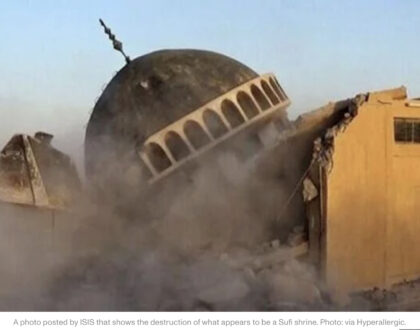
The Emergence of Sectarian Identity: Rethinking the Genesis of the Sunni-Shia Divide
December 8, 2025
The Best School of Fiqh is the Qur’an – Gulf Talk
October 16, 2025